Located in the North of Atlantic Ocean between Iceland and Norway, the Faroe Islands is one of the most remote and unspoiled destinations in the world. This self-governing archipelago which is part of Denmark, comprises 18 volcanic islands connected by road tunnels, bridges and ferries.
With unbelievable dramatic natural landscapes characterised by endless valleys and hills, grassy heartland, thousands of waterfalls and coastal cliffs, I can assure you that the Faroe Islands will blow your mind from the first sight.
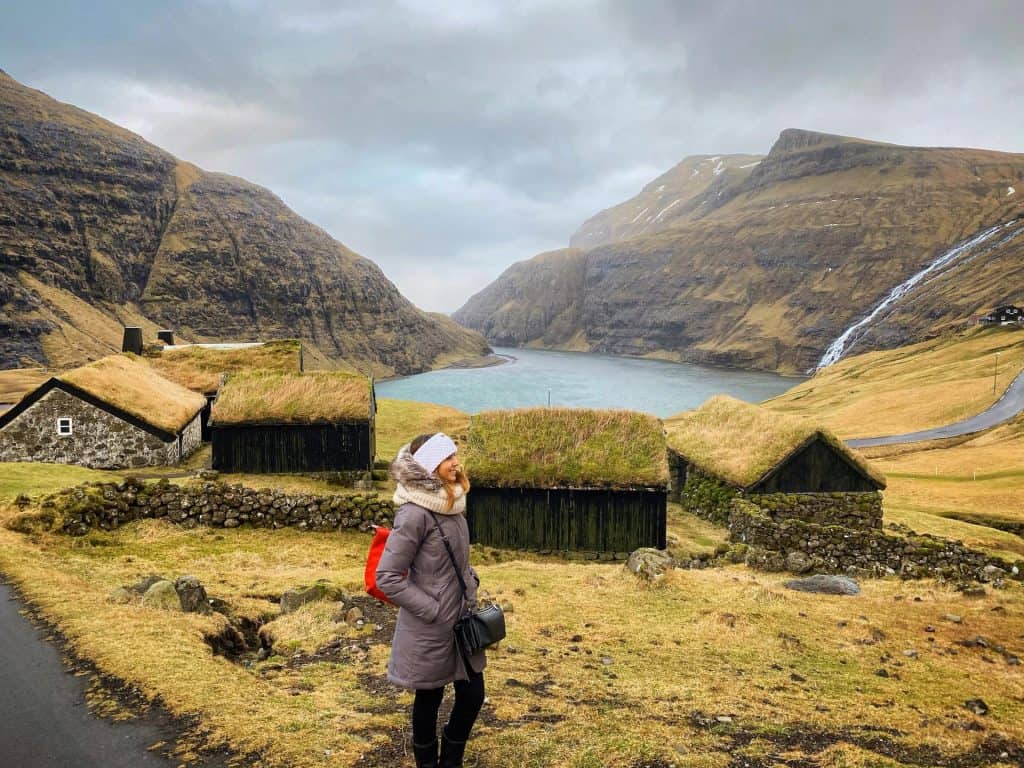
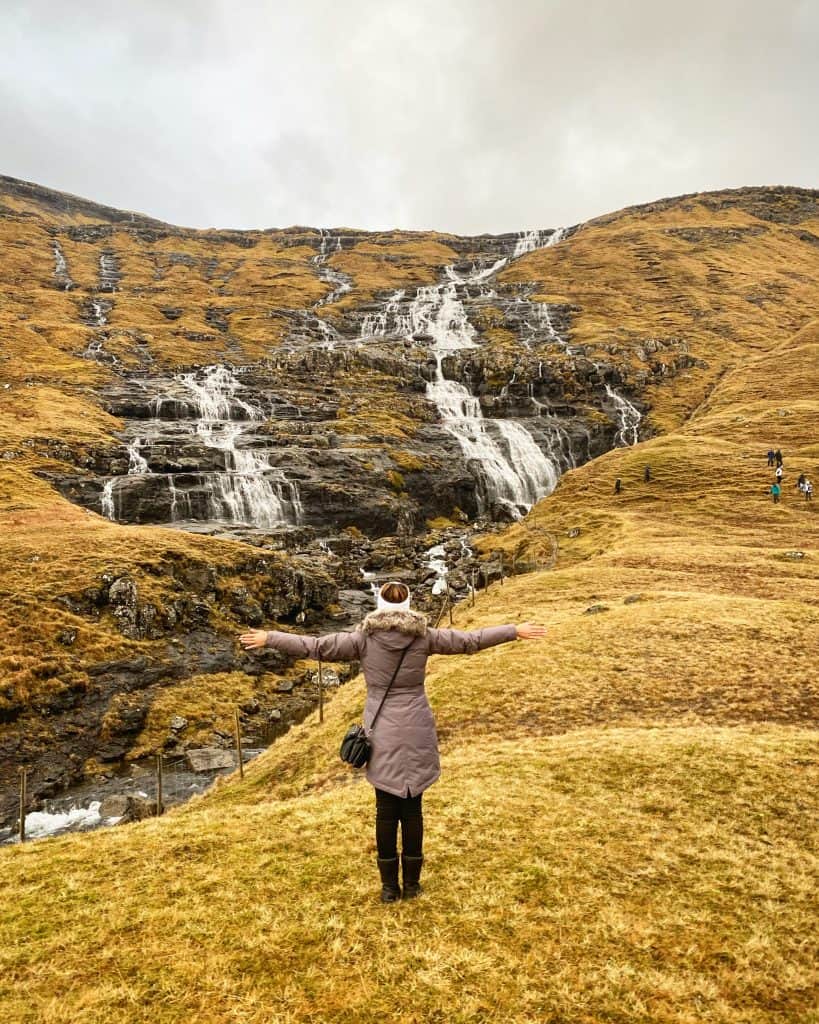
Saksun, Faroe Islands
I’ve visited Faroe Islands in 2019 during New Years period for 5 days and I wish I could had stayed for at least one week. I don’t regret at all visiting it at this time of the year because I love Winter, but it has some limitations. First of all the weather is quite unpredictable and it can be so stormy that will challenge your plans (one day it was raining so much that I couldn’t literally leave the hotel without being completely soaked). Additionally in Winter time some accommodations are closed and it’s more difficult to get to some more remote islands where you can only get by ferry. Late Spring or Summer can be a good alternative to go as you will experience milder weather and you can also see the puffin colonies at this time of the year.
I decided to be based in Torshvan and to do some day trips to different locations in the islands. I’ve stayed in Hotel Hafnia which I recommenced as it is quite comfortable in a very centric location.
Because the weather can be unpredictable and I had limited time in the Faroe so I wanted to make the most of my stay there, I decided to book day tours with a local company Heimdal Tours and it was a great option. The guide was super nice, he took us to the most known places but also some off the track locations and he explained us everything about the Faroe Islands history and culture.
In this blog post I will share the must-go places in the Faroe Islands, including a few that I couldn’t visit but that are part of my bucket list.
Torshvan
Located in Streymoy Island, Torshvan is the capital of the Faroe Islands. Even if it’s one of the smallest capitals in the world, it is a charming city to visit and in my opinion a great choice to stay whilst visiting this archipelago. It has only 20.000 inhabitants and it name means Thor’s Harbour. Legends say this name refers to the Nordic mythology god of weather and strength, Thor.
You can easily spend a day exploring this city – that’s what I’ve done. It has a small commercial area, a cultural center called The Nordic House and a pretty harbour with many typical coloured buildings by the sea.
Torshvan Harbour
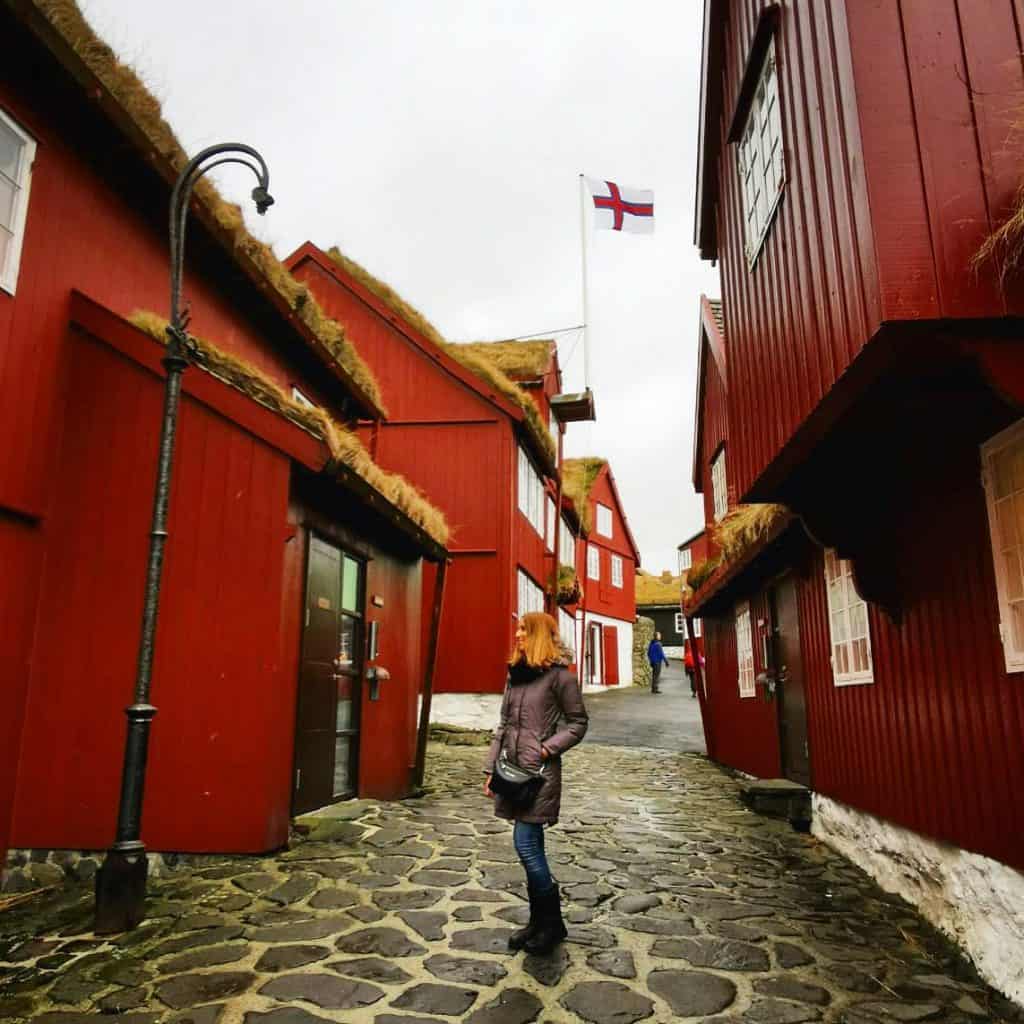
One of my favourite areas of the city is Tinganes, the old town dating back to the Viking Age that hosts now the Faroese government. Take some time to walk around and you will be involved by its unique atmosphere from the past, surrounded by red houses covered with grass on the roof, a typical postcard from the Faroe.
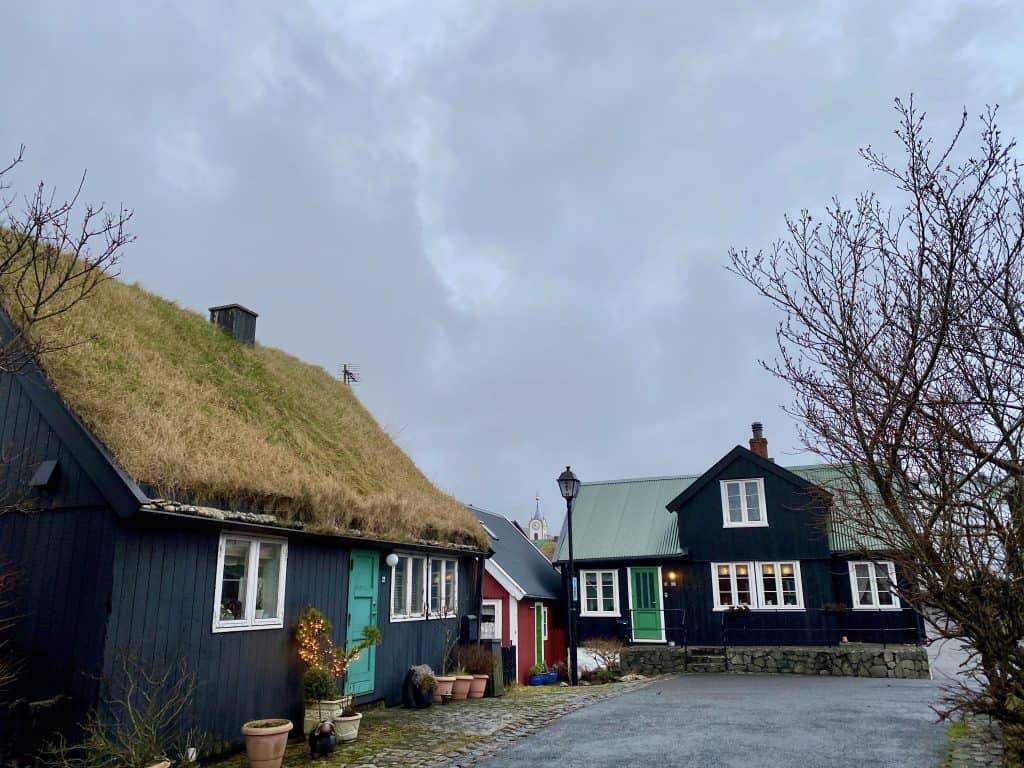
Not far away from Tinganes, Reiny district is also worth a visit with its traditional houses painted in black and turf-roofed. There are some very nice restaurants in this area. Be aware that restaurants and overall cost of living in the Faroe Islands is quite expensive, but you can find options adapted to every budget.
Tinganes
A few minutes walking from Tinganes you will find Skansin area, with an old fort from the 16th century and a lighthouse at the top of a hill.
Torshvan
Kirkjubour
Only 15m drive from Torshvan in the southern part of Streymoy island, Kirkjubour is one of the most important historical sites in the Faroe Islands.
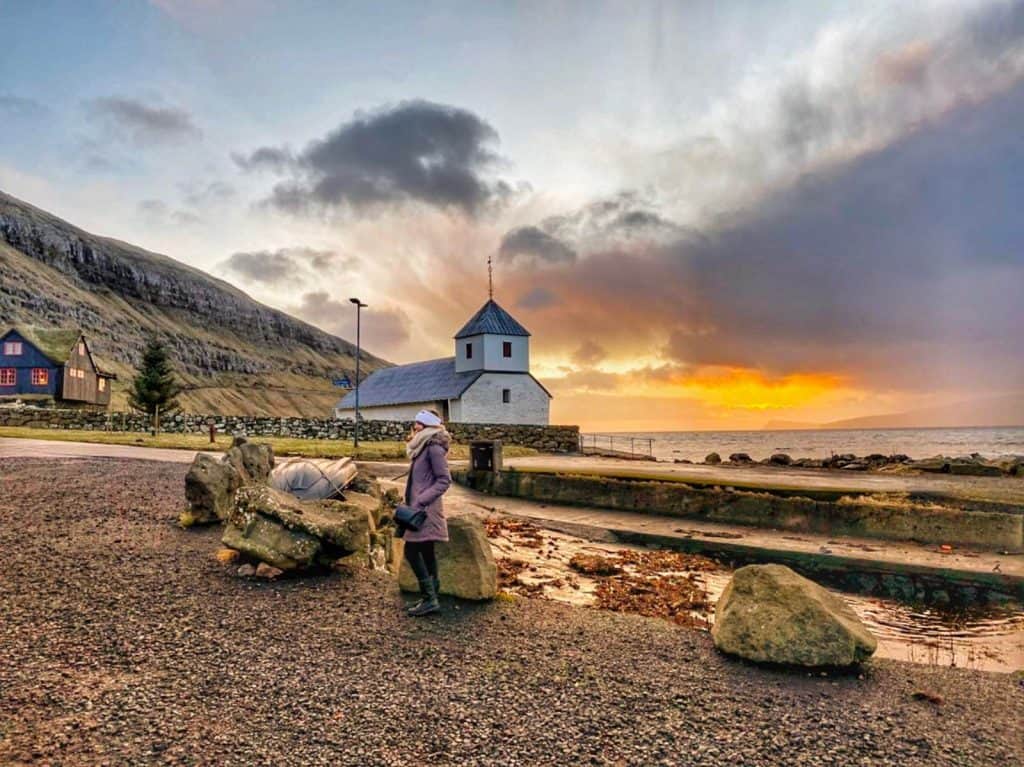
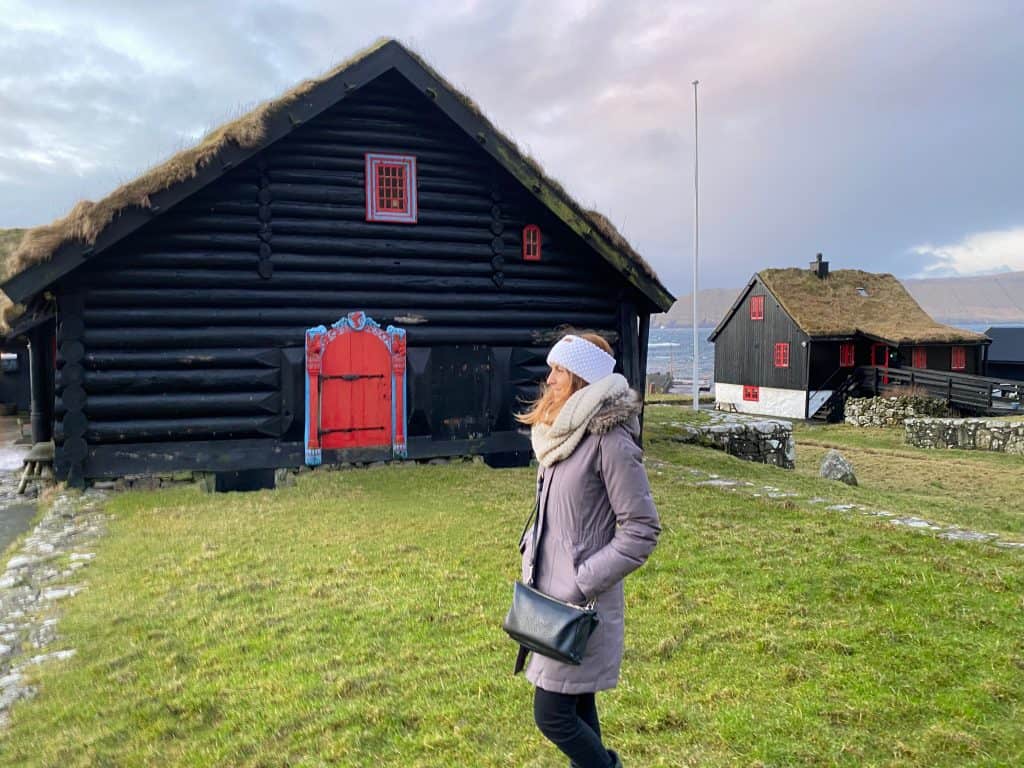
Beside of the beautiful surrounding landscape with mountains and a rough Atlantic beach, Kirkjubour is famous by the ruins of Saint Olav’s Church from the 12th century andMagnus Cathedral from the beginning of the 14th century. It has also an old farmhouse, Roykstovan, with a living room open to the public where is possible to see an interesting ethnography exhibition.
Kirkjubour
Kirkjubour
Saksun
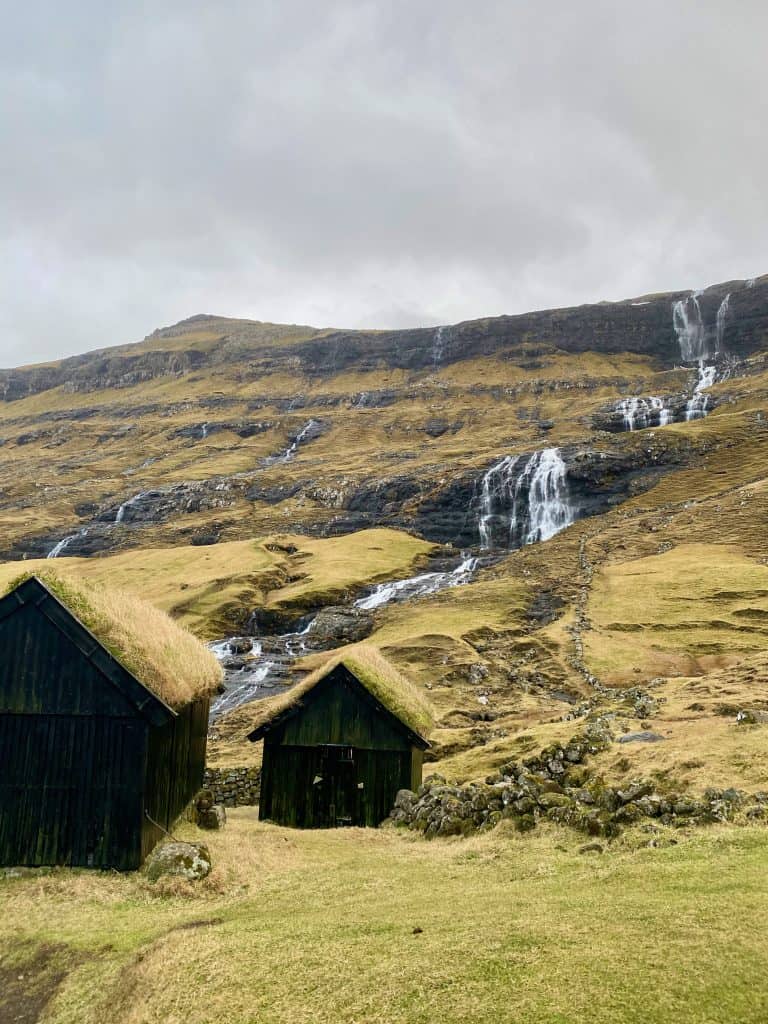
If I had to select my favourite place in the Faroe Islands, it would be probably Saksun. This remote small village is located in a beautiful lagoon which was once a natural harbour that was blocked by the sand during a storm, a long time ago. The surrounding nature is absolutely stunning with waterfalls along the mountain sides.
Saksun is also characterised by the turf-roofed church and houses sitting in a natural amphitheatre which seem to be part of a Middle Earth tale.
From Saksun is possible to do a scenic hike to the nearby village Tjornuvik.
Saksun
Tjornuvik
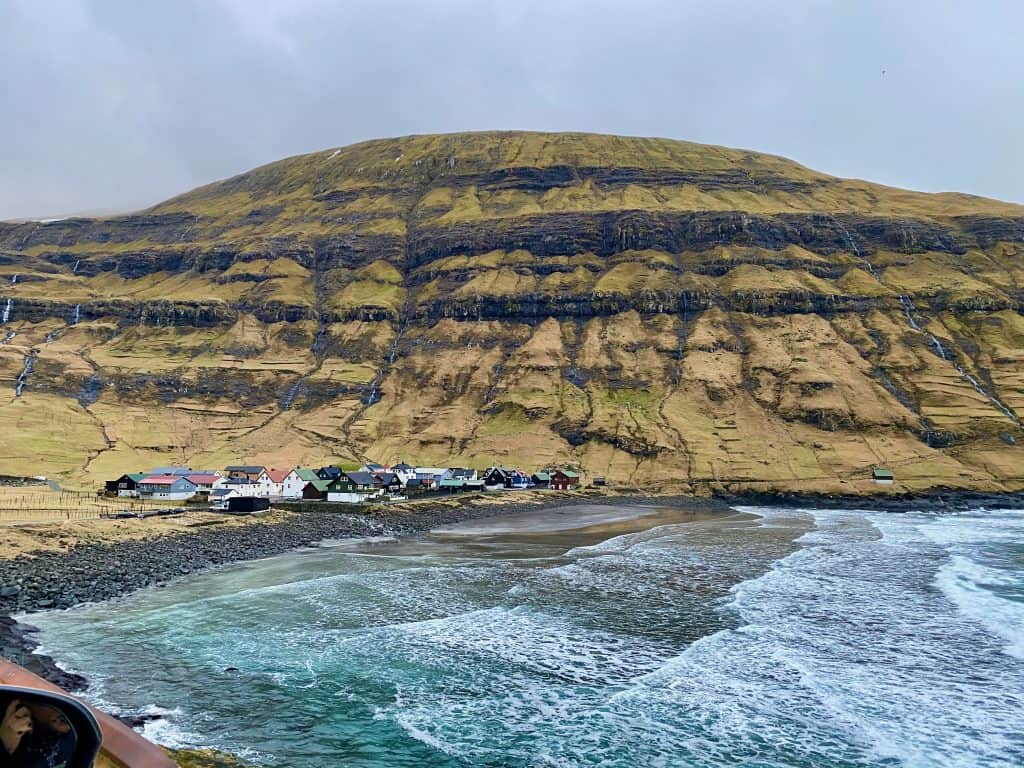
Another beautiful small and remote village which has one of the older Viking burial grounds and a dramatic black sandy beach overlooking the ocean and protected by the surrounding mountains. With around 60 inhabitants, there is only one road to get there.
Tjornuvik
Gjogv
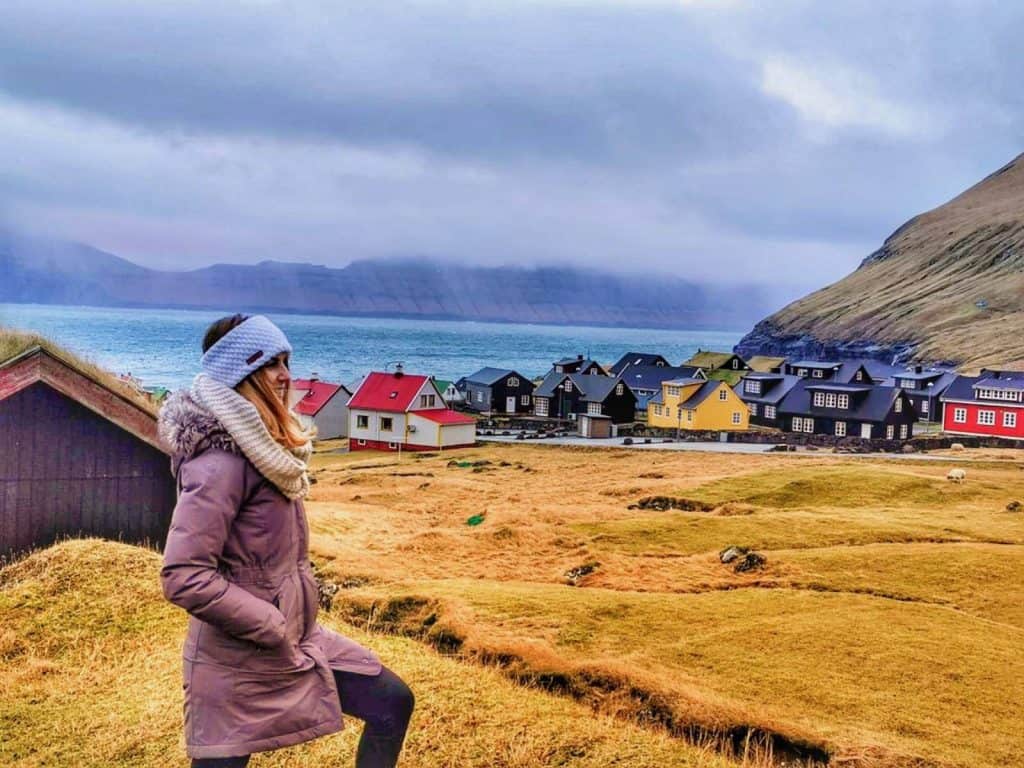
This picturesque village is located in the northernmost part of Eysturoy, the second largest island in the Faroe. Its name was inspired by the long gorge that has been used by locals for centuries as a natural harbour.
From Gjogv is possible to have beautiful views to the neighbour Kalsoy island. To get there you will need to do the scenic drive from Eloi passing the highest mountain in the archipelago.
Gjogv
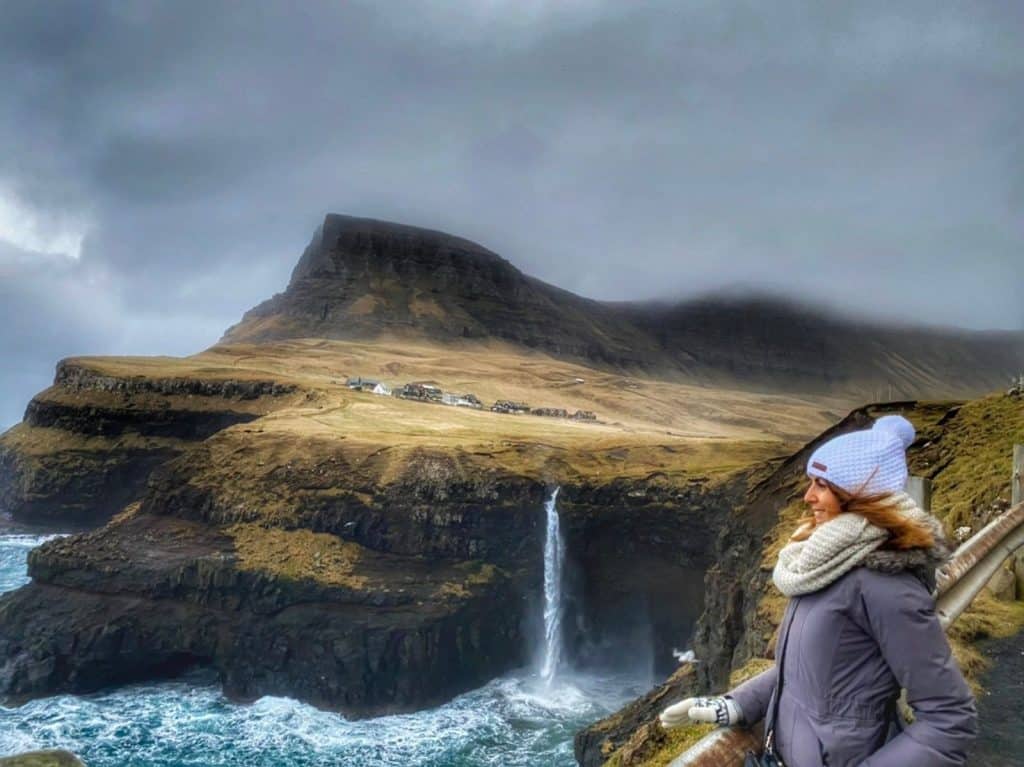
Gasadalur and Mulafossur Waterfall
Located in Vagar island, which is accessible from Torshvan by a sea tunnel, Gasadalur is a small village in one of the most remote locations in the Faroe.
With scenic views to Mykines island, Gasadalur is surrounded by the highest mountain in Vagar and for many years it was almost not accessible until a tunnel was built in 2004 through the rocky mountains, connecting it with the rest of the world.
Gardens by the Bay by day
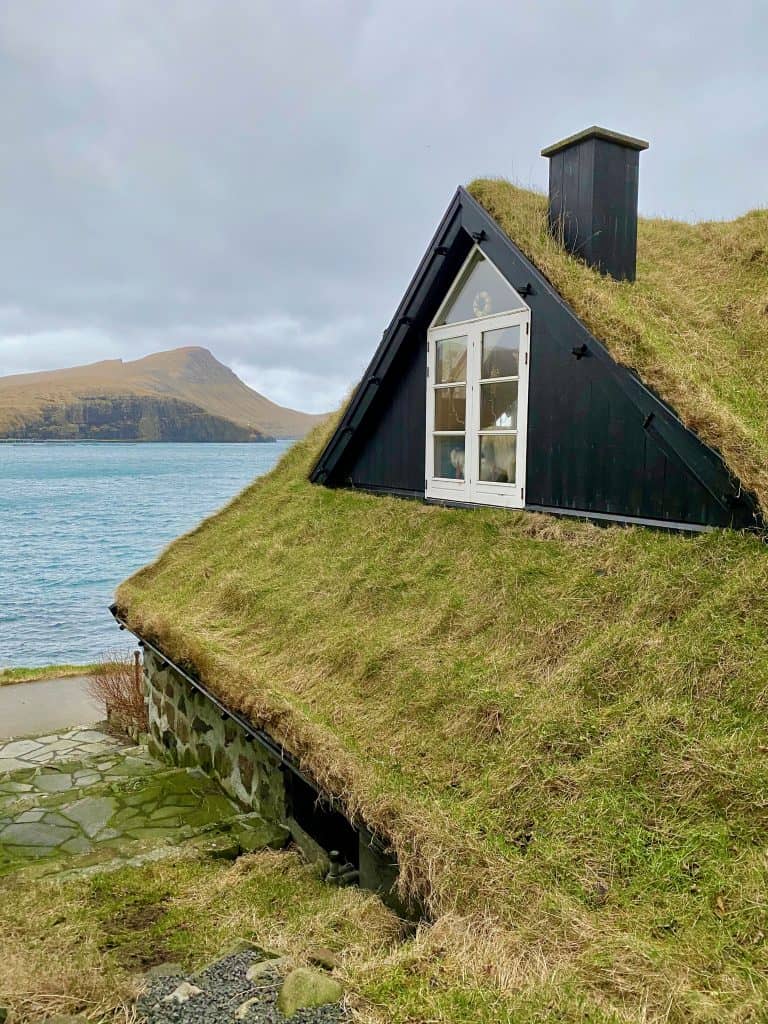
Bour
One of my favourite villages in the Faroe is Bour in Vagar Island, in the way to Gasadalur. Characterised by the typical cottages with grass roofs and a mesmerising view to the Atlantic Ocean and surrounding islands, it is a must visit sight.
It has a picturesque church by the sea built in the 19th century and a waterfall tumbling through the village.
Bour
Lake Sorvagsvatn
Located in Vagar island, this fjord like lake is the largest one in the Faroe. It seems to be held hundreds of feet above sea level thanks to an optical illusion. I’ve heard that the view from there is also quite impressive. It was in my bucket list, but it requires a significant hike and the weather was windy and rainy in the day that I planned to visit, so at end I didn’t go.
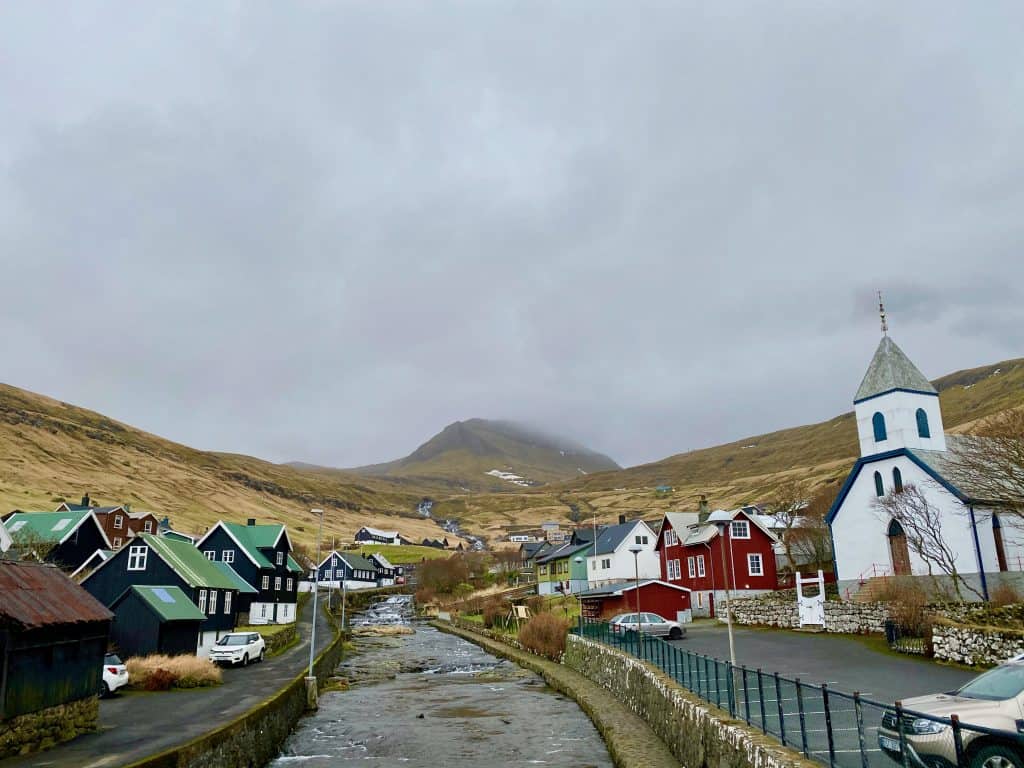
Kvivik
One of the oldest settlements in the archipelago, Kvivik village is known by its Viking heritage and it has some excavations where is still possible to see house walls with many centuries. The village itself is very picturesque with a church and a small river flowing towards the sea.
Kvivik
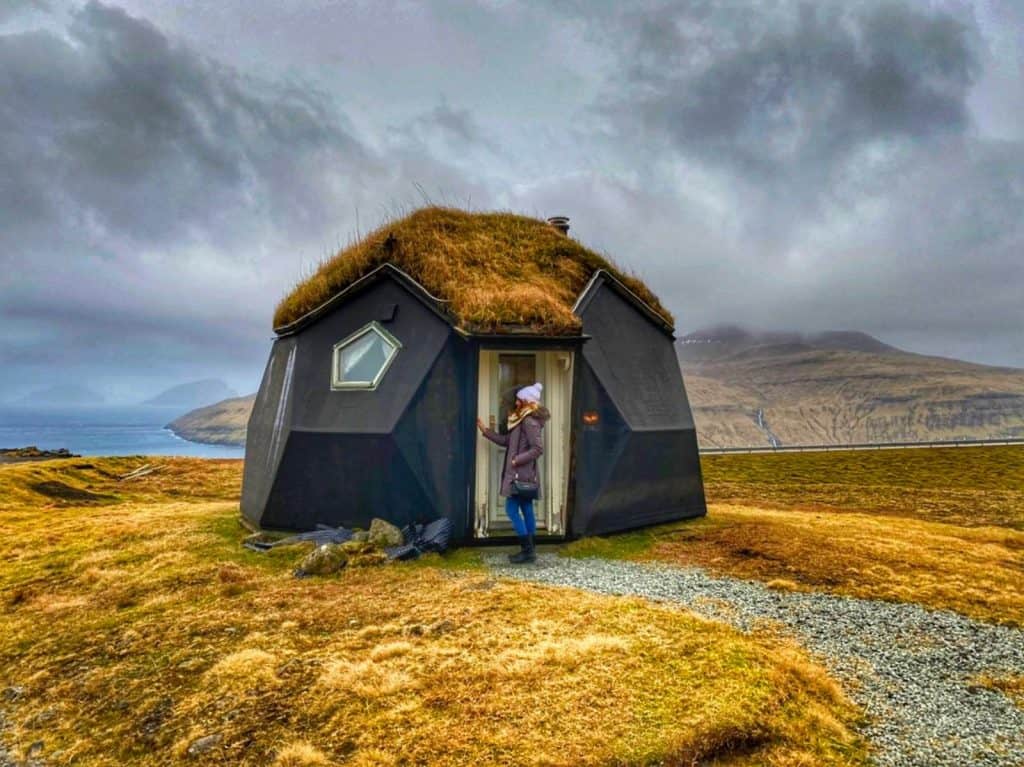
I had seen online some pictures of the cutest turf roofed igloos but I couldn’t find the location before heading to the Faroe Islands. I’ve mentioned that to my guide and… he knew exactly where they were located, near Kvivik. They were once Airbnb accommodation, but when I visited they seemed to be closed. Anyway it’s worth to pass by to take a picture and admire the amazing view to the sea from there.
Kvivik Igloos
Mykines Island
Another famous place to go in the Faroe is Mykines Island, known as the birds paradise and one of the best locations for seeing puffins during the spring and summer months.
I didn’t visit it because I didn’t have time and it was not the ideal time of the year to go, but it’s in my list for a future trip to the Faroe Islands.
Natural Landscapes
As I’ve mentioned in the beginning of this blog post, the unbelievable natural landscapes around the Faroe Islands makes of it one the most amazing destinations in the world. Remote, untouched and dramatic, this archipelago in the middle of North Atlantic will surprise you with its valleys and hills, grassy heartland, thousands of waterfalls and coastal cliffs.
Faroe is known as the “land of 10.000 waterfalls” and driving by the islands you will be continuously surprised by the beauty of its many waterfalls.
Waterfalls
While I was traveling in the Faroe Islands, I’ve stopped I’ve stopped the car countless times just to take one more picture of the scenic landscapes, each one more beautiful than the other. Lost cottages with grass roofs in the middle of grassy valleys, rough coastlines and many, many sheep everywhere.
The Faroese sheep is a breed native to the islands since the 9th century and they are part of the tradition of the Faroe, with more sheep than inhabitants. It is said that the name “Faroe” mean “sheep island”.
This website uses cookies to improve your experience. We'll assume you're ok with this, but you can opt-out if you wish. Cookie settingsACCEPT
Privacy & Cookies Policy
Privacy Overview
This website uses cookies to improve your experience while you navigate through the website. Out of these cookies, the cookies that are categorized as necessary are stored on your browser as they are essential for the working of basic functionalities of the website. We also use third-party cookies that help us analyze and understand how you use this website. These cookies will be stored in your browser only with your consent. You also have the option to opt-out of these cookies. But opting out of some of these cookies may have an effect on your browsing experience.
Necessary cookies are absolutely essential for the website to function properly. This category only includes cookies that ensures basic functionalities and security features of the website. These cookies do not store any personal information.
Any cookies that may not be particularly necessary for the website to function and is used specifically to collect user personal data via analytics, ads, other embedded contents are termed as non-necessary cookies. It is mandatory to procure user consent prior to running these cookies on your website.