Cambodia steals your heart from the very first moment. A land of timeless temples, vibrant cities, lush plains and dreamy coastlines, it merges seamlessly the ancient and the modern worlds, providing endless unforgettable experiences to visitors. I had Cambodia in my bucket list for a long time. I finally visited it in April and I immediately felt in love with this unique country. So I’ve prepared a Cambodia Bucket List with the best places to visit in Cambodia, including Phnom Penh, Angkor Temples and Koh Rong Sanloem Island.
Located at the heart of Southeast Asia, Cambodia shares its borders with Thailand, Laos and Vietnam. Its landscape is shaped by the mighty Mekong River and a patchwork of plains, rainforests and pristine shores. Once the center of the powerful Khmer Empire, its legacy lives on the culture and the history of the country. It also lives on the impressive architecture with thousands of temples in Cambodia, being the most famous within the iconic Angkor complex in Siem Reap.
I started my adventure visiting the lively capital Phnom Penh, then I went to Siem Reap’s region to explore Angkor temples, and I finally ended up my journey relaxing in Koh Rong Sanloem island, with some of the best beaches in Cambodia.
Angkor Wat
I strongly advise you to take enough time to explore the top attractions in Cambodia and everything this amazing country has to offer. I stayed in Cambodia for 9 days, but I wish I would have stayed longer. Cambodia isn’t a place to rush. With its beautiful landscapes, stunning historical sites and the warmest and most welcoming people, Cambodia should be enjoyed with open eyes, open heart and quality time.
In this article I will share with you a Cambodia Bucket List with my Cambodia itinerary, recommendations and useful tips to explore one of my favourite destinations ever. I hope you enjoy it as much as I did, and collect some travel memories that you will forever cherish.
How to get to Cambodia?
You can reach Cambodia via international flights into its capital Phnom Penh or Siem Reap, the gateway to Angkor. It’s a good idea to combine Cambodia with other countries in the region. If you are already exploring Southeast Asia, overland or sea crossings from Thailand or Vietnam are also common and straightforward.
Be aware that when I visited, it was needed to get an e-Visa in advance (I think you can also get the Visa on arrival, but you will need to queue at passport control). Additionally I had to fill an e-Arrival card within 7 days of my arrival date. But always check the most updated information from official sources prior to your trip, as it may change overtime.
Royal Palace in Phnom Penh
How to travel around Cambodia?
There are several options to travel around Cambodia that suit every style and budget. For longer distances, domestic flights between Phnom Penh, Siem Reap and Sihanoukville are relatively affordable, but between some destinations there are no flights every day. In alternative, you can travel overland with VIP buses or private drivers’ companies.
I traveled to the different locations in the trip with a private driver service, which was a great option. It allowed me to have more flexibility to travel at my own pace and to explore Cambodia’s countryside.
In the cities, an easy and affordable way to get around is by tuk-tuk, often arranged through apps like Grab. I used it for many of my trips in Phnom Penh and Siem Reap.
Independence Monument in Phnom Penh
When to visit Cambodia?
The best time to visit Cambodia is often considered the dry season, from November to April, when the skies are clear and there is very little rain. November to February with its milder temperatures is very popular and perfect for temple hopping in Siem Reap or lounging in powdery beaches. From March to April daytime temperatures start to soar. I visited Cambodia in April, and despite of the hot weather I had an amazing time.
The wet season from May to October brings lush green landscapes, discounts in many accommodations and fewer visitors. There is sometimes afternoon rain and higher humidity, but it can be a good option for greener sceneries, great deals and less crowds.
What to see in Cambodia? My Cambodia Itinerary
What to see in Cambodia? There are countless natural places and historical sites to see in Cambodia, but I will share my Cambodia itinerary based in my own experience. I visited three main regions: Phnom Penh, Siem Reap and Angkor temples, and Koh Rong Sanloem island off the coas of Sihanoukville.
Those locations are far away from each other, so if you travel overland you will need to plan to spend some time in the road. For reference (it really depends on the circumstances and the traffic) my trip from Phnom Penh to Siem Reap took approximately 6 hours, from Siem Reap to Sihanoukville 8 hours, and from Sihanoukville back to Phnom Penh 3 hours.
Visiting Vibrant Phnom Penh
I started my journey in Cambodia visiting its vibrant capital, which is also the largest city in the country. Located at the confluence of four rivers, including the famous Mekong and Tonle Sap rivers, Phnom Penh is a city of contrasts: ancient and modern, buzzling activity and serenity. Once known as the “Pearl of Asia,” Cambodia’s capital may feel overwhelming at first, but beneath its apparently chaotic surface lies a city that tells the story of a nation’s resilience, memory and beauty. Let me share my list of things to do in Phnom Penh.
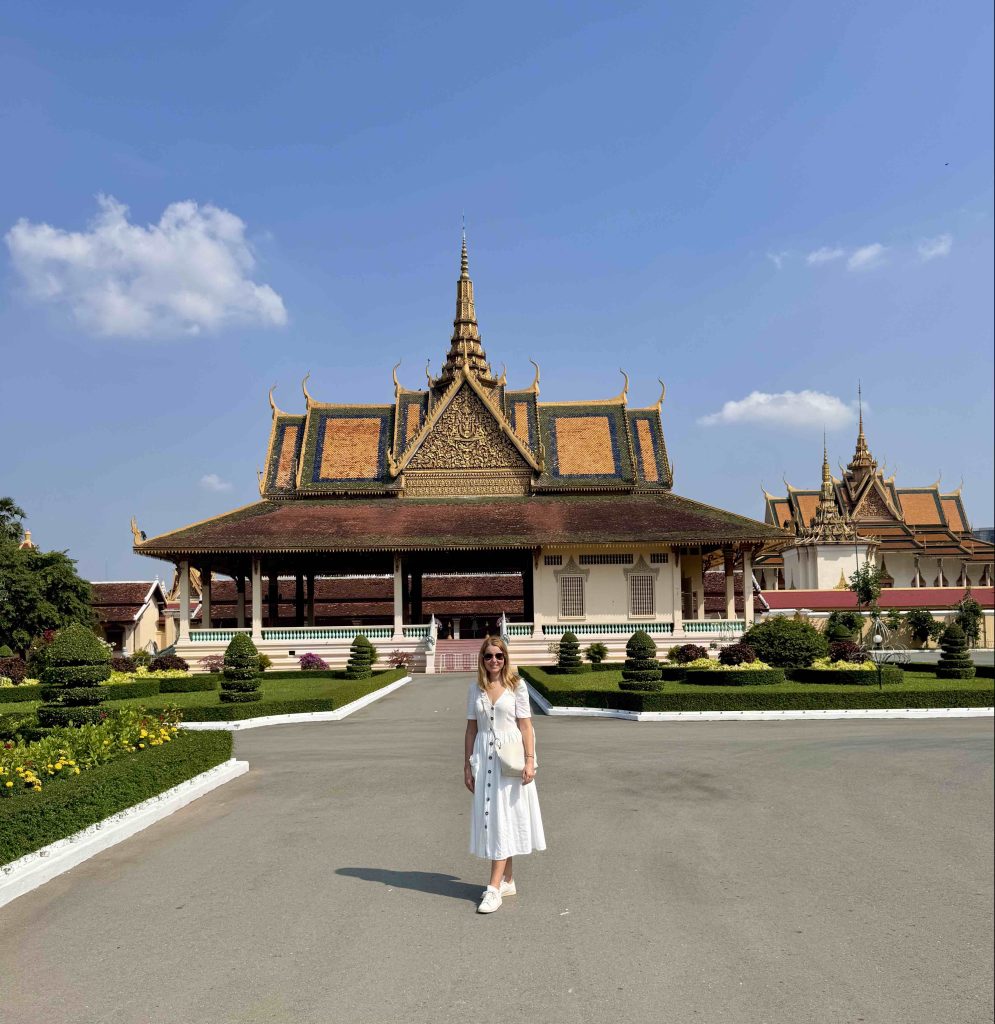
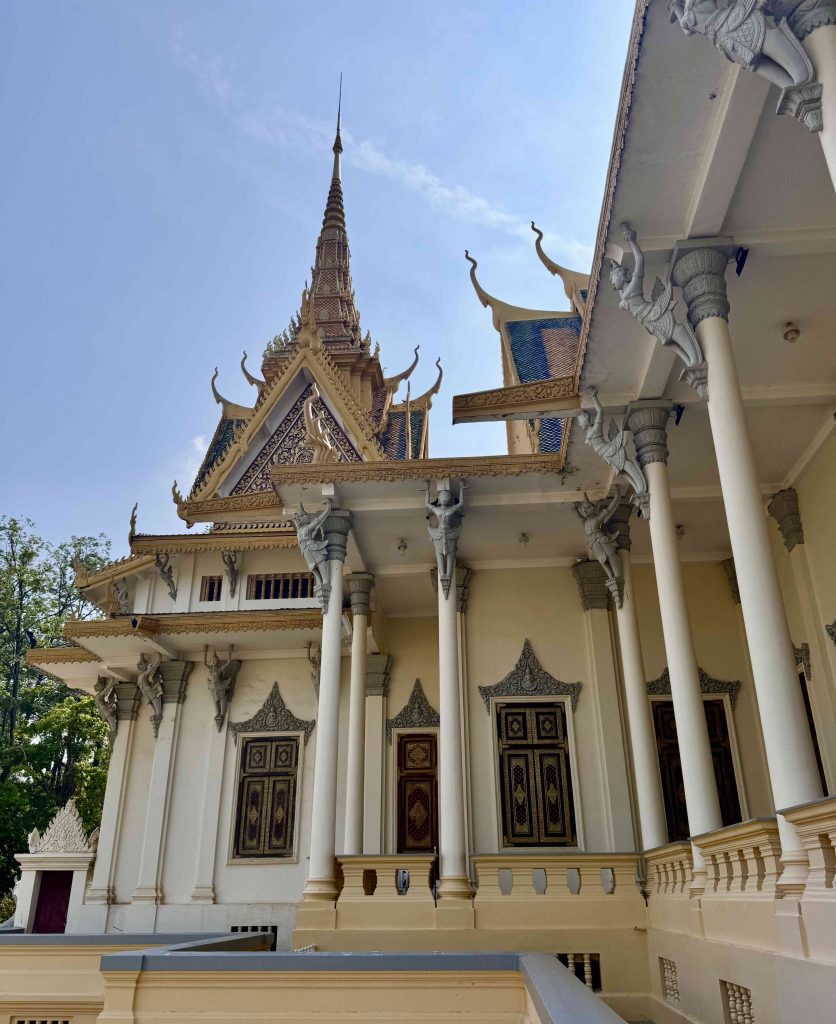
Start your journey at the Royal Palace and the adjacent Silver Pagoda, where Khmer architecture glows in the sunlight and the spirit of Cambodian royalty lives on. This beautiful complex of buildings dating back from 1866, servesnowadays as the official royal residence. It also welcomes visitors providing a glimpse of the country’s history and culture.
In the complex don’t miss some highlights like the Silver Pagoda, covered with over 5000 silver tiles, the Throne Hall with a gold tiled roof, the Moonlight Pavilion and its gardens and courtyards.
Royal Palace
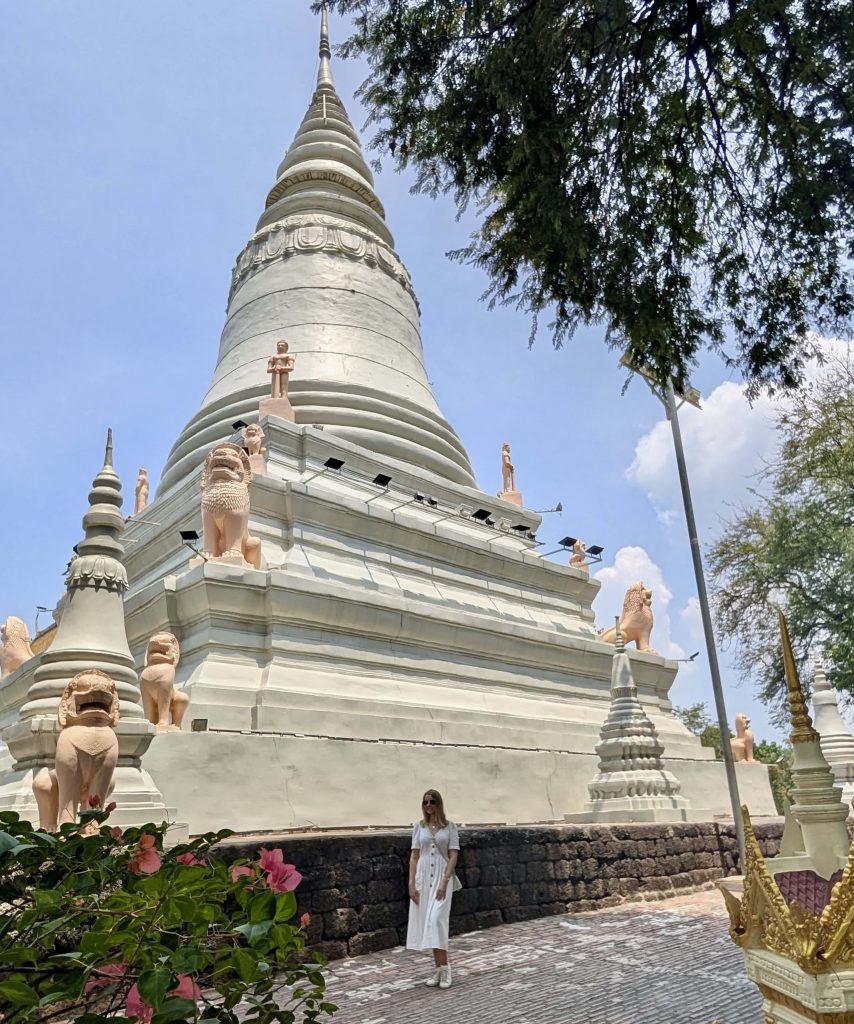
Another iconic place to visit in Phnom Penh is Wat Phnom, a hilltop temple that is the oldest and tallest religious structure in the city. Despite being surrounded by the city buzz, this site offers peaceful grounds that are perfect for a slow and tranquil stroll.
Wat Phnom
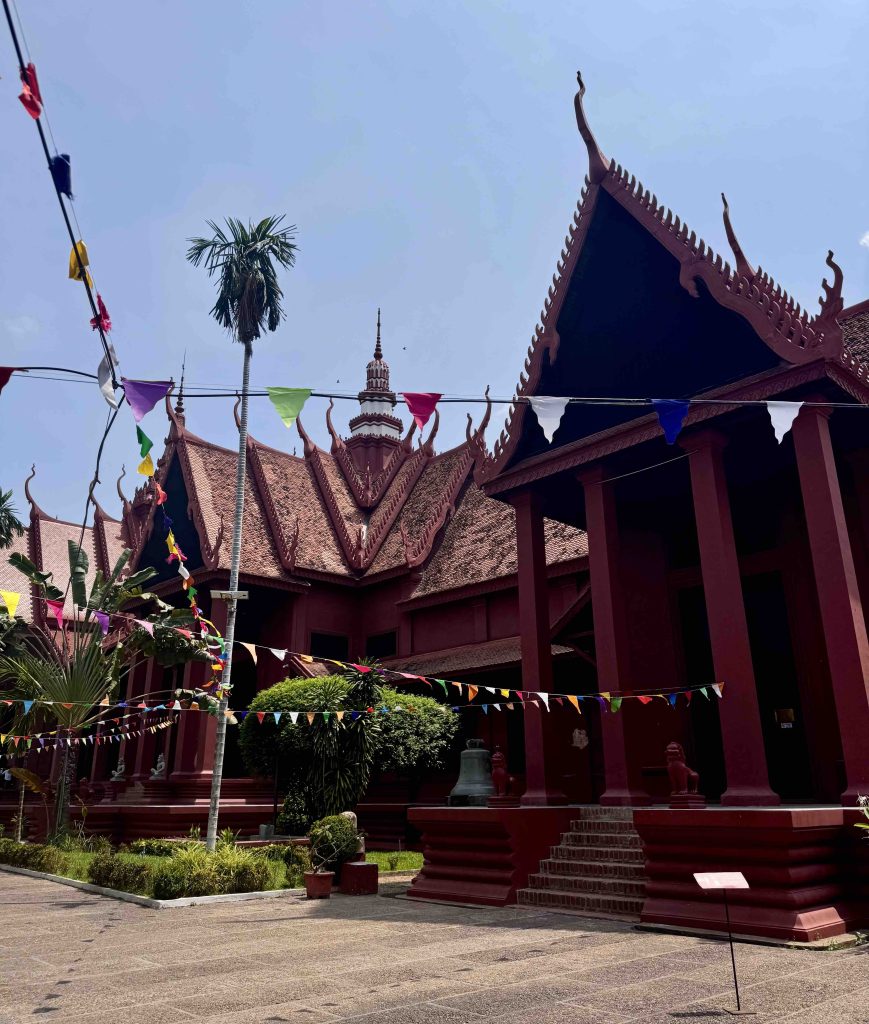
For those who want to learn more about Cambodia’s heritage, the National Museum of Cambodia holds an exquisite collection of Khmer sculptures and artefacts, and a courtyard garden that is ideal to unwind. It’s also worth walking around its outdoors and admire the impressive Khmer architecture with tiered roofs and spires.
National Museum of Cambodia
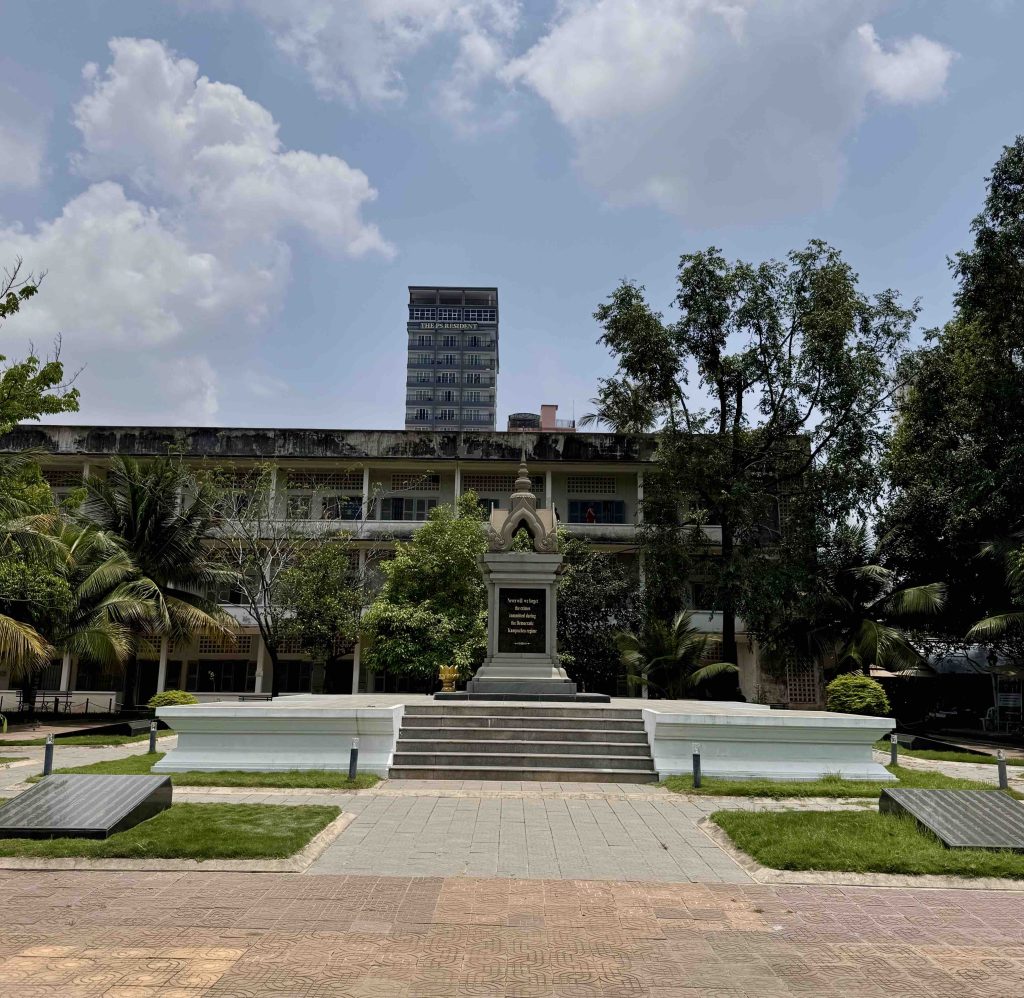
In Phnom Penh is important to visit some places that are a testimony of Cambodia’s most painful chapter. During the Khmer Rouge regime, from 1975 to 1979, almost a quarter of the country’s population was tortured and murdered. One of those places is Tuol Sleng Genocide Museum (S-21). Once a school turned into a prison during the Khmer Rouge regime, it is now a museum and a memorial where the walking paths and rooms remain stark and heavy with the memories of that terrible period. I recommend to have an audio guide to understand everything that happened there.
Visiting this place is very painful, but it’s important as it remind us of the importance of remembrance and humanity in order to never repeat it. It is also a way to honor the courage and resilience of Cambodia’s people.
Tuol Sleng Genocide Museum (S-21)
Don’t miss a riverside promenade where locals gather to walk and eat. It gets particularly magical at sunset. If you have enough time, enjoy a sunset cruise along the Mekong River, watching the skyline shimmer. Don’t forget to explore the vibrant Central Market, a striking Art Deco landmark perfect for picking up local handicrafts and textiles.
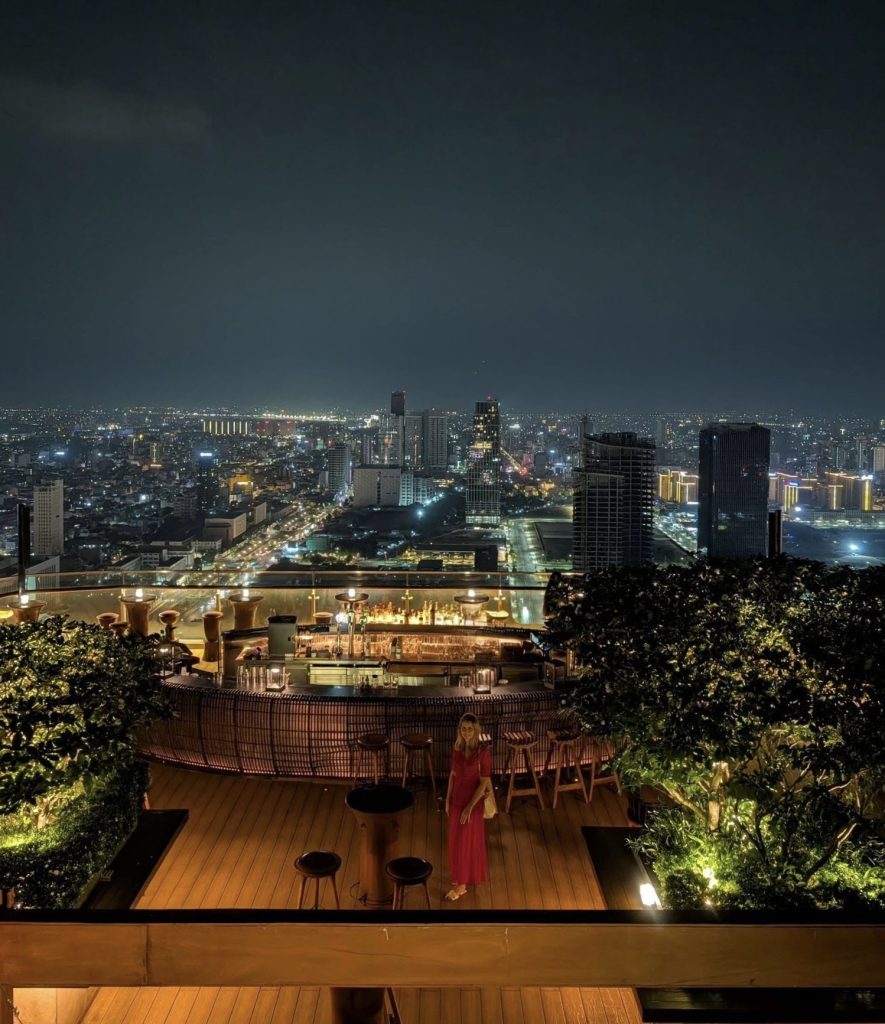
End your day with a view. Phnom Penh has some stylish rooftop bars, where you can drink a cocktail as the city lights shine bright in the skyline. I’ve been to Sora Skybar, offering stunning panoramic views to the city and a relaxing atmosphere.
Phnom Penh rooftops by night
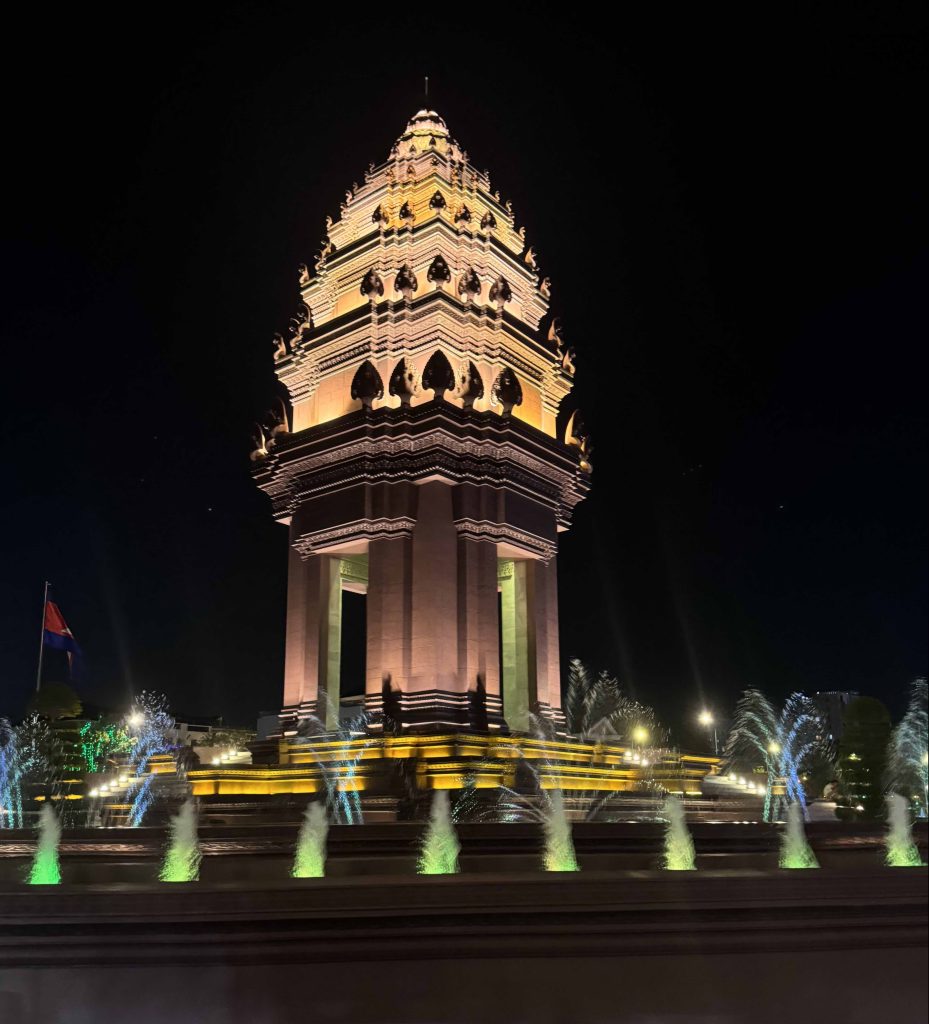
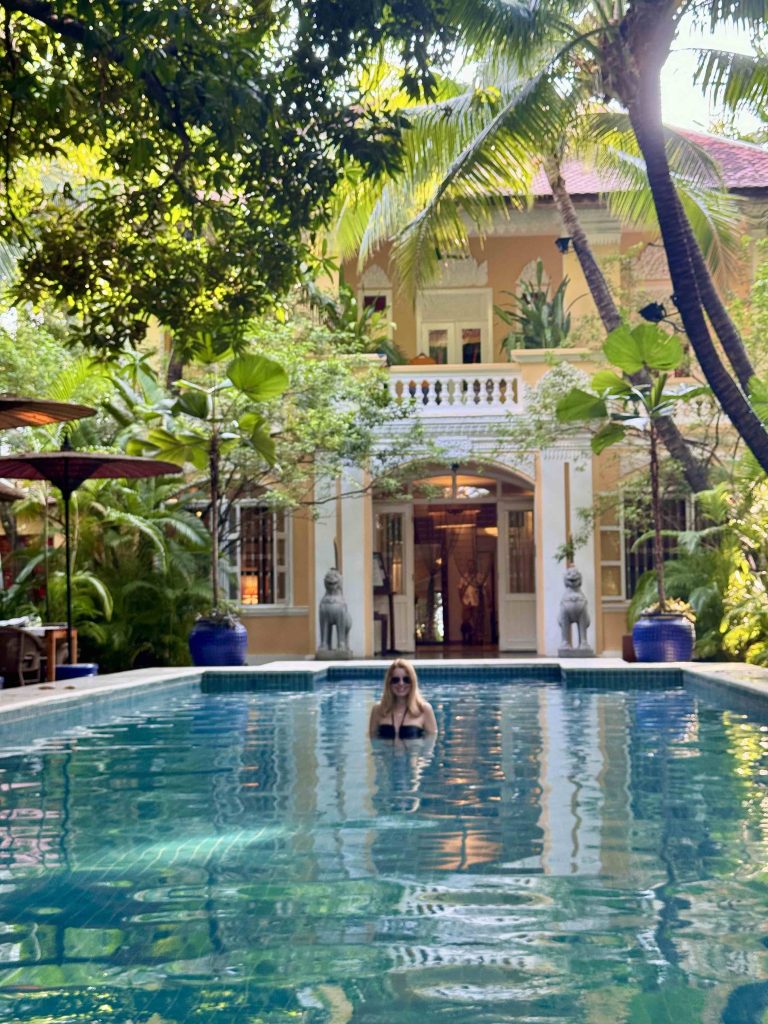
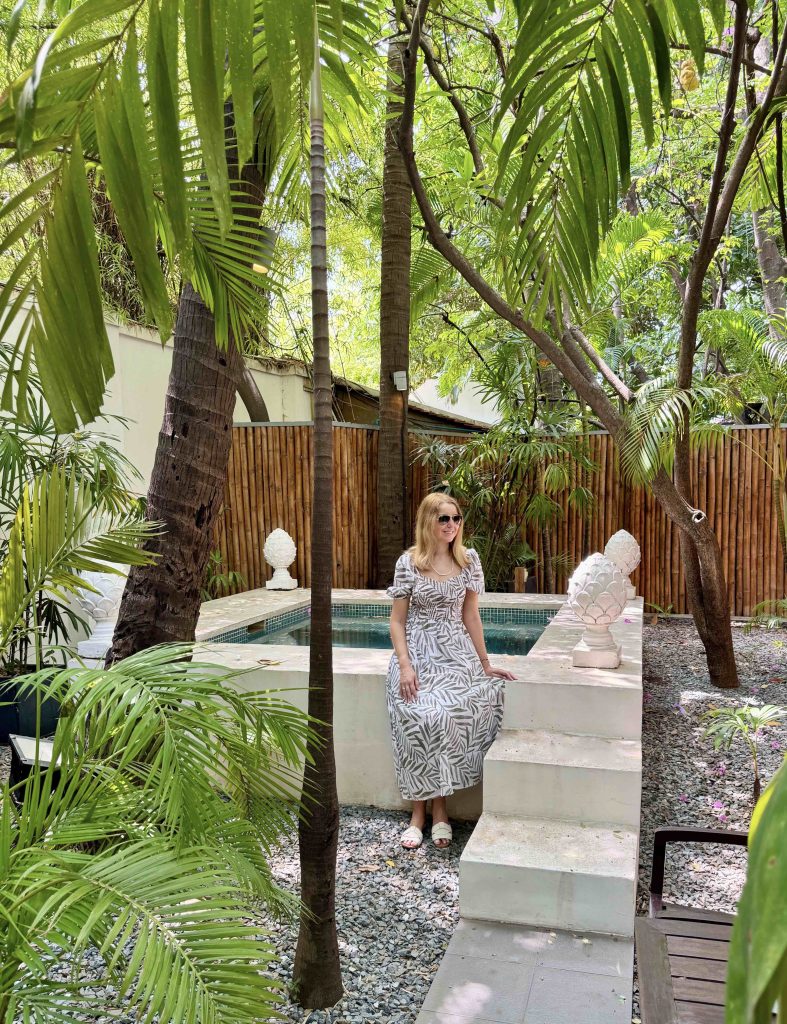
I stayed in Phnom Penh at the Pavilion Phnom Penh, a hidden oasis at the heart of the city. Just steps away from the Royal Palace and Phnom Penh’s Independence Monument, this hotel is perfectly placed to explore the capital’s most iconic landmarks on foot. Yet, you may find yourself lingering even longer than expected. The moment you step through its discreet entrance, the city’s bustle fades into a serene background inviting you to unwind and enjoy the lush gardens, the relaxing terrace and the two beautiful swimming pools.
Pavilion Phnom Penh swimming pool
Once a colonial residence tied to Queen Mother Kossamak, the hotel exudes timeless elegance and tranquility. The rooms, each uniquely styled, balance colonial charm with modern comfort, and some open into patios with private jacuzzi or pool. The top-notch service from the attentive staff will make you feel that you found your home away from home. Don’t miss the delicious breakfasts by the pool, the happy hour at the end of the day and the tasty local cuisine at the poolside restaurant.
Pavilion Phnom Penh villa with private jacuzzi
Siem Reap: Gateway to Ancient Wonders and Angkor Temples
Most travellers head to Cambodia to accomplish the dream of visiting Angkor Thom, a complex of temples that is one of the most impressive archeological sites in the world. It is located near Siem Reap, usually known as the gateway to the ancient wonders of Angkor.
Siem Reap is a city suspended between the old and the modern worlds that deserves a visit and has its own charm. In the city centre, it’s worth to visit Angkor National Museum, where visitors can learn more about Khmer civilisation.
Beside its historical heritage, Siem Reap is a vibrant city where streets buzz with color, energy and creativity. You can easily spend an afternoon wandering the Old Market (Psar Chaa) and shopping textiles, fragrant spices and handmade crafts. Fashion lovers will also be delighted by tailor-made linen shops in the city, where local designers create beautiful and customised pieces.
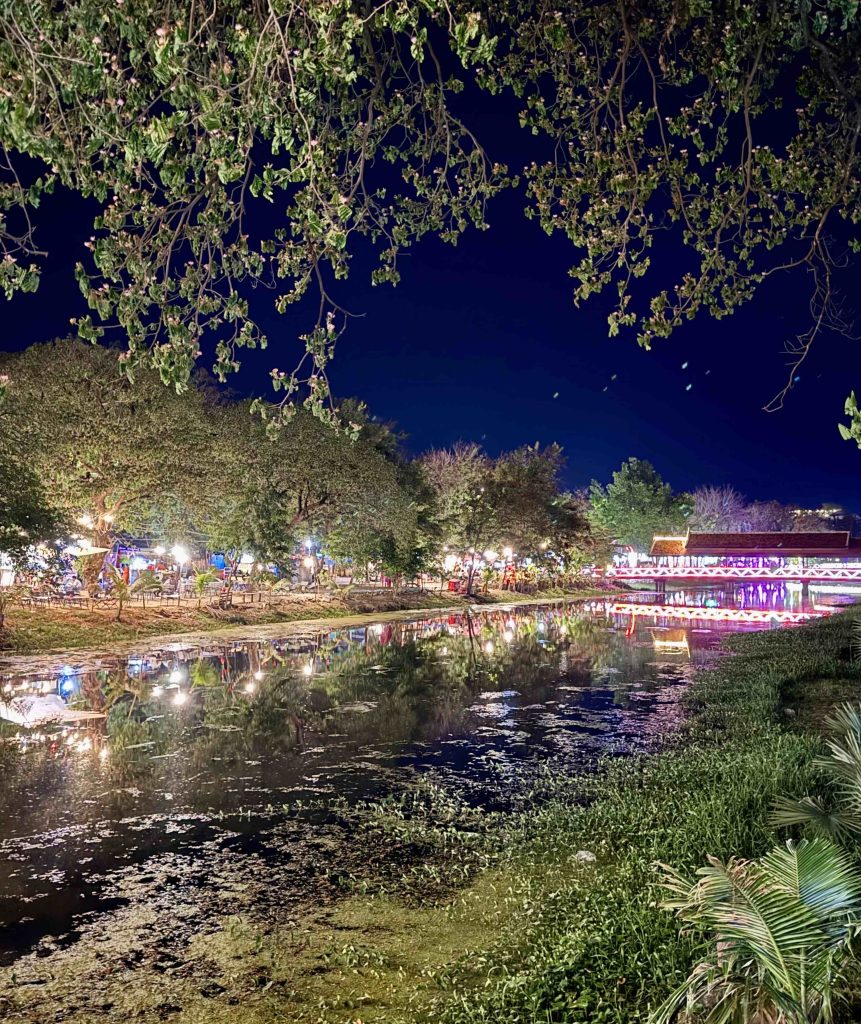
At night, the city gets alive in the area around the riverside and the famous Pub Street, with a mix of neon lights, open-air bars and street performances. Despite the name, it’s not just for partygoers. Some of the city’s best restaurants hide just around the corner, offering everything from refined Khmer tasting menus to international cuisine and cozy cafes.
Siem Reap riverside by night
But Siem Reap’s jewel of the crown is Angkor Archeological Park, a UNESCO World Heritage Site and one of the most amazing archeological sites on Earth. It has even been considered the Eight Wonder of the World. The park stretches over more than 400 kilometres square, where remains of different capitals of the Khmer Empire (from the 9th to the 15th century) can be seen, as well as a vast area of lush forest. There are around 70 major Angkor temples in the complex, along with hundreds of other smaller temples spread across the area.
You can buy your tickets to Angkor Archeological Park onsite or online at the official website. There are tickets of 1, 3 and 5 days and they allow you to visit all the temples in the complex. I had limited time, so I could only spend one day exploring the temples and I had to focus on the ones I wanted to see the most. But I recommend you stay longer to enjoy everything Angkor has to offer.
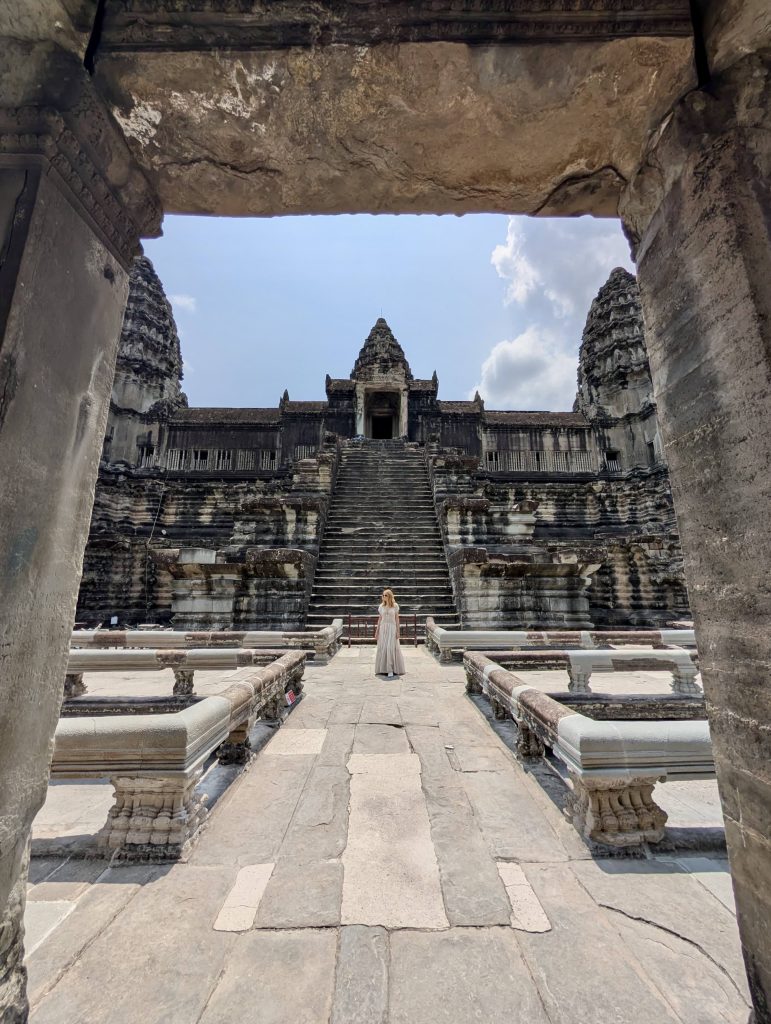
The most famous temple in the archeological park and Cambodia’s most iconic landmark is undoubtedly Angkor Wat. Rising majestically from the jungle, Angkor Wat offers a journey back in time to the 12th century, when it was built by the Khmer Empire. Originally constructed as a Hindu temple, it was later transformed into a Buddhist temple. It is the largest religious building in the world, offering a stunning fusion of spirituality, intricate architecture and ancient artistry.
Angkor Wat
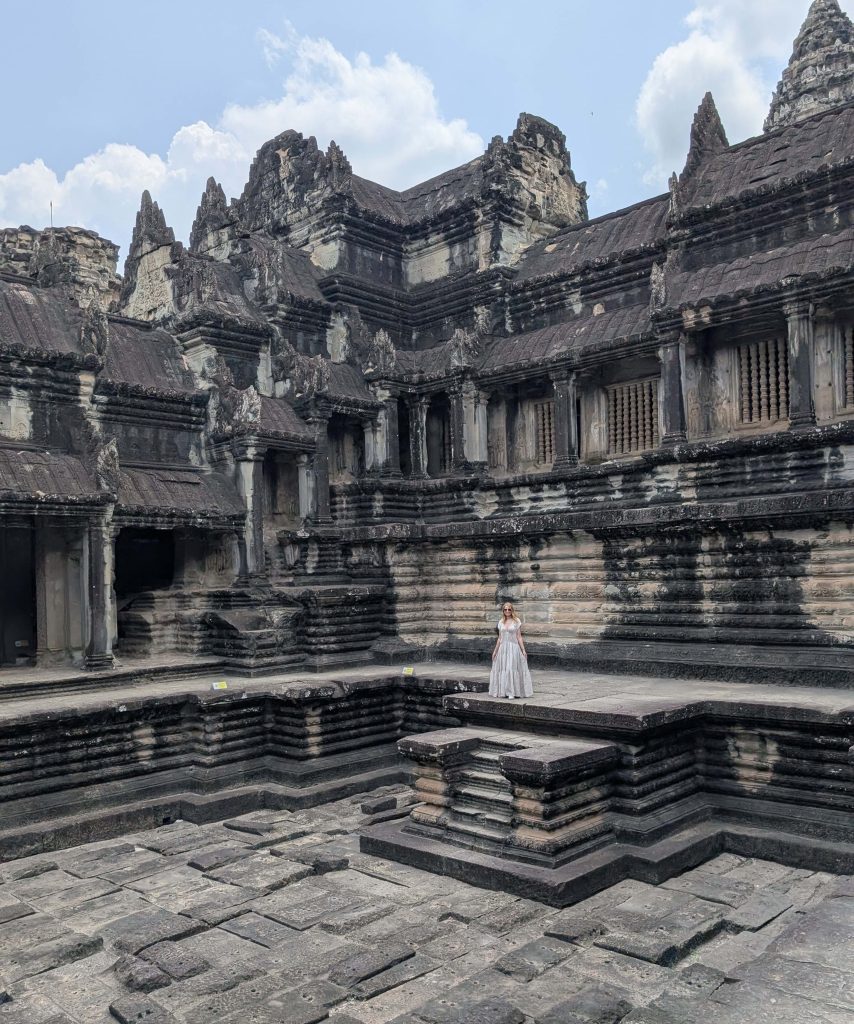
Many travellers head to Angkow Wat before the sun rises. As the first rays of sunlight peek over its lotus-shaped towers, the temple complex comes alive in golden hues, offering one of the most breathtaking sunrises in the world. Independently of the time of the day you go, dedicate enough time to explore this wonder marvel without rush. Exploring its endless corridors, detailed bas-reliefs and serene courtyards feels like stepping into an epic adventure carved in stone.
Angkor Wat
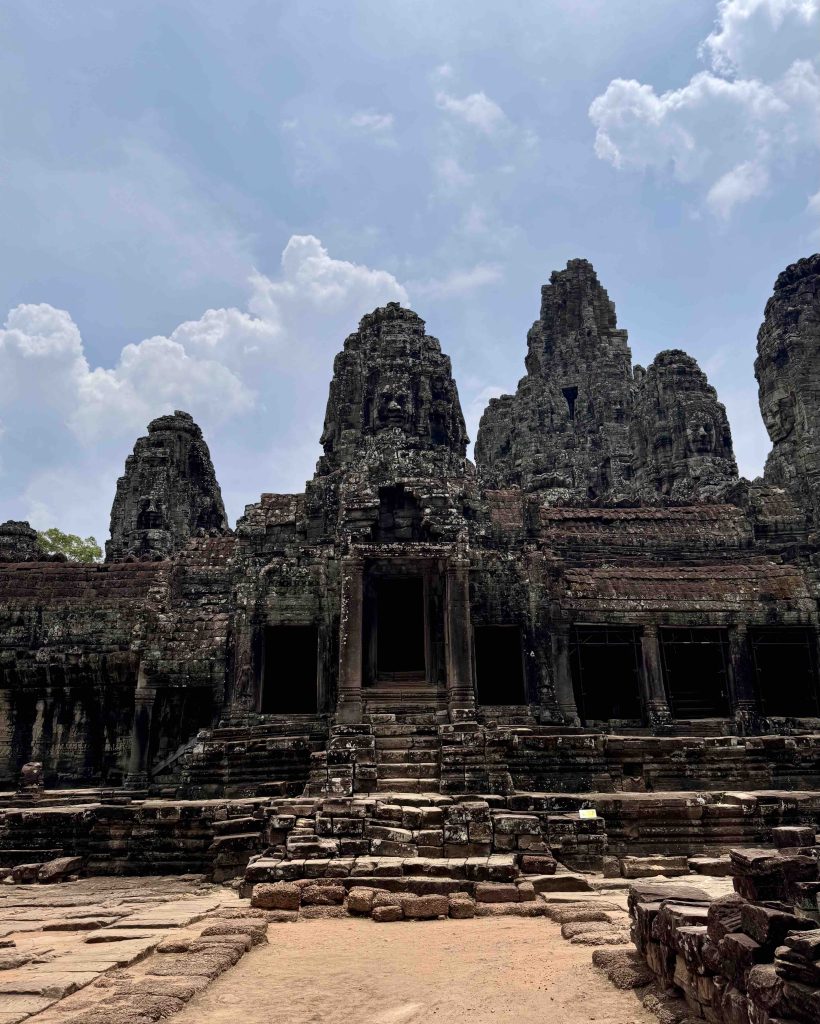
Another unmissable temple in the area is Bayon Temple. Standing exactly at the the heart of Angkor Thom, it is one of Cambodia’s most enigmatic and mesmerizing sites. It was built in the late 12th or early 13th century by the famous King Jayavarman VII. Unlike any other temple in Angkor, Bayon is renowned for its more than 170 towering smiling stone faces carved into the temple’s many towers, watching silently in all directions.
Wander through its narrow passageways and crumbling galleries that almost look like a labyrinth. Don’t miss the series of bas-reliefs on the inner and outer galleries depicting everyday life in the Khmer Empire, as well as the beautiful statues located in the northeast and southeast towers.
Bayon Temple
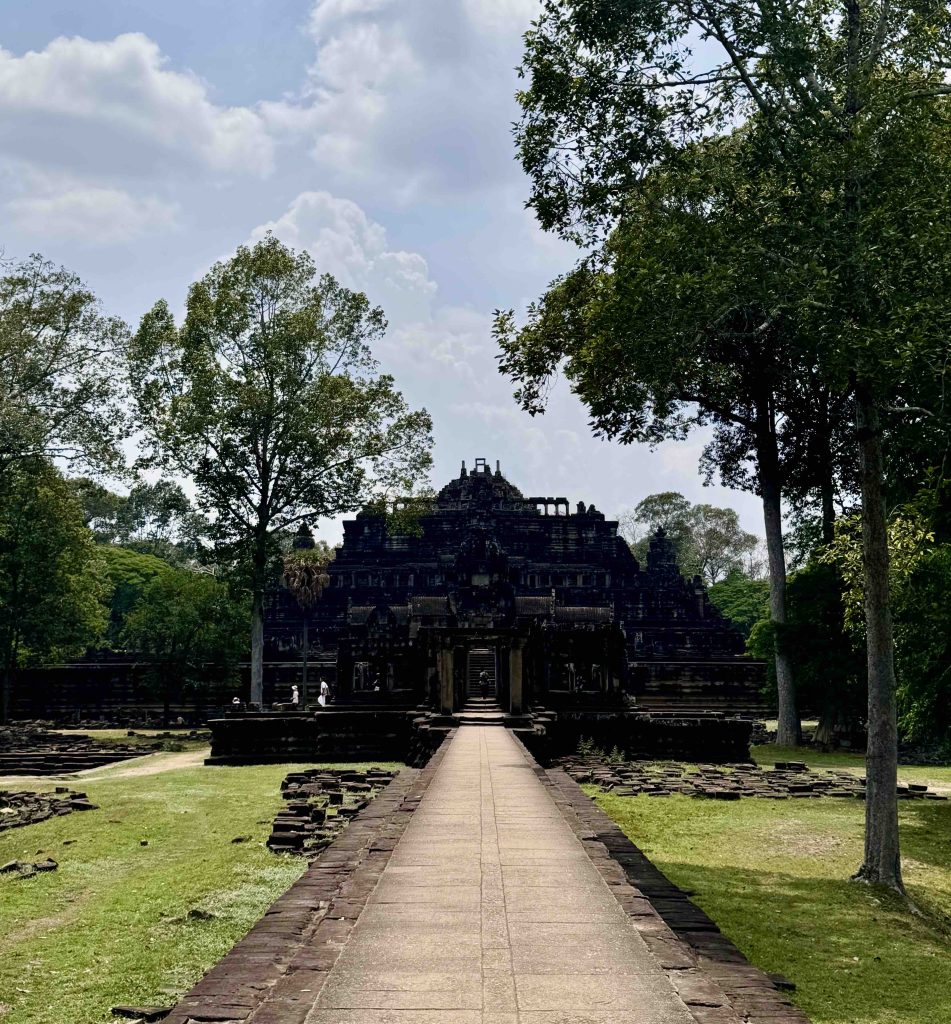
Often overshadowed by its more famous neighbours, Baphuon Temple is a hidden gem within Angkor Thom that rewards those who take the time to explore it. Once considered one of the grandest temples of the Khmer Empire, this 11th century structure in pyramid-style was dedicated to Hindu worship and later converted to a Buddhist temple.
Throughout the centuries, this temple suffered significant damages, but luckily it has been restored. Nowadays it can be visited again. One of the highlights of the temple is themassive reclining Buddha that can be found in the western wall. From its summit, the emerald canopy of the Angkor complex sprawls endlessly, offering one of the most amazing perspectives of Angkor Archeological Park.
Baphuon Temple
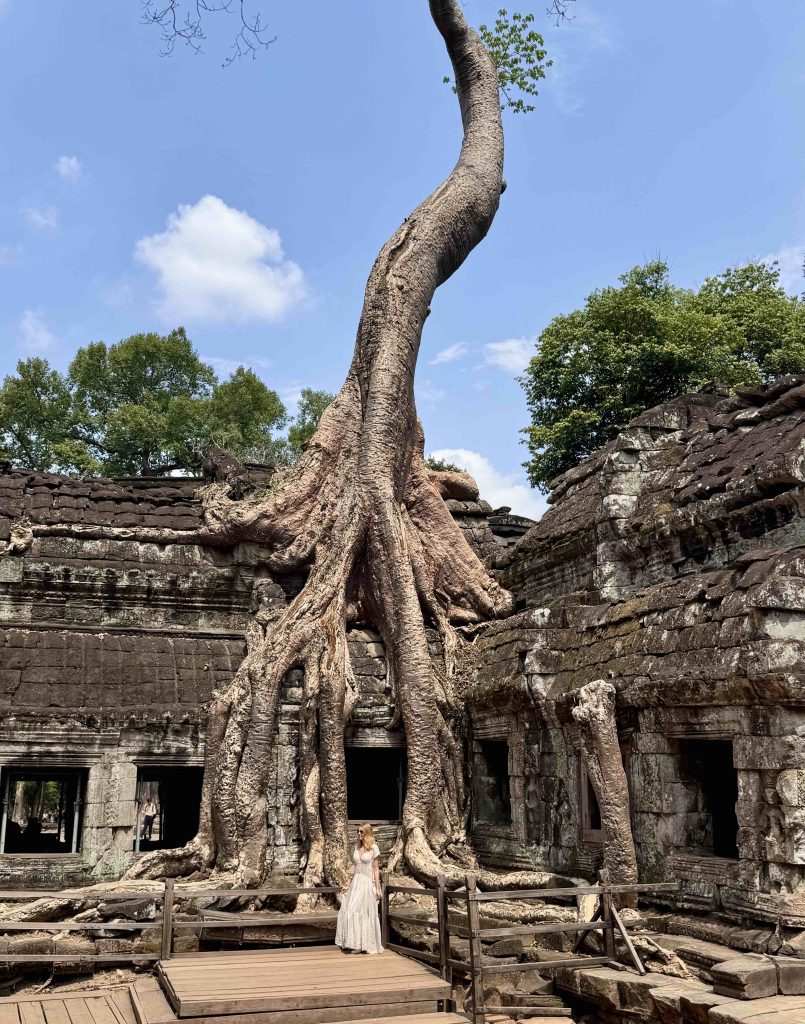
Nestled in mystery and tangled in the roots of towering trees, Ta Prohm is one of Angkor’s most atmospheric temples. It is a place where nature and ancient architecture exist in dramatic harmony. Built in the 12th century as a Buddhist temple dedicated to the mother of King Jayavarman VII, it was swallowed by the jungle throughout the centuries. It was only rediscovered by French explorers in the late 1800s.
Stepping into Ta Phrom feels like entering a lost world frozen in time. Hidden deep within the Angkor complex, it is also known as the Tomb Raider temple, after featuring in the famous movie. This jungle-clad sanctuary invites visitors into a cinematic world of crumbling stone walls, moss-covered carvings, and massive trees that have claimed the ruins over centuries. It creates an almost unreal scenery.
Ta Prohm, also known as Tomb Raider Temple
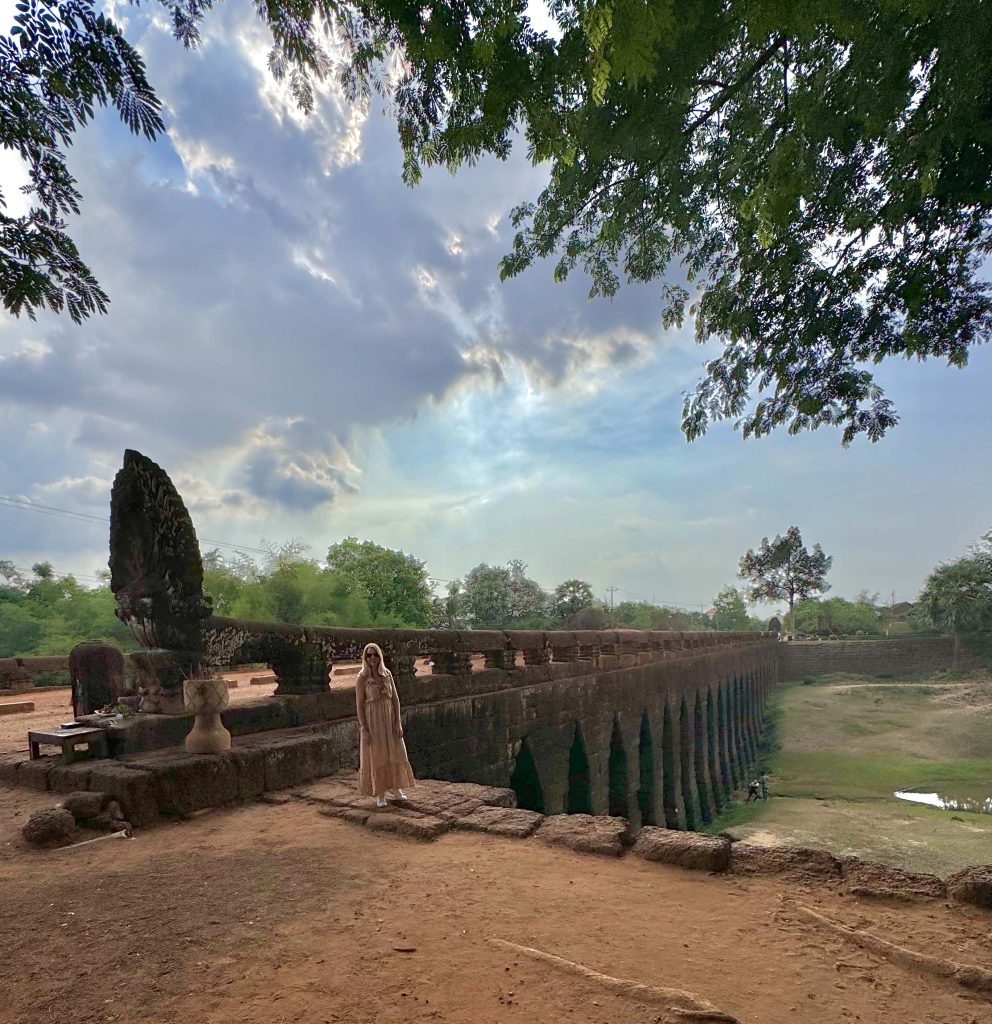
In the surroundings of Siem Reap, on the road from Phnom Penh, it’s also worth to stop by the historic Kampong Kdei Bridge with its impressive 21 narrow arches.Built during the reign of King Jayavarman VII, it used to be the longest cobbled stone-arch bridge in the world. Nowadays it is one of the longest surviving ancient bridges in Southeast Asia. This off-the-beaten-path gem also offers a glimpse into the engineering marvels of the Khmer Empire.
Kampong Kdei Bridge
In Siem Reap I stayed at Templation Angkor, a serene hideaway nestled in tropical gardens just minutes from Angkor, and I couldn’t be happier about my choice. This stunning resort offers sustainable luxury and tranquility in an oasis that is perfect to relax after exploring the surrounding temples and vibrant Siem Reap.
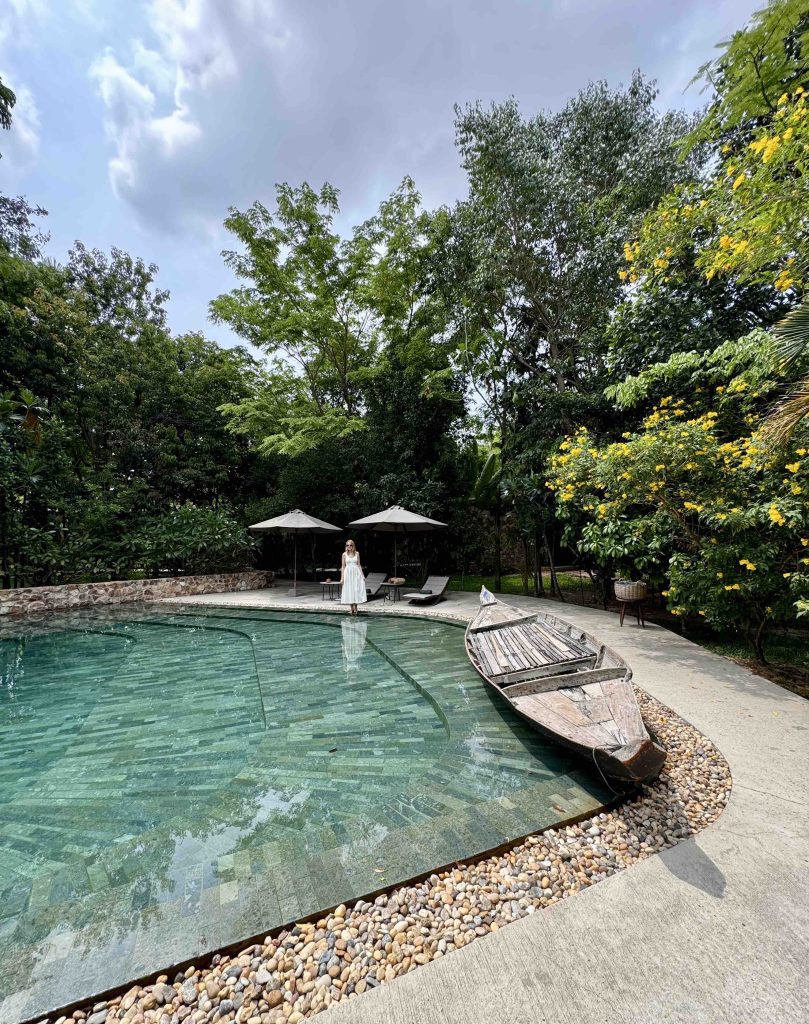
The main pool of the resort is one of the largest in the region, and it is beautifully designed as a secret lake, featuring a wooden boat and a floating sala. Only a few steps away is the open-air lounge and restaurant area, where you can enjoy delicious Khmer cuisine. There is also a spa and the Angkor Database Library with interesting books available to learn more about Khmer history and culture. Another detail that I loved about Templation Angkor was the lovely rabbit garden.
Templation Angkor swimming pool
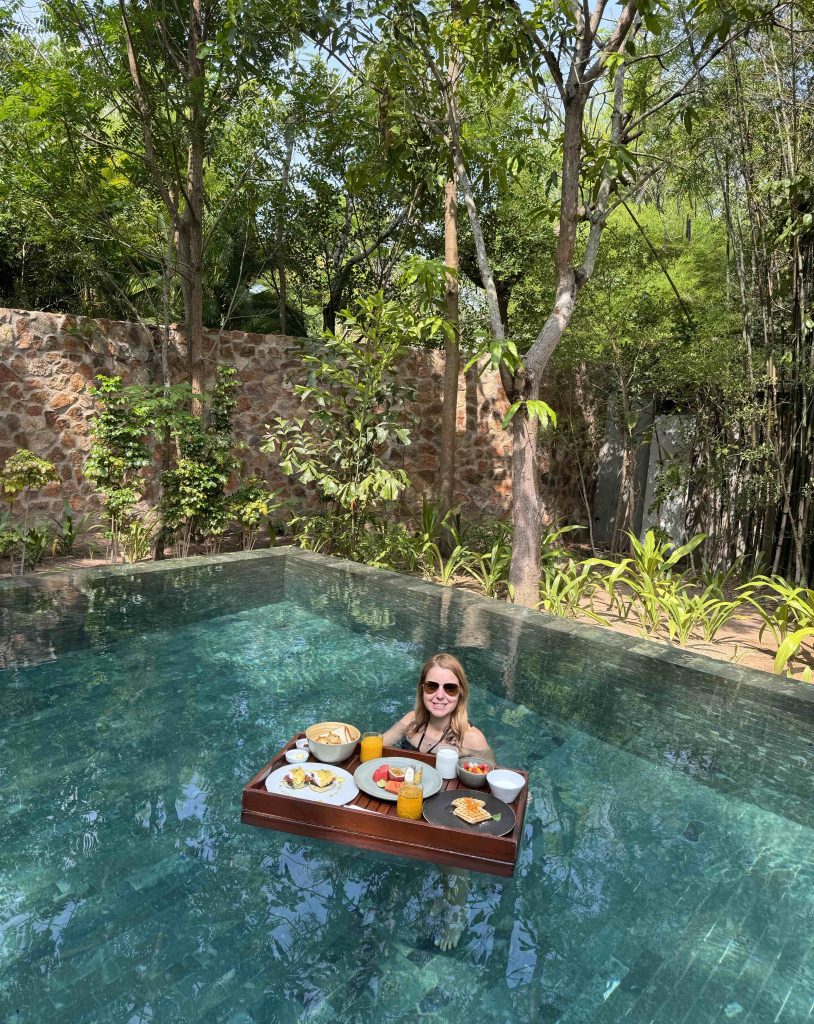
A highlight of the stay was my villa with a private pool, which was one of the most beautiful places I’ve ever stayed. This villa had two separate spaces for the bedroom and the living room, leading to a spacious terrace and a stunning private pool. The open-air bathroom with a bathtub was also incredible. After days filled with discoveries and unforgettable moments, enjoying a floating breakfast in the villa’s pool was the cherry on top of this dreamy stay.
Floating breakfast at Templation Angkor
Koh Rong Sanloem: Cambodia’s Lost Paradise by the Sea
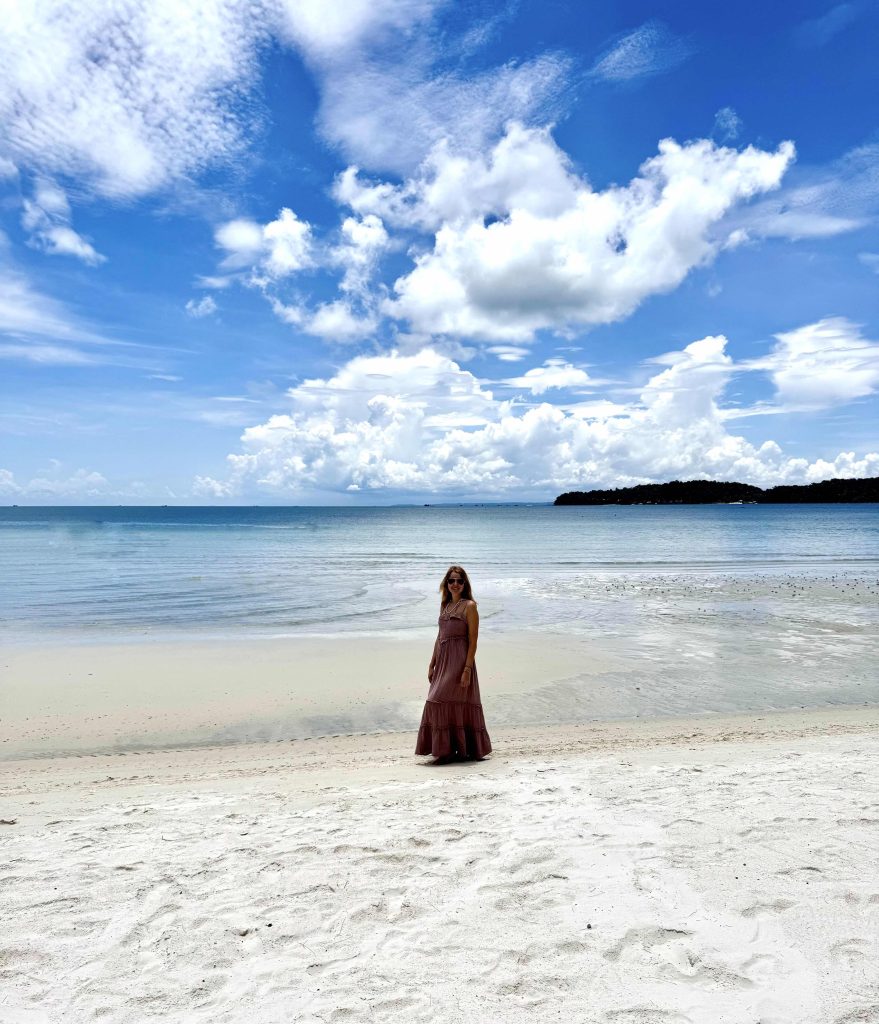
Did you know that Cambodia has some of the most secluded and beautiful beaches in South East Asia? Koh Rong Sanloem island in the southern coast of Cambodia is the perfect example of that, and it feels like a whispered secret. With powdery white sands, swaying palm trees and turquoise waters that stretch endlessly into the horizon, this island is the perfect definition of a tropical paradise.
Koh Rong Sanloem island
To get to Koh Rong Sanloem, you need to take a boat ride from Sihanoukville. It only takes 45 minutes to reach the island from the coast, leaving behind the mainland bustle for island tranquility. In Koh Rong Sanloem island there are no cars, rush or noise. You will find just barefoot paths, a daydream beach and a sky that lights up with stars every night.
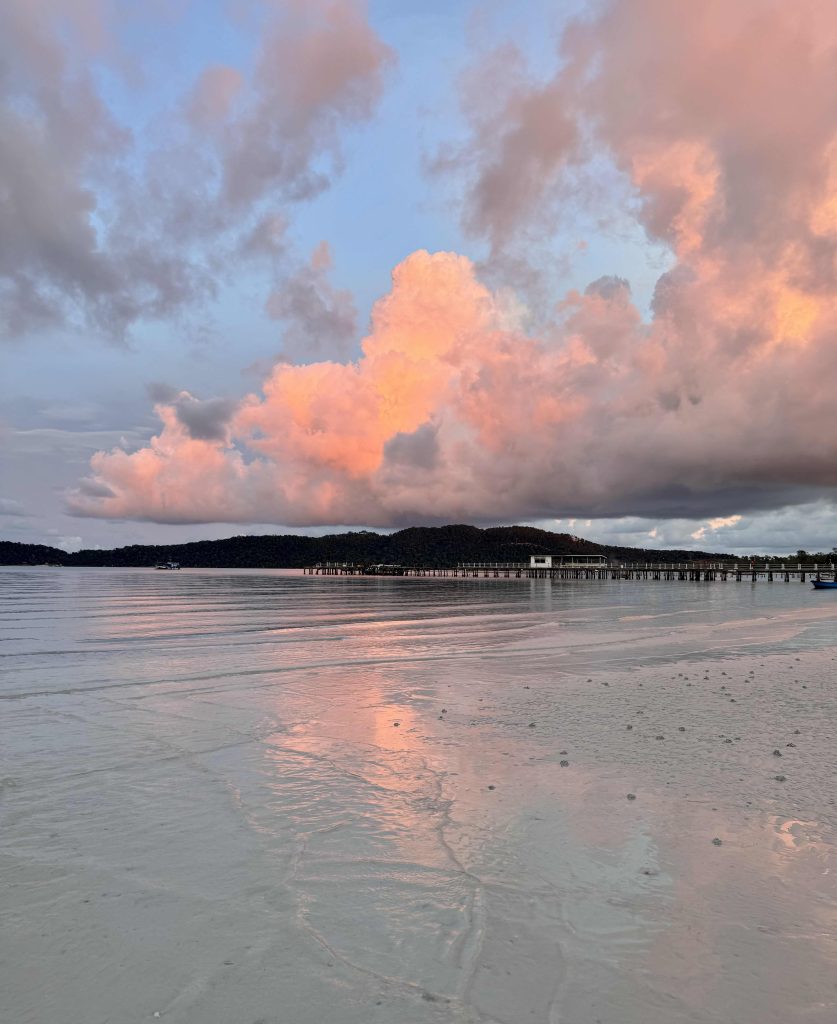
Many visitors arrive to Koh Rong Sanloem at Saracen Bay, where most of the accommodations are located. This beach stretches for 2,5 kilometres of white sand and shallow waters that are postcard-worthy, and it is the perfect place to stay based while enjoying the island.
Sunset at Saracen Bay
You can perfectly spend several days around Saracen Bay just unwinding and enjoying the perfect island escape. But from there you can also explore some other locations in the island like M-Pai fishing village, Sunset Beach that is famous for its golden hour, or Lazy Beach. Be aware that there are no roads in Koh Rong Sanloem, so all transportation is done by boat or by foot through trails in the jungle.
Sometimes you might also witness the island’s magical bioluminescent plankton, glowing like tiny stars in the water on moonless nights. There are boat tours available from Saracen Bay to see it.
I had the best time in Koh Rong Sanloem staying at Island Center Pointresort, perfectly located on a vast extension of beachfront and forest hill grounds, and offering the perfect balance between rustic charm, quiet luxury and comfort at the sea shore.
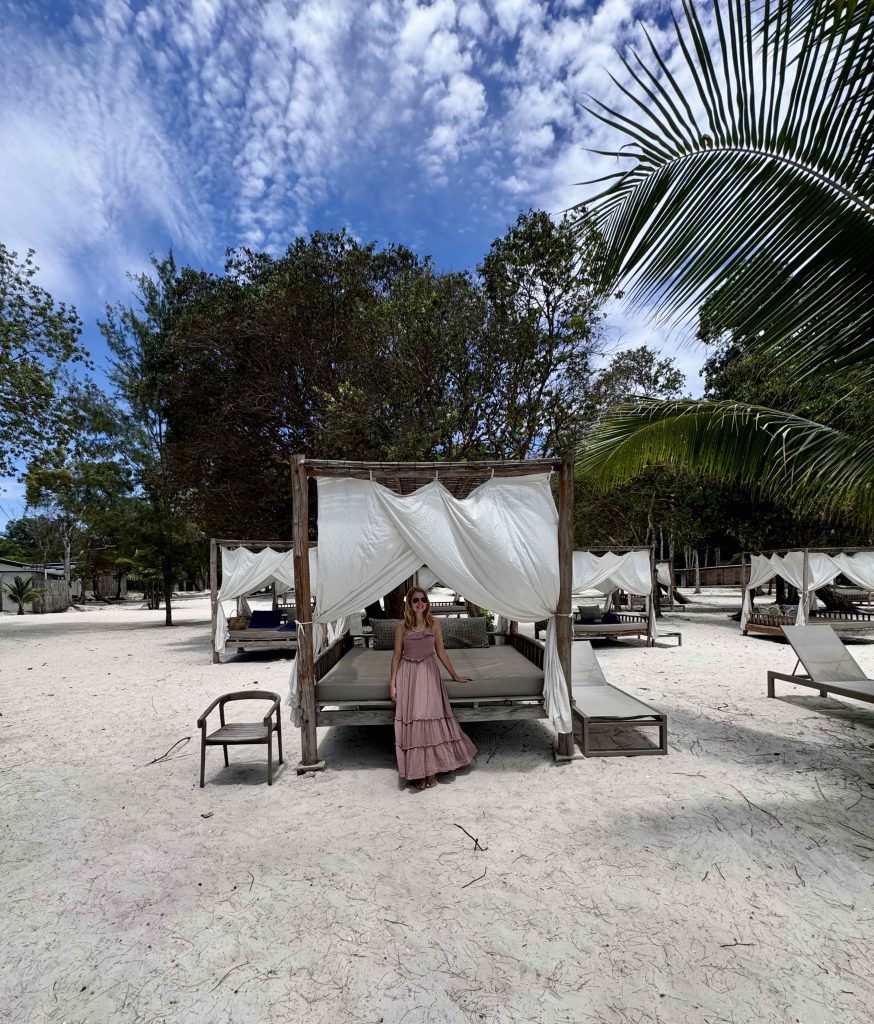
Beach area at Island Center Point
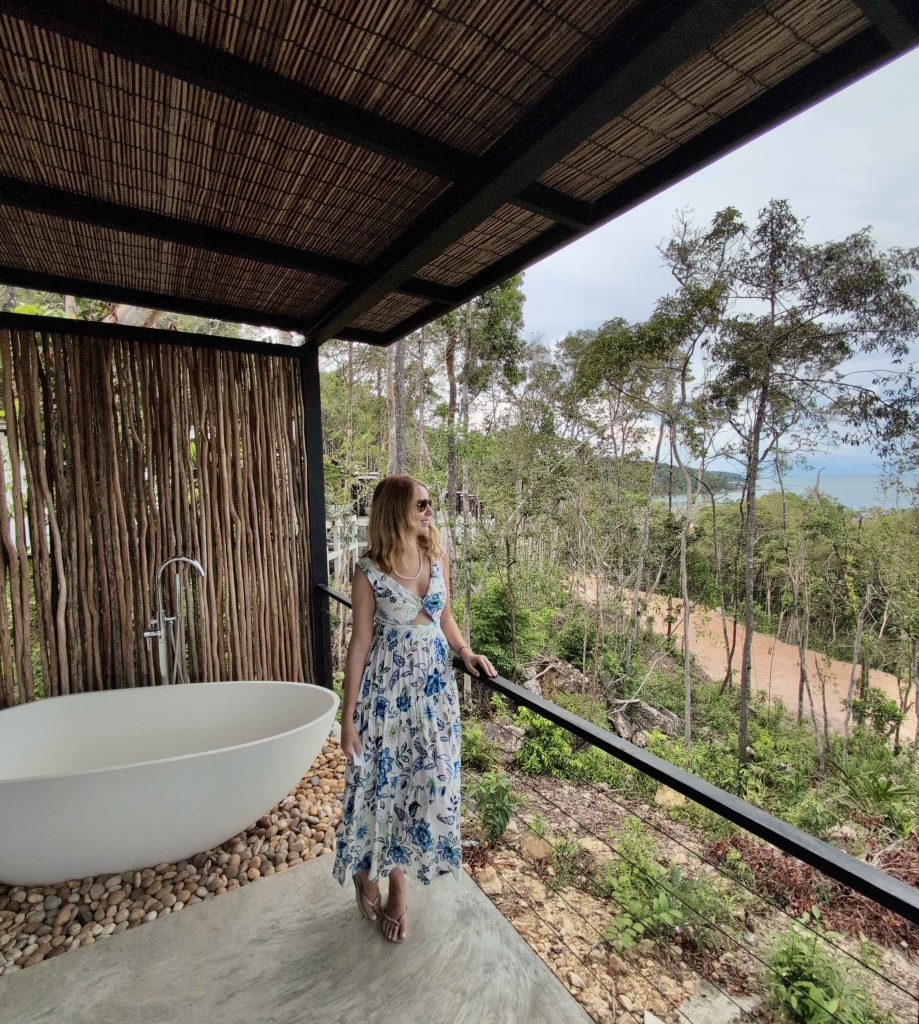
During my stay at Island Center Point, I enjoyed a beautiful and comfortable suite facing the ocean and literally just steps down from the beach and the pristine waters. One of things I loved about my suite was the open-to-the-sky bathtub, ideal for a bubble bath moment. I also had the opportunity to visit the brand new hillside suites with stunning views over the bay and the tree tops, only a short walk away from the beach through the native forest.
The views from the hillside suites at Island Center Point
I had the best time at Island Center Point swimming in the crystal clear waters, relaxing in the beachfront cabanas, or simply walking along the beach. At the resort there is a leisure center with different activities available like paddle boarding, jungle treks or yoga, as well as a spa. In its restaurant you can have a tasty breakfast with sea views and try the delicious local cuisine at dinner time.
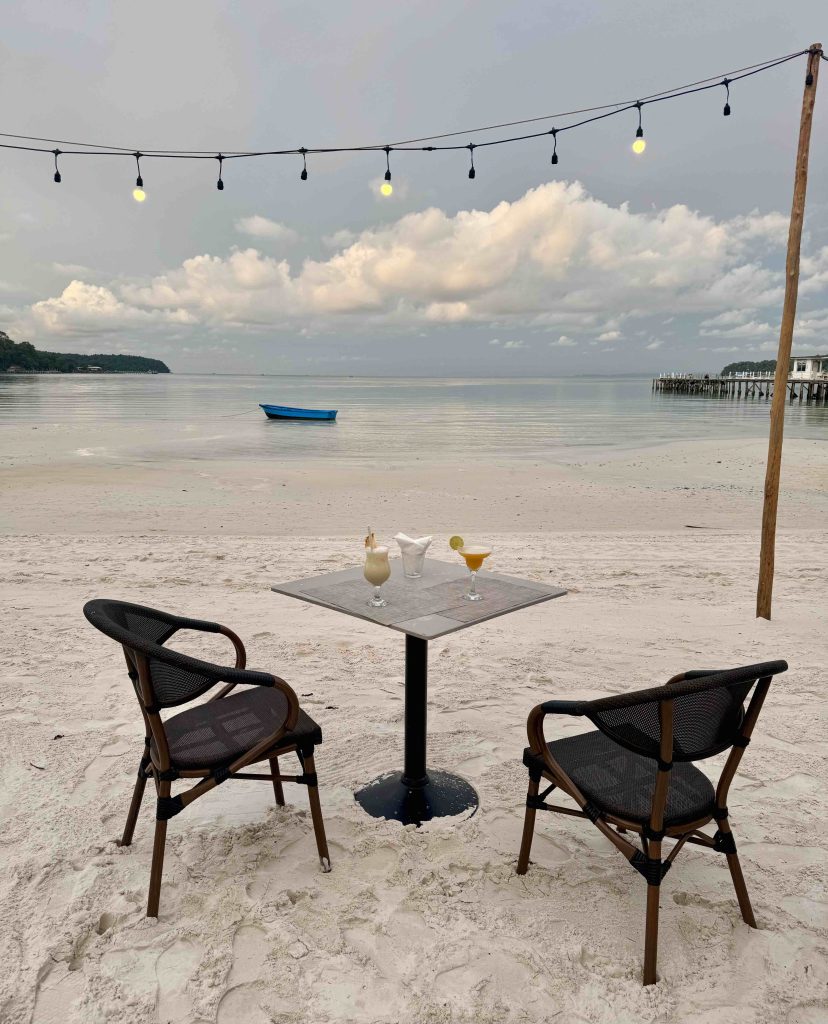
I recommend enjoying the magical sunsets of the island at the beach bar and having a cocktail during the happy hour. For a more exclusive experience, you can even have a romantic private dinner at the beach.
Happy hour at Island Center Point
From May to September, you can enjoy the Go Green Season at Island Center Point with special offers available at their website using the code ICPGREEN2025. This is a great way to enjoy this paradise, which at that time of the year will be greener and quieter.
Koh Rong Sanloem island ad Island Center Point resort offer a perfect sense of escape. In a world that moves sometimes too fast, this island invites to pause, breathe and simply enjoy the beauty and quietness of the simple moments in life.
This website uses cookies to improve your experience. We'll assume you're ok with this, but you can opt-out if you wish. Cookie settingsACCEPT
Privacy & Cookies Policy
Privacy Overview
This website uses cookies to improve your experience while you navigate through the website. Out of these cookies, the cookies that are categorized as necessary are stored on your browser as they are essential for the working of basic functionalities of the website. We also use third-party cookies that help us analyze and understand how you use this website. These cookies will be stored in your browser only with your consent. You also have the option to opt-out of these cookies. But opting out of some of these cookies may have an effect on your browsing experience.
Necessary cookies are absolutely essential for the website to function properly. This category only includes cookies that ensures basic functionalities and security features of the website. These cookies do not store any personal information.
Any cookies that may not be particularly necessary for the website to function and is used specifically to collect user personal data via analytics, ads, other embedded contents are termed as non-necessary cookies. It is mandatory to procure user consent prior to running these cookies on your website.