Explore Granada, Spain: 10 Unforgettable Places to Visit
Explore Granada, Spain: 10 Unforgettable Places to Visit
Explore Granada, Spain10 Unforgettable Places to Visit
Nestled at the foot of Sierra Nevada mountains, Granada is undoubtedly one of the most captivating destinations in Spain. Known for its vibrant history and culture, its rich Moorish heritage and architecture, and breathtaking views, this Andalusian city captivated me since the moment I arrived. I had an incredible long weekend getaway there last summer, so I want to share my guide to explore Granada in Spain and 10 unforgettable places to visit.
Whether you’re wandering through ancient streets or admiring world-famous landmarks, Granada offers an unforgettable travel experience. From the iconic Alhambra to the whitewashed alleys of Albaicín neighbourhood. From the panoramic viewpoints to its flamenco tradition, delicious tapas culture and lively city centre. Every corner in Granada tells a story and reflects the city’s layered past shaped by multiple influences throughout the centuries.
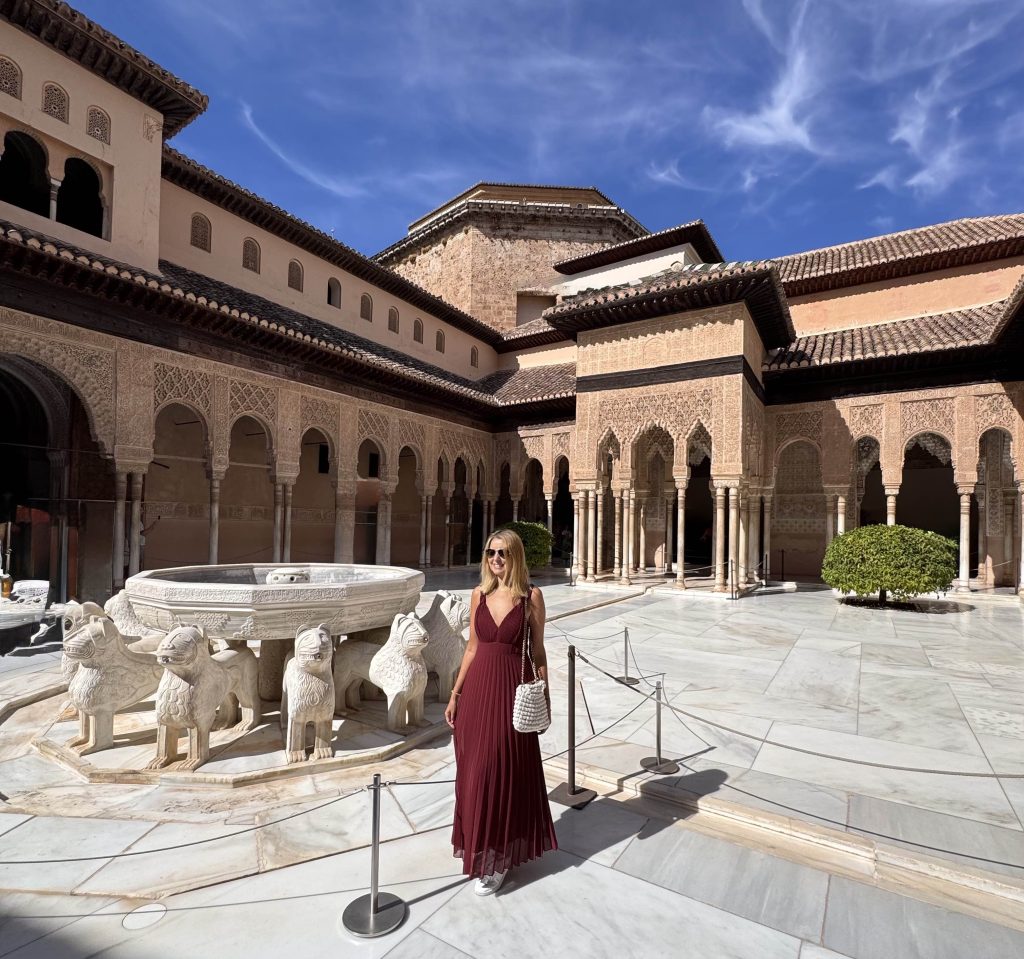
Court of the Lions in Nasrid Palaces, Alhambra
Its location at the heart of Spain in the beautiful Andalucia region, makes it an ideal destination for a roadtrip. You can easily combine it with other places like the nearby mountain range Sierra Nevada, atmospheric cities like Cordoba, Sevilla or Ronda, whitewashed villages like Zahara de la Sierra or Seteneil de las Bodegas, or coastal towns like Malaga or Nerja.
In this travel guide to explore Granada in Spain, you will discover 10 best places to visit, must-see attractions, and practical tips to help you plan your trip. Whether it’s your first visit or a return to this magical city, I hope these words invite you to fully embrace a city which will leave for sure a lasting impression.
Alhambra
Visiting Alhambra is one of the most unforgettable experiences in Granada. It was in my bucket list for a long and it just exceeded my expectations, being one of the most impressive monument complexes I’ve ever visited.
Perched above the city, this UNESCO World Heritage Site stands as a remarkable testimony of the Nasrid Kingdom, the last Muslim rulers in Spain before the Christian reconquest in 1492. Its origins date back to the 9th century as a fortress, but it became the royal residence and court of Granada in the mid-13th century. It is worldwide famous for its intricate world of palaces, courtyards, gardens and defensive walls that reflect the artistic and intellectual peak of the Nasrid period.
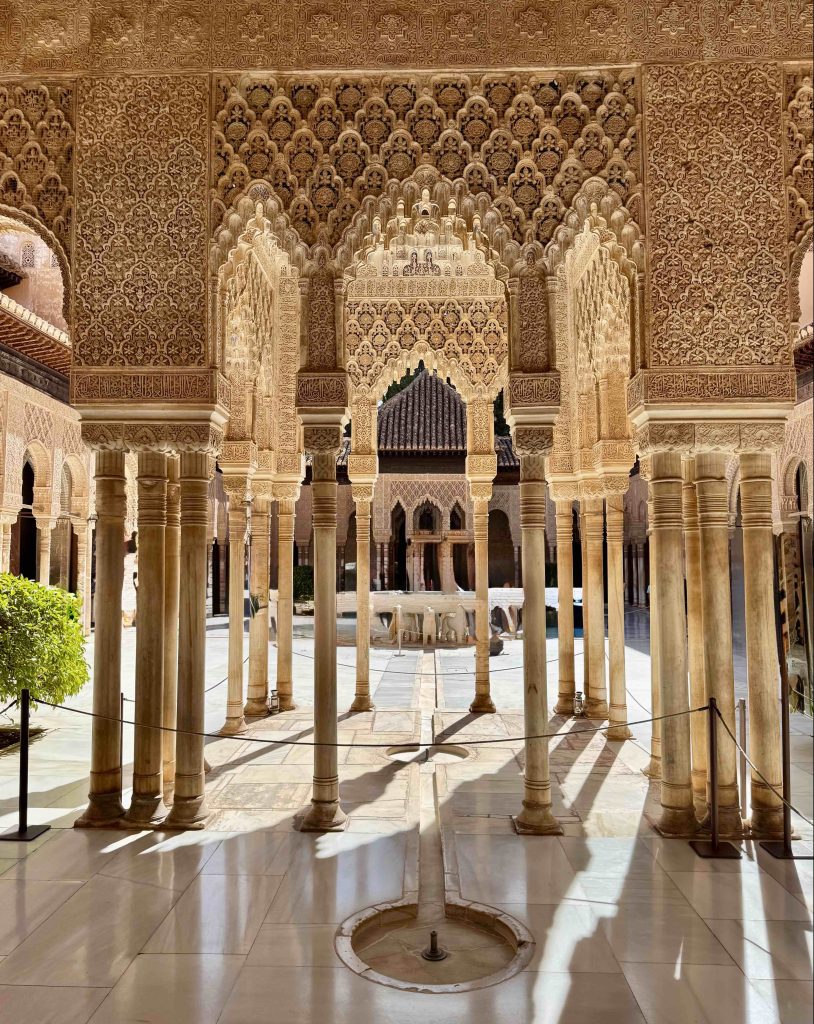
At the heart of the complex, the breathtaking Nasrid Palaces are the highlight of any visit. Here, delicate stucco work, detailed tile patterns and Arabic inscriptions cover nearly every surface, creating spaces that feel almost too perfect to be real. The famous courtyards, like the Court of the Lions, showcase a harmony of light, water and geometry.
Nasrid Palaces
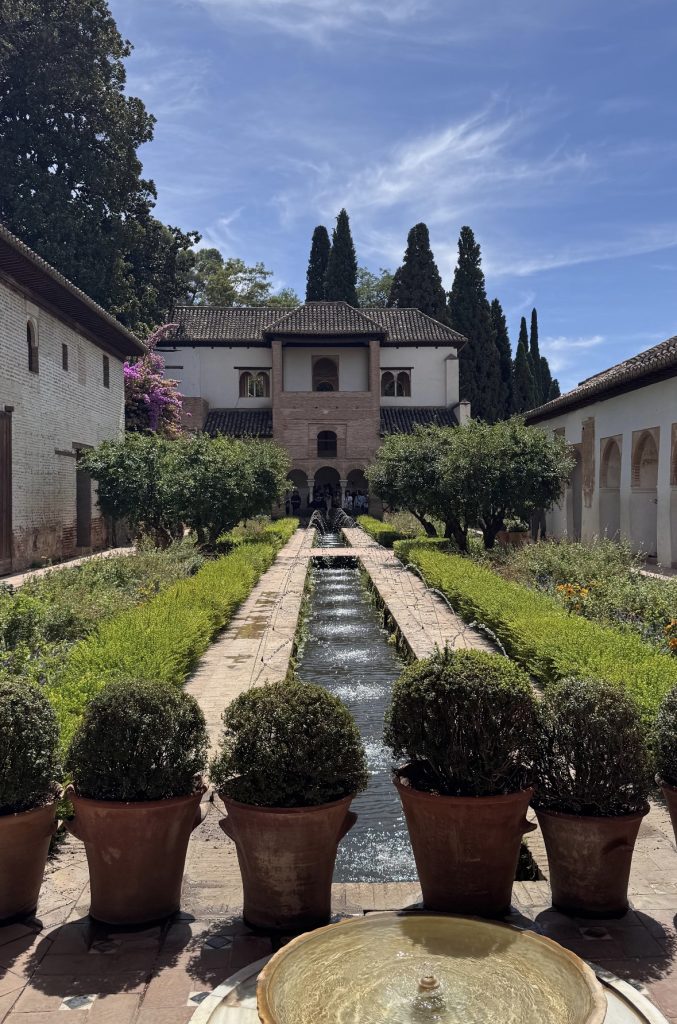
Just beyond, Generalife offers a completely different atmosphere. Once the summer residence of the Nasrid rulers, these lush gardens are filled with fountains, shaded walkways and perfectly manicured greenery, providing a peaceful escape from the grandeur of the palaces.
Generalife
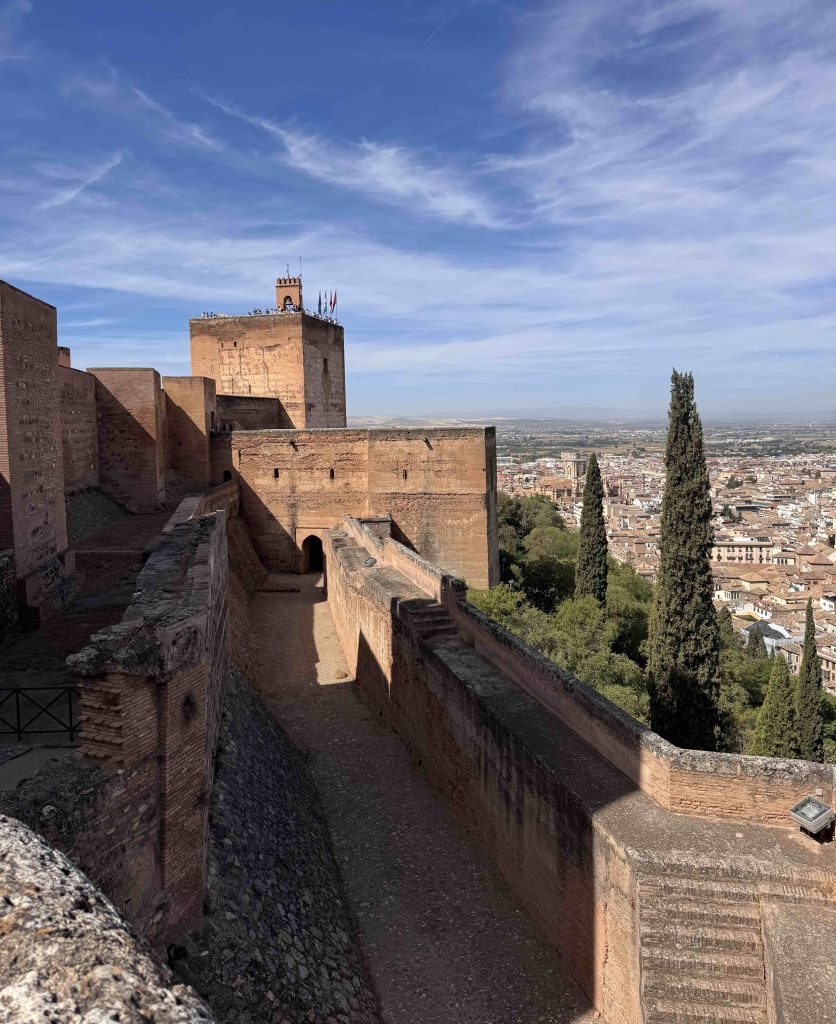
The imposing Alcazaba is the oldest part of Alhambra complex and it served as a military fortress and citadel, with its ancient towers and ramparts offering some of the best panoramic views over Granada and the surrounding landscape.
Alcazaba
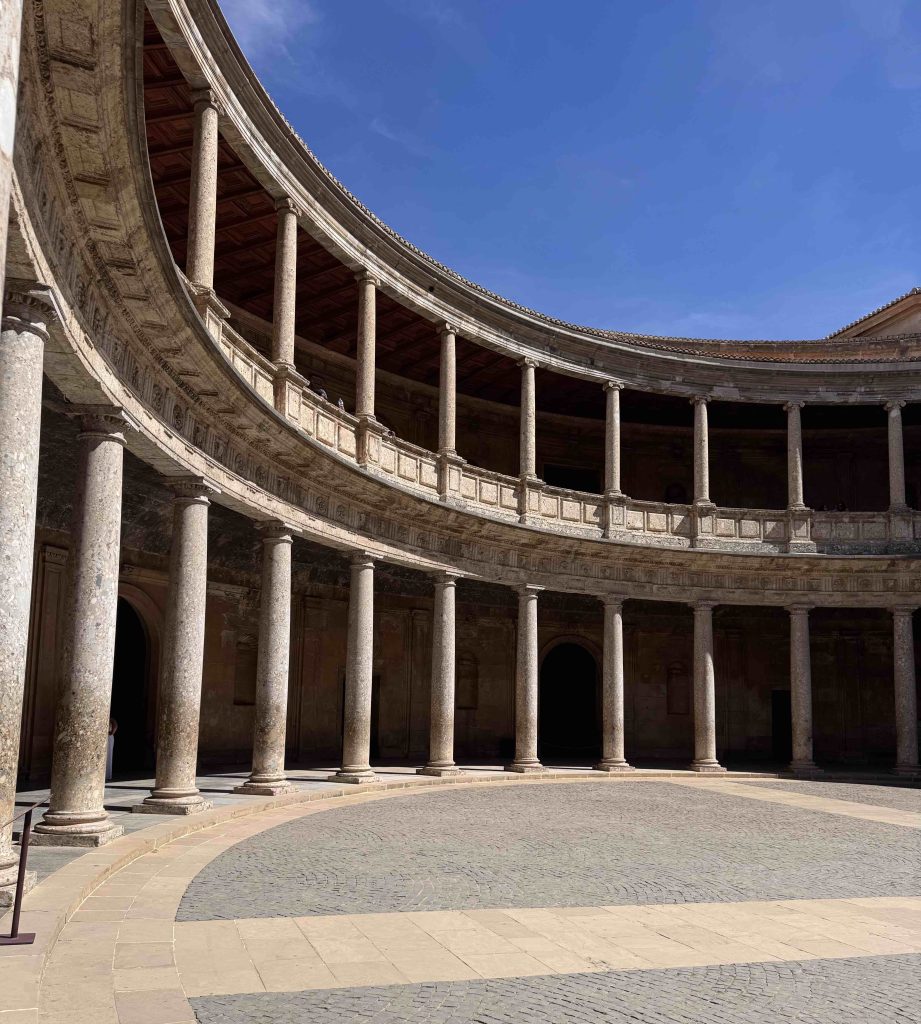
Last but not least, Charles V Palace was built after the Christian Reconquest in Renaissance style. Its bold, circular courtyard contrasts to the delicate Nasrid architecture, symbolizing the cultural transition that shaped Granada’s history.
Due to the immense popularity of Alhambra, it’s essential to buy tickets well in advance, especially for the Nasrid Palaces, which have strict timed entry slots. Planning ahead ensures you can fully experience this extraordinary place.
Charles V Palace
Albaicín
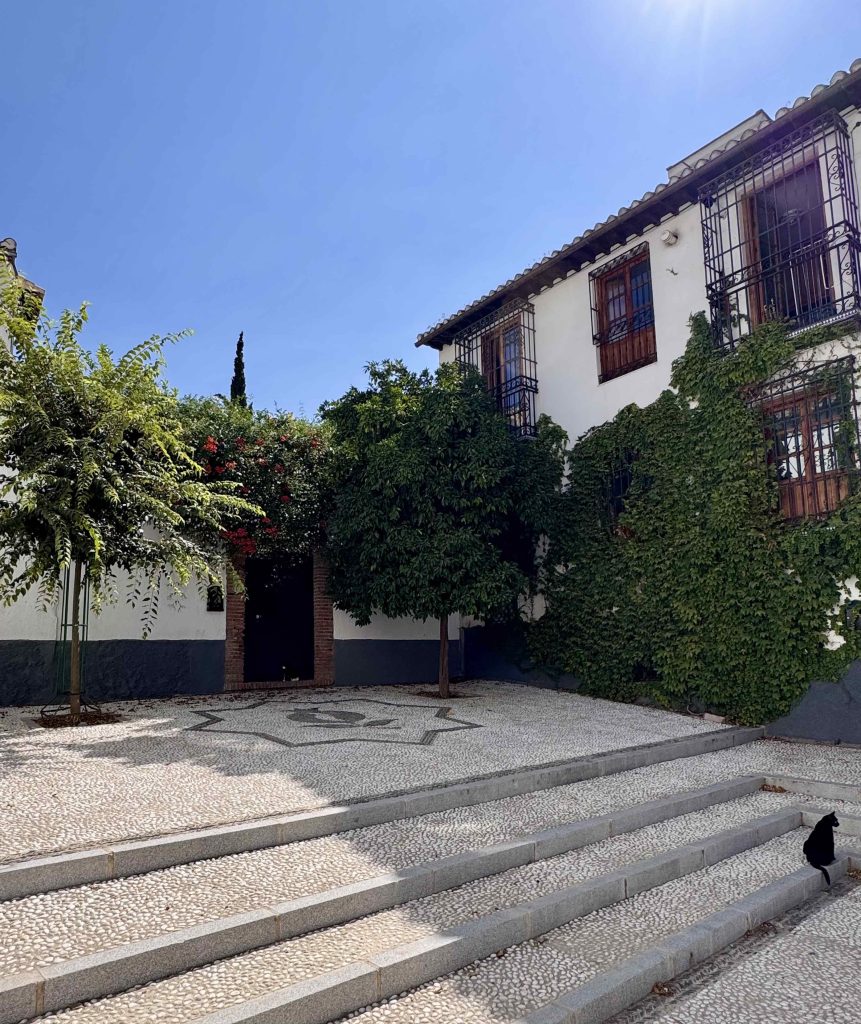
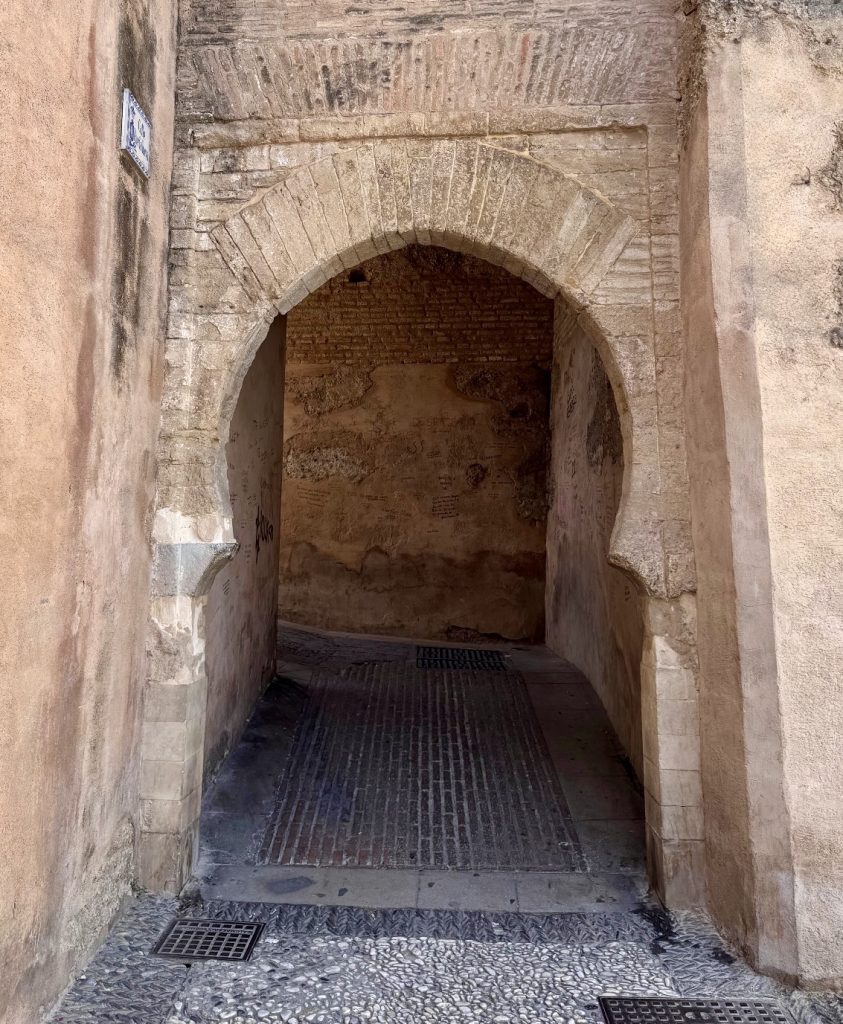
Perched on a hill opposite the Alhambra, Albaicín is the oldest and the most atmospheric neighbourhood in the city. This UNESCO-listed quarter preserves the essence of Granada’s Moorish past, with its labyrinth of narrow cobbled streets, whitewashed houses and hidden courtyards.
While exploring Albaicín, be prepared for steep, uneven cobblestone streets and many staircases. But I assure it’s totally worth it. Walking through Albaicín feels like stepping back in time, where every corner reveals a new viewpoint, a quiet square or a glimpse of the Alhambra rising above the trees. Beyond its beauty, Albaicín carries a deep cultural and historical significance and it still reflects centuries of Arab influence in Granada’s urban layout and architecture.
Albaicín
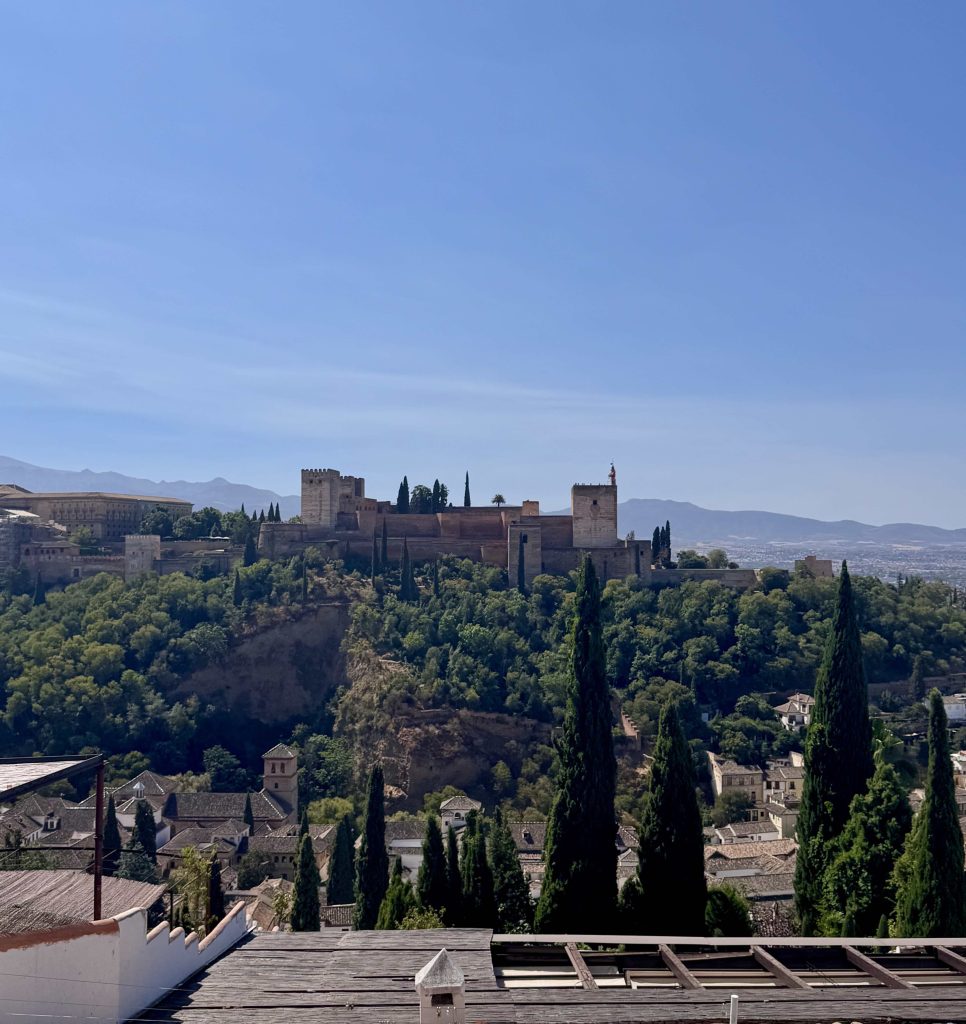
A short climb above the neighbourhood leads to the Mirador de San Miguel Alto, one of the highest and most breathtaking viewpoints in Granada. From here, the city stretches out in every direction, with the Albaicín’s rooftops, the majestic Alhambra, and the peaks of the Sierra Nevada forming a spectacular panorama. Unlike the most popular viewpoints, this spot feels wilder and more local.
Albaicín
San Nicolás Viewpoint
No visit to Granada is complete before admiring the views from Mirador San Nicolás. Located at the heart of Albaicín, San Nicolás is the most famous viewpoint in the city and it’s easy to understand why. From this elevated spot, visitors are rewarded with breathtaking panoramic views of the Alhambra set against the dramatic backdrop of Sierra Nevada.
It’s worth to visit San Nicolás viewpoint at any time of the day, but at sunset it gets particularly magical. As the sun begins to set, the square fills with musicians, travelers and locals waiting for the exact moment when Alhambra is bathed in golden light. Its central location in Albaicín makes it an easy and rewarding stop while wandering through the neighbourhoods narrow, whitewashed streets.
San Nicolás Viewpoint
Dar al-Horra Palace
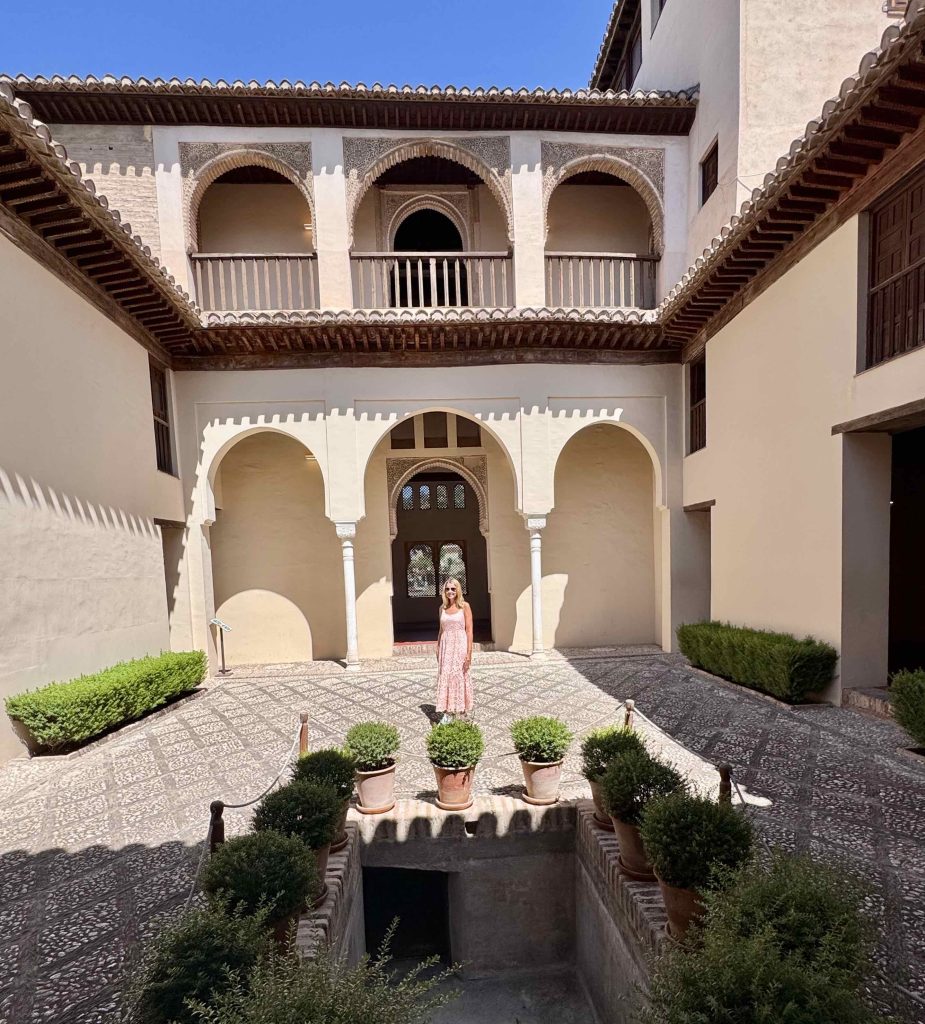
Dating back to the 15th century, Dar al-Horra Palace is one of the best examples of Nasrid palatial architecture outside the walls of Alhambra. Located in the upper part of Albaicín, this is one of Granada’s most atmospheric hidden gems and a must visit in the city. It used to be an elegant Nasrid residence and its name means “House of the Honest Lady,” referring to the mother of Boabdil, the last Nasrid ruler of Granada, who is believed to have lived there.
Dar al-Horra Palace
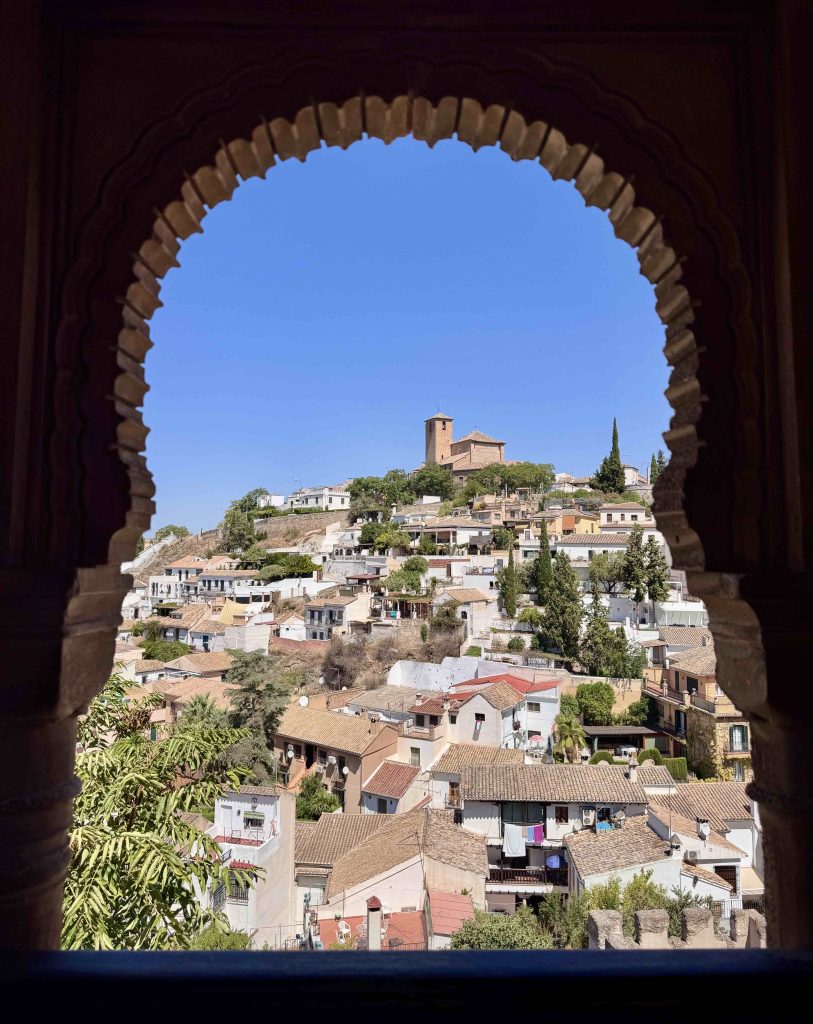
Dar al-Horra Palace offers a glimpse into the city’s Moorish past and it perfectly showcases the refined architectural style of the Nasrid period with a harmonious courtyard, delicate arches and intricate decorative details. From its upper levels, the views are incredible spreading as much as the eye can see over the Albaicín rooftops and across to Alhambra itself, with the Sierra Nevada rising in the distance.
Views from Dar al-Horra Palace
El Bañuelo
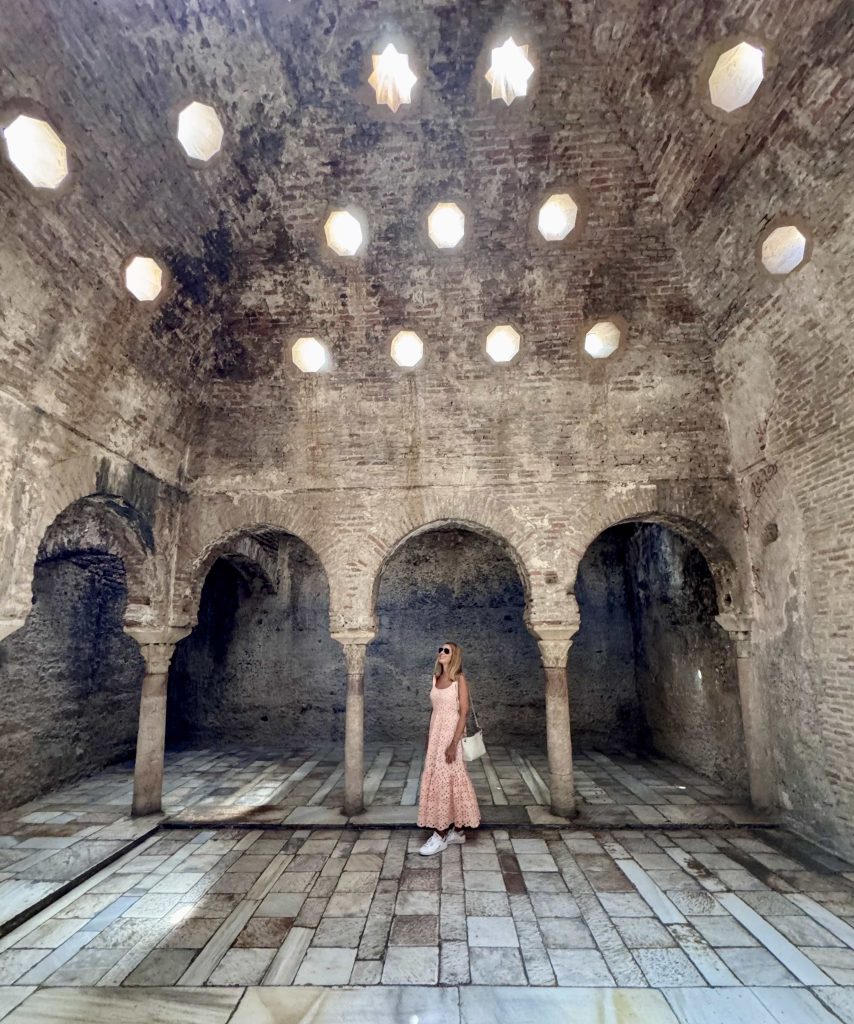
One of the places that impressed me the most in Granada was El Bañuelo, one of the oldest and best preserved hammans (Arab baths) in Spain. Located at the foot of Albaicín neighbourhood in the scenic Carrera del Duque, it was built in the 11th century during the Zirid period, being also the oldest building in the city.
Stepping inside El Bañuelo feels like entering another era, when public baths were an essential part of social and cultural routines. Its beautifully preserved rooms feature horseshoe arches, brick vaults, and star-shaped skylights that filter soft light into the space, creating a serene and almost mystical atmosphere. Unlike many similar structures that were destroyed throughout the centuries, El Bañuelo survived largely intact, making it a rare architectural treasure.
El Bañuelo
Carrera del Darro
One of the most beautiful streets in Granada, and even in Spain, is Carrera del Darro. At the shores of Darro river, this cobbled street stretches from Plaza Nueva to Paseo de los Tristes connecting Albaicín district with Alhambra.
Lined with buildings from the 16th and the 17th centuries, houses in Arab style and picturesque bridges, it features famous spots like the Archaeological Museum of Granada, the Church of Saint Peter and Saint Paul, and El Bañuelo.
Don’t miss a scenic stroll by this charming street, that gets particular magical at sunset. You can stop in one of its numerous cafes, restaurants or small shops for a short break.
City Centre
If the atmospheric and historic neighbourhoods of Granada are undoubtedly its soul, the lively and buzzing city center can be considered its heart. In this area of the city you can find elegant boulevards, bustling squares and hidden alleys pulsing with energy from morning to late into the night.
You can start your visit to the city centre by Plaza Nueva, the oldest, busiest and most central public square. It is lined up by 16th century buildings and lovely terraces which are ideal to try the delicious traditional gastronomy, while embracing the vibrant lifestyle of Granada. In the surrounding area you will find typical streets and alleyways offering diverse options of restaurants, cafes and shops.
Stroll along the Gran Vía de Colón avenue with its historic facades, or loose yourself in the maze of streets around Calle Elvira, famous for its Arabian-style teahouses, Moorish handicraft shops, traditional tapas bars and picturesque architecture.
Street in the city centre of Granada
Granada Cathedral
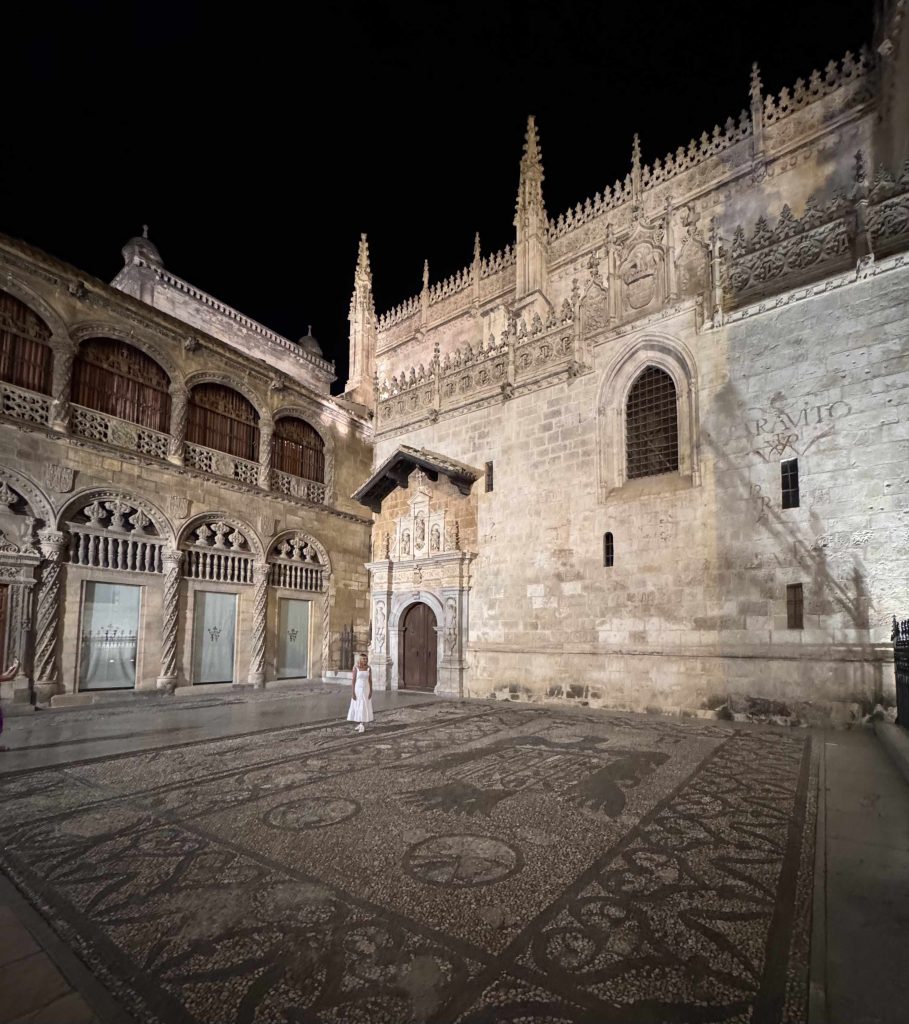
Just a short walk away from the bustling Plaza Nueva, Granada Cathedral stands as one of the city’s most impressive landmarks. It began being built in the early 16th century under the rule of the Catholic Monarchs, symbolising a new chapter in Granada’s history. The construction spanned throughout 181 years, and over time the cathedral evolved into a masterpiece of Spanish Renaissance architecture.
Inside, the atmosphere is serene and luminous, filled with natural light that enhances the soaring columns, elegant domes and harmonious proportions. The cathedral is adjacent to the Royal Chapel of Granada , where Queen Isabella and King Ferdinand are buried.
Granada Cathedral
La Alcaicería Market
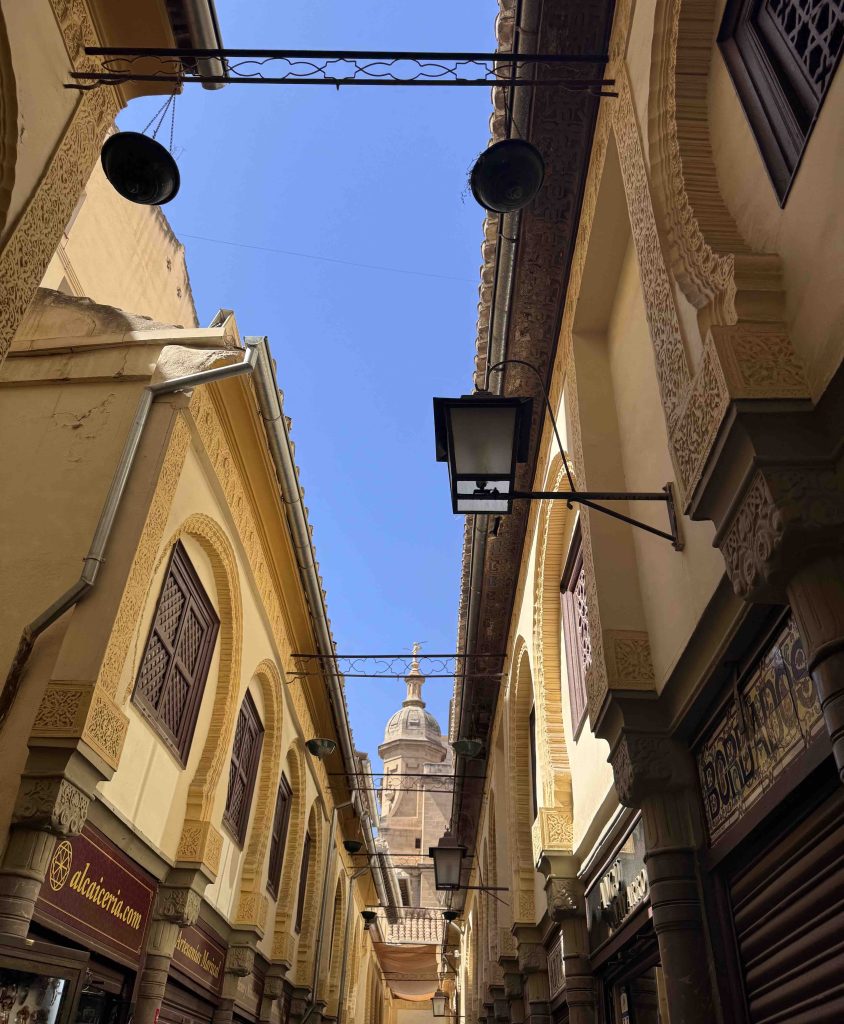
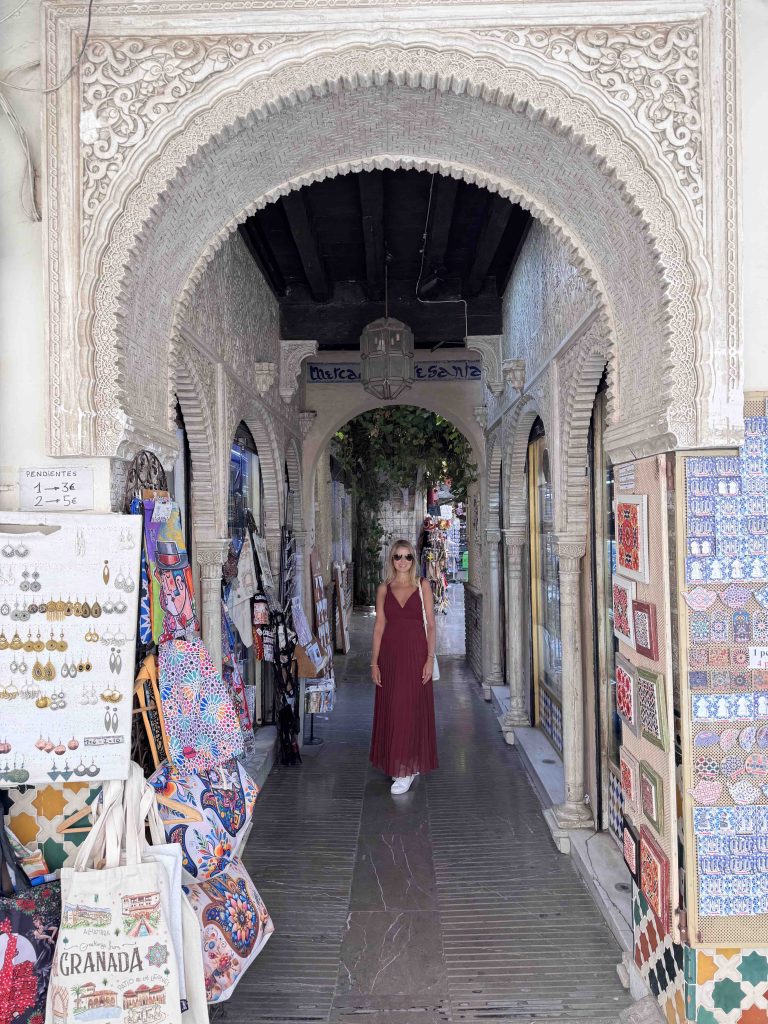
In Granada’s city centre, close to Granada Cathedral, La Alcaicería Market is a vibrant labyrinth of narrow streets that once formed the historic Moorish silk market. Dating back to the Nasrid period, in the 19th century most of the original structure was lost to a fire, but the market was rebuilt later, preserving its distinctive layout and character.
Nowadays La Alcaicería is a lively and colourful space, filled with small shops selling ceramics, textiles and traditional crafts. I’ve had a great time walking through its alleyways, surrounded by colourful and intricate patterns and by the scent of spices and leather.
La Alcaicería Market
Sacromonte
Perched on Mount Valparaiso above Granada, right opposite the Alhambra, Sacromonte is one of the city’s most unique and culturally rich neighbourhoods. Its history is deeply intertwined with the cultural evolution of Granada after the Christian Reconquest. As Muslim and Jewish populations were displaced from the city centre, many went to the hills surrounding Granada. Later, Gipsy communities also settled in Sacromonte, transforming the area into a unique cultural enclave.
Walking through Sacromonte is like exploring an open-air museum with its distinctive cave dwellings carved into the hillside and whitewashed on the outside. It’s worth to visit the Sacromonte Caves Museum to have a better understanding of those unique caves where generations have preserved a deep-rooted cultural identity. Don’t miss in the area Sacromonte Abbey, built in the 17th century and hosting the relics of Saint Caecilius, the city’s patron saint. The views from the Abbey are incredible.
Nowadays, Sacromonte is the heart of Granada’s flamenco heritage. At night this district is alive with passionate performances unfolding in intimate cave venues. Here, the rhythm of guitar, song and dance feels raw and authentic, offering a powerful connection to the soul of Andalucia.
This website uses cookies to improve your experience. We'll assume you're ok with this, but you can opt-out if you wish. Cookie settingsACCEPT
Privacy & Cookies Policy
Privacy Overview
This website uses cookies to improve your experience while you navigate through the website. Out of these cookies, the cookies that are categorized as necessary are stored on your browser as they are essential for the working of basic functionalities of the website. We also use third-party cookies that help us analyze and understand how you use this website. These cookies will be stored in your browser only with your consent. You also have the option to opt-out of these cookies. But opting out of some of these cookies may have an effect on your browsing experience.
Necessary cookies are absolutely essential for the website to function properly. This category only includes cookies that ensures basic functionalities and security features of the website. These cookies do not store any personal information.
Any cookies that may not be particularly necessary for the website to function and is used specifically to collect user personal data via analytics, ads, other embedded contents are termed as non-necessary cookies. It is mandatory to procure user consent prior to running these cookies on your website.