Japan Bucket List for First-Time Travelers
Japan Bucket List for First-Time Travelers
Japan Bucket List for First-Time Travelers. Writing these words still feels surreal. Visiting Japan was a lifelong dream of mine, and yet, nothing truly prepared me for how much it would exceed my expectations. From the moment I arrived, I realized Japan is not just a destination you visit, but one you experience deeply. A country where ultra-modern cities and ancient traditions coexist in the most fascinating and harmonious way.
During my trip to Japan, I explored some of the country’s most iconic places. From the electric energy of Tokyo, and the timeless beauty of Kyoto, to the unforgettable views of Mount Fuji, and the peaceful tradition-filled streets of Nara. Each place felt completely different, yet together they formed the perfect introduction to Japan — vibrant, cultural, surprising and deeply inspiring.
Planning a first trip to Japan can feel overwhelming. I felt it too — navigating transport, choosing where to go, and figuring out how to make the most of limited time. That’s exactly why I created this guide. Based on my own experience, this Japan bucket list for first-time travelers is designed to help you plan your trip with confidence, avoid unnecessary stress, and focus on what truly matters on your first journey to this extraordinary country.
Tokyo: a first-time guide to Japan’s vibrant capital
The first chapter of my Japan Bucket List for First-Time Travelers was Tokyo. Japan’s capital was my introduction to Japan, and it instantly set the tone for the entire journey. It’s a city of contrasts like no other. Futuristic skylines and neon lights exist side by side with quiet temples, traditional neighbourhoods and moments of unexpected calm. Tokyo can feel intense at first, but it’s also incredibly organized, safe and surprisingly easy to navigate once you settle in.
What makes Tokyo so special on a first trip to Japan is its ability to show you multiple sides of the country all at once. From fast-paced districts and cutting-edge technology to deeply rooted traditions, Tokyo prepares you for what’s to come while leaving you constantly curious and inspired.
Asakusa and Senso-ji temple
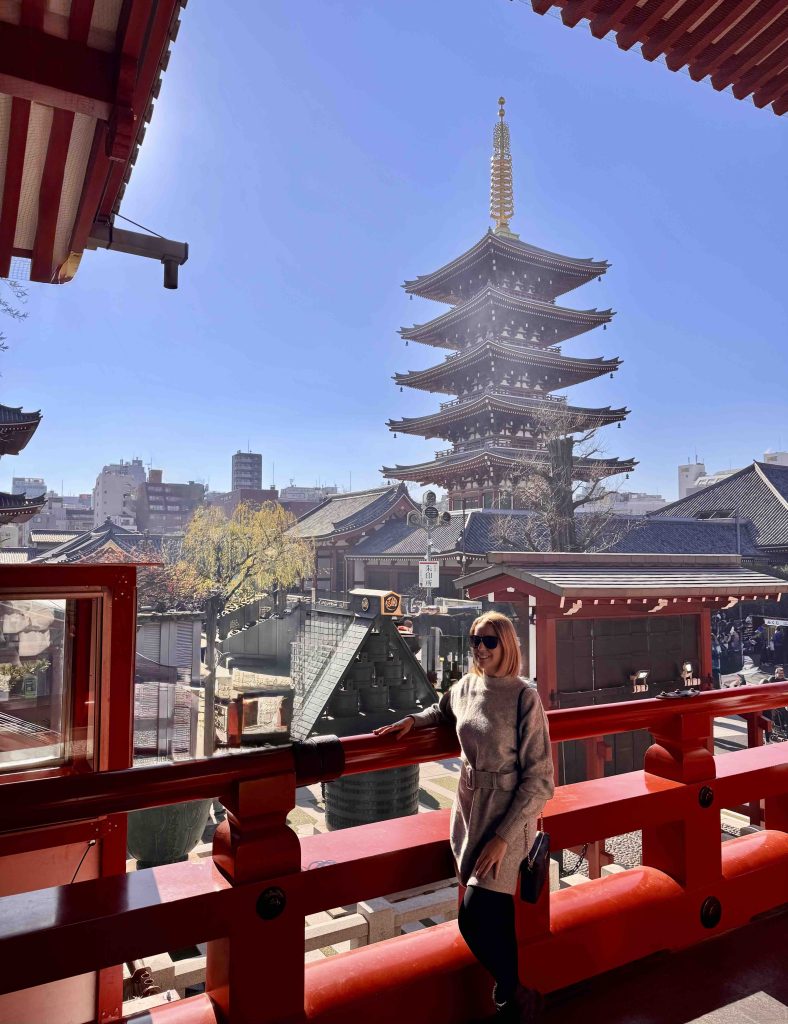
I recommend starting any visit to Tokyo by Asakusa area, often considered the city spiritual heart. It captures perfectly the essence of Japan’s traditions and culture. Asakusa is home to Senso-ji, Tokyo’s oldest Buddhist temple and one of the city’s most meaningful cultural landmarks. Founded in the 7th century, it is dedicated to Kannon, the goddess of mercy.
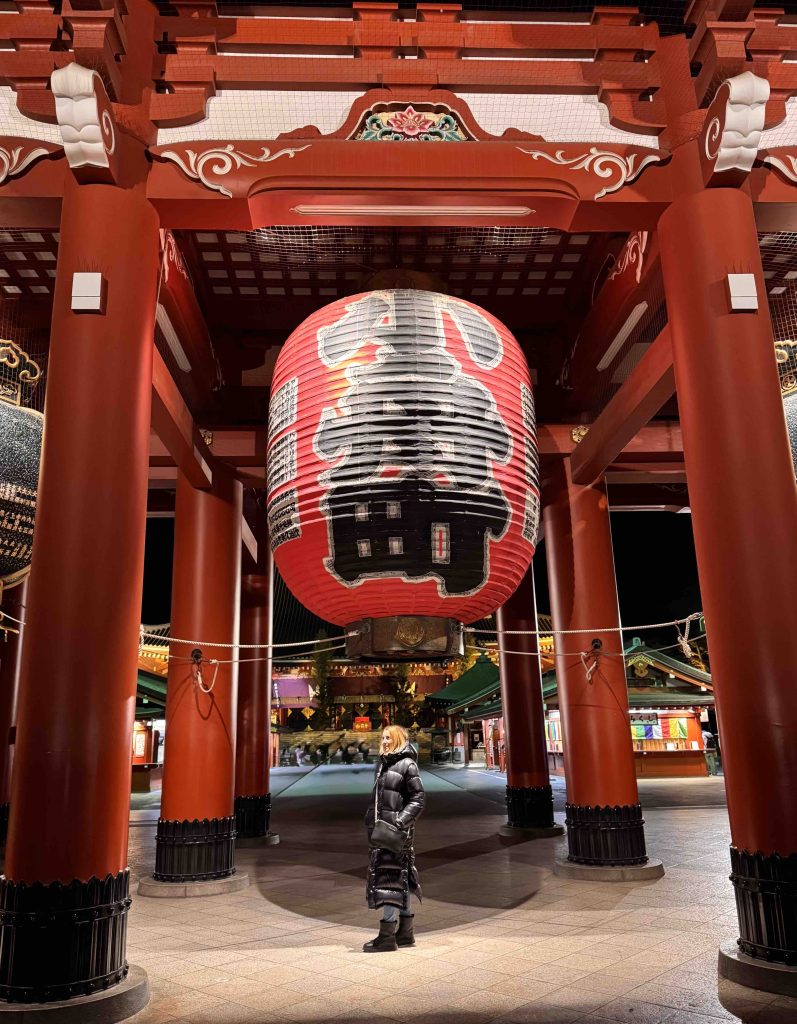
Entering through the iconic Kaminarimon Gate, with its massive red lantern, feels like stepping back in time. From there, Nakamise-dori, a lively market street lined with traditional stalls offering from beautifully crafted souvenirs to local snacks and centuries-old artisanal treats, leads the way to the temple. Adjacent to the main temple, it’s also worth to stop at Asakusa shrine, enshrining the fishermen who discovered the Kannon statue.
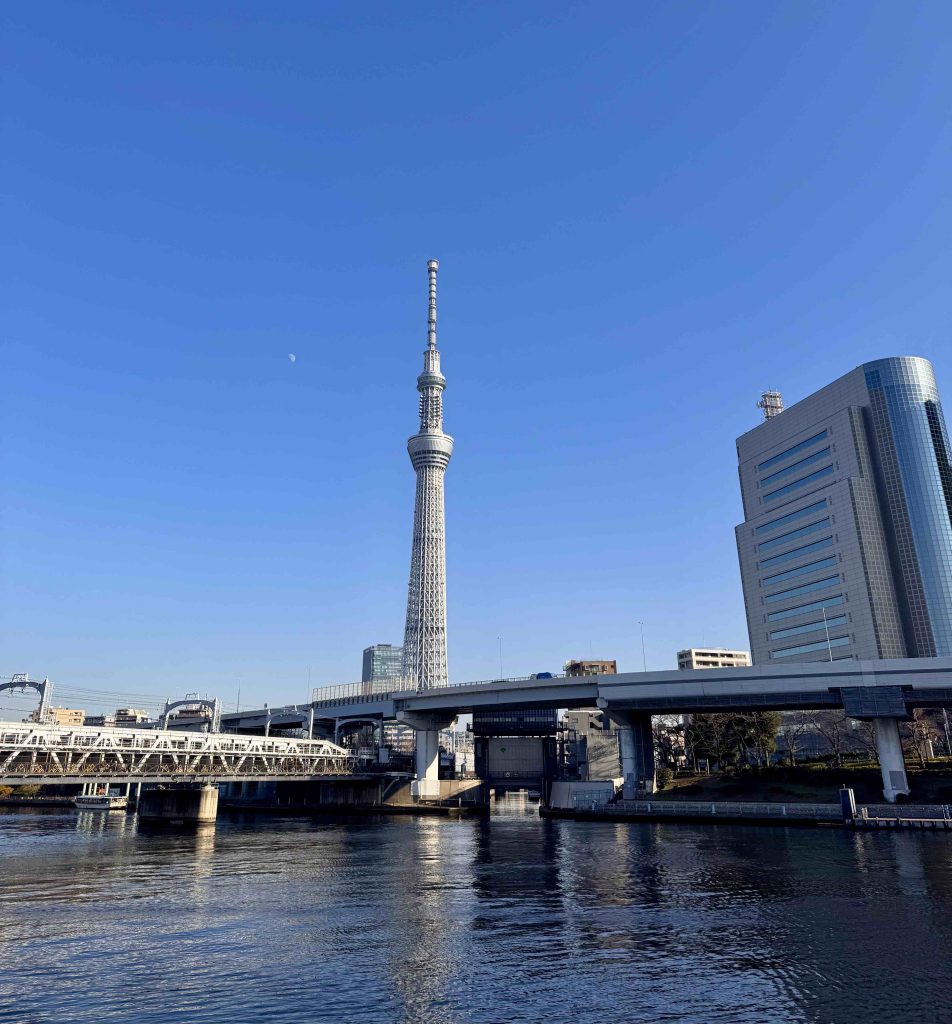
Beyond the temple grounds, the surrounding streets are filled with traditional restaurants, making it a great spot for lunch or dinner after exploring the area. Being a waterfront district, Asakusa also offers a different perspective of Tokyo. Walk by Sumida Park, which rewards visitors with great riverside views, especially towards Tokyo Skytree. An alternative is doing a cruise along the Sumida River for a more relaxing way to see the city from the water.
Meiji Jingu Shrine
Another unmissable temple complex in Tokyo is Meiji Jingu Shrine. It was established in 1920 and is dedicated to Emperor Meiji and Empress Shoken, who led Japan’s modernization. Located in a vast forest area offering an oasis of calm just in the middle of the city, it hosts thousands of trees donated from different regions of the country.
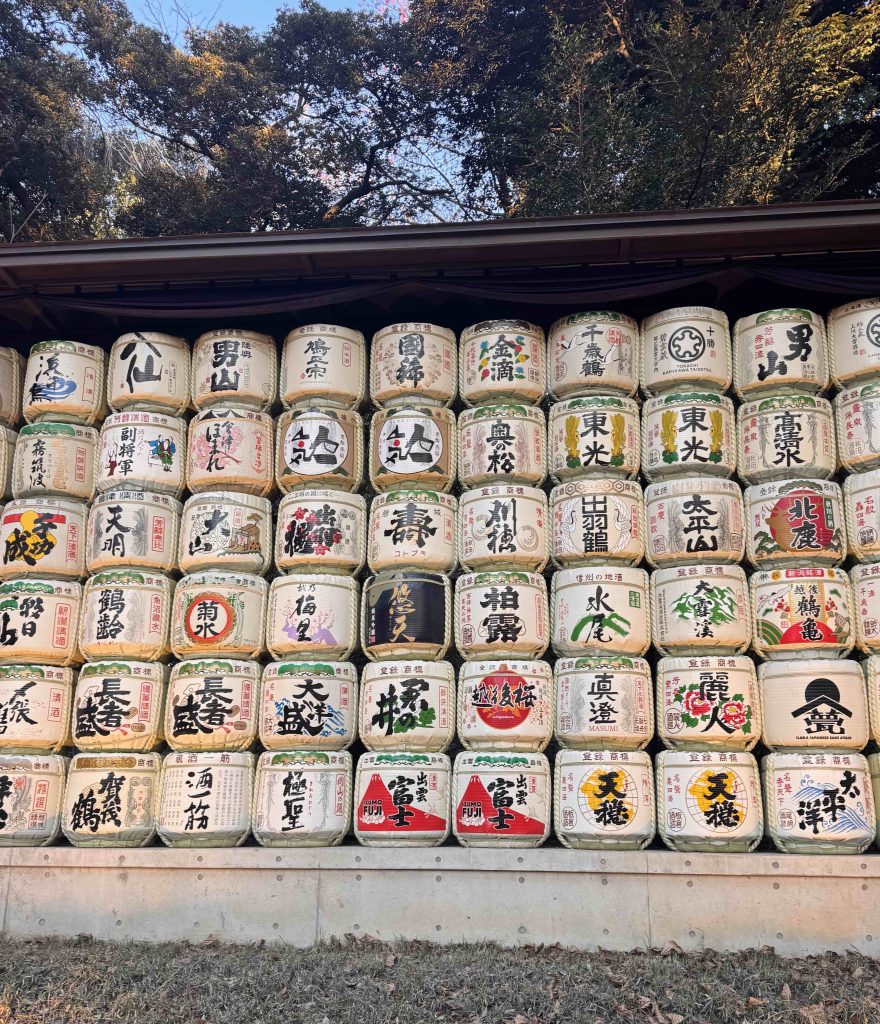
One of the things that surprised me most were the giant barrels of sake (sake-don), dedicated to the deities, lining the path and creating a scenic visual effect. On the way to the temple, a beautiful wall of white and blue lanterns welcome visitors. In the complex you can also visit Meiji Jingu Museum, showcasing artefacts related to the Emperor and treasures from the shrine’s collection.
Takeshita Street
Not far away from Meiji Jingu Shrine in Harajuku district, Takeshita Street is a pedestrian shopping street known as the birthplace of Japan’s “kawaii” (cute) culture. Lined with colourful shops selling bold teen fashion, vintage stores and themed cafes, this is where Tokyo’s street style truly comes to life. Simultaneously lively, chaotic and puzzling, it offers a fascinating glimpse into modern Japanese youth culture and it’s worth to visit even if not for shopping.
Shibuya Crossing
One of the highlights of any trip to Tokyo is going to Shibuya Crossing. Located in Shibuya, a commercial and entertainment district, it is considered the busiest pedestrian crossing in the world. Walking by Shibuya Crossing for the first time feels like stepping into the very heartbeat of modern Tokyo. When the lights turn green and hundreds of people cross Shibuya from all directions, the scene is both chaotic and strangely harmonious. In that moment I felt I was part of the city’s fast-paced, hyper-connected rhythm.
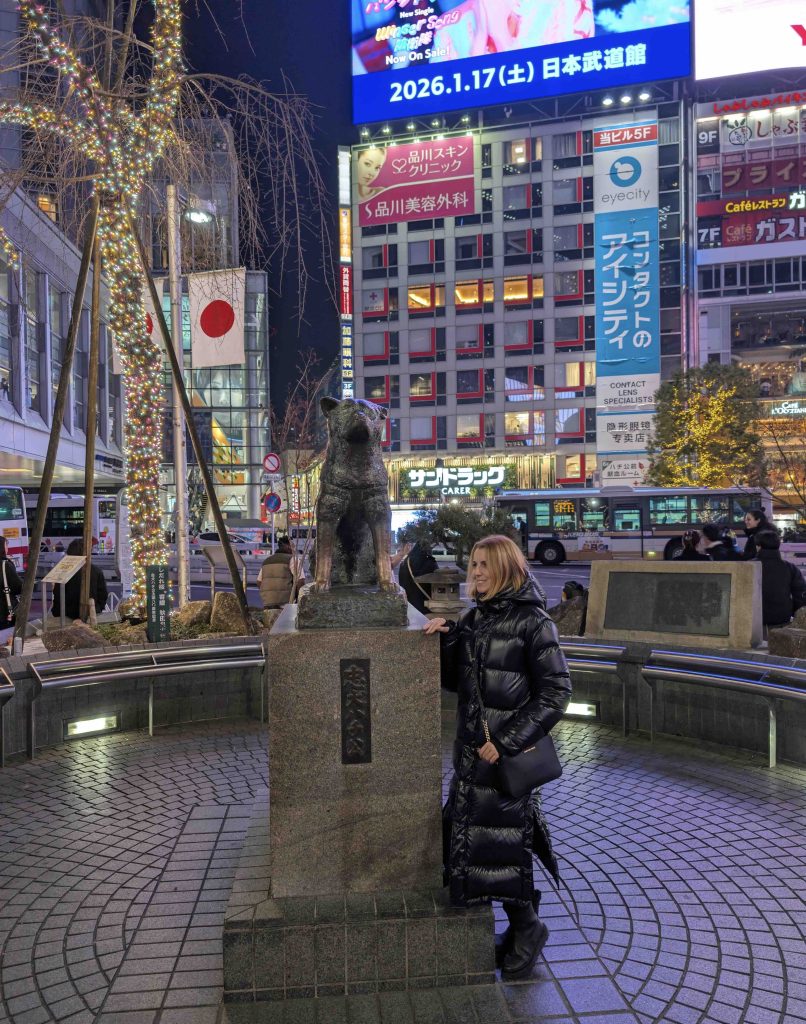
Just steps away, in the middle of towering screens and fashion stores, it’s worth to stop at Hachikō Statue, a symbol of loyalty and one of Tokyo’s most famous meeting points. This statue has an heartbreaking story behind. It honours Hachikō, an Akita dog that has waited daily at Shibuya Station for his deceased owner for nearly 10 years.
Shibuya Sky
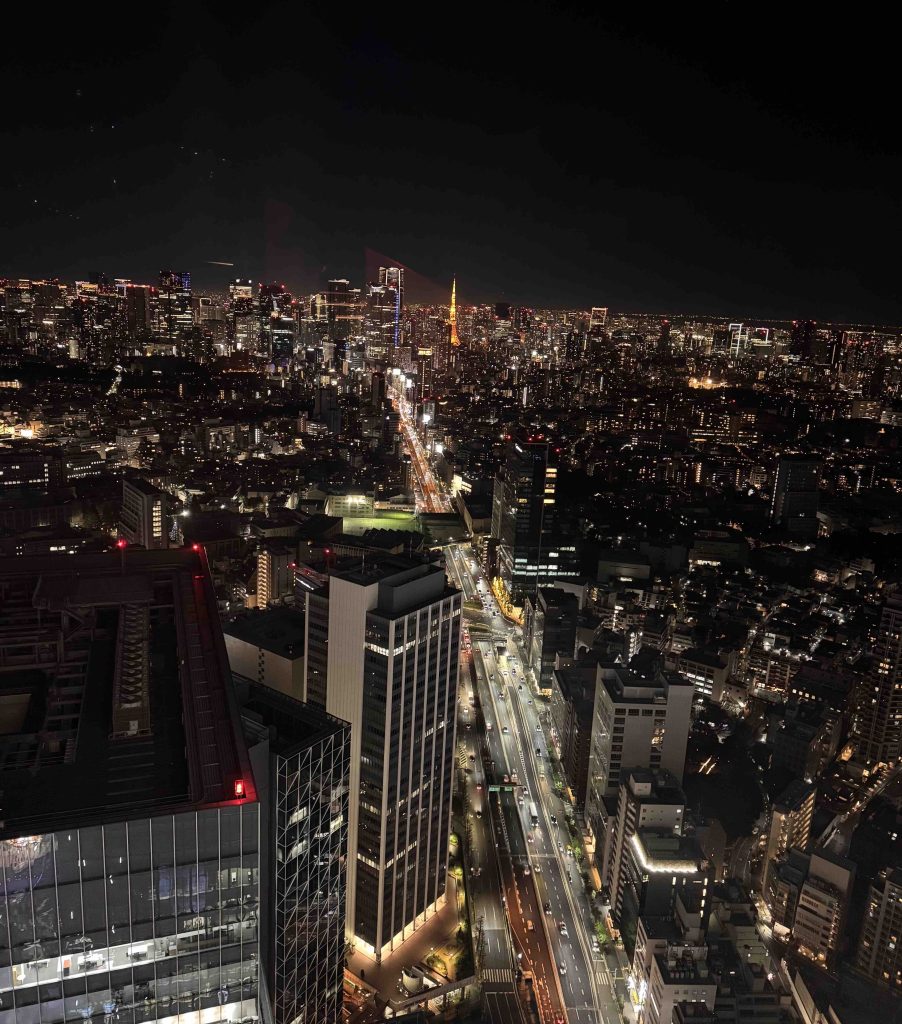
When in Shibuya, don’t miss the opportunity to see Tokyo from above at Shibuya Sky, one of the most impressive observation decks in the city. At the top of Shibuya Scramble Square, this open-air platform offers breathtaking 360 degree views over Tokyo, with Shibuya Crossing unfolding far below like a living map. Watching the city stretching endlessly into the distance is a bucket list experience in Japan’s capital.
Visiting Shibuya Sky is particularly breathtaking at sunset or after dark, when Tokyo’s skyline shines bright illuminated by thousands of city lights. The tickets to Shibuya Sky are available 15 days before the planned date of the visit, so book it advance to guarantee your preferred date and time slot.
Hie Shrine
Located in a small hill in Chiyoda district near Akasaka, surrounded by skyscrapers and business districts, Hie Shrine is one of the major shrines in Tokyo. It dates back to 1478 and during the 19th century it served as a guardian shrine of the Imperial Palace.
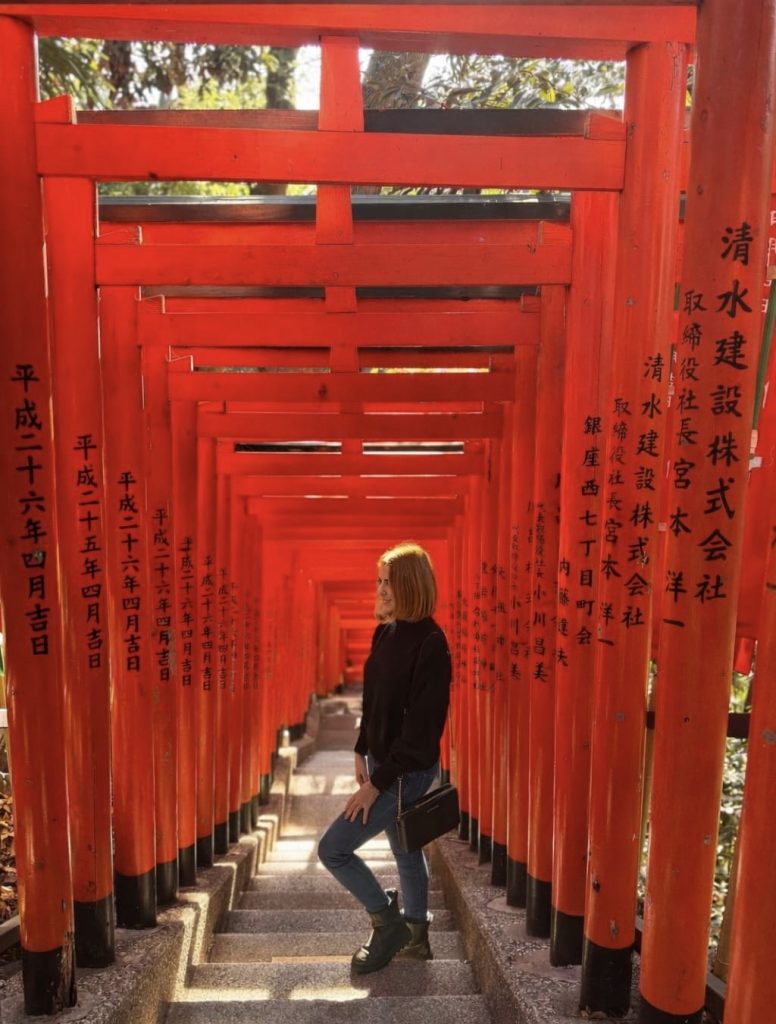
Dedicated to the protector deity of Tokyo, it is known for the Sanno Matsuri, one of Tokyo’s major festivals. Offering moments of quietness amid the city’s fast pace, one of the highlights of Hie Shrine is its back entrance with a stunning tunnel of 90 bright red torii gates, reminiscent of Kyoto’s Fushimi Inari but on a smaller scale.
Imperial Palace
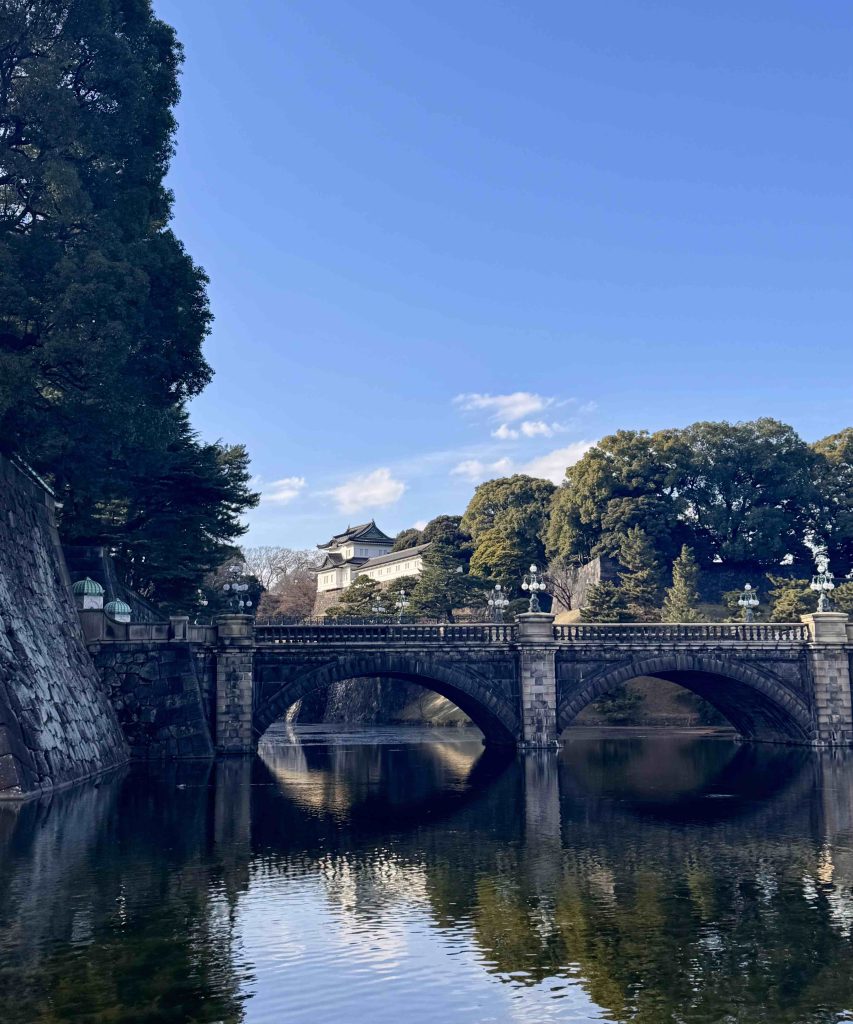
After visiting Hie Shrine, I headed to the Imperial Palace , also known as Kokyo Castle. Situated in a large and beautiful garden area on the former site of Edo Castle, it is the residence of Japan’s Imperial Family. Built in the 19th century, it was destroyed during the World War II, but it was reconstructed keeping the exact same style.
Even if it’s not possible to visit the inner grounds of the palace, which opens to public only twice a year, it’s totally worth to walk around and admire the beauty of the palace at distance. I really enjoyed Kokyo Gaien plaza with its scenic views to Nijubashi, two bridges at the entrance of the Imperial Palace that look like a painting.
Shinjuku
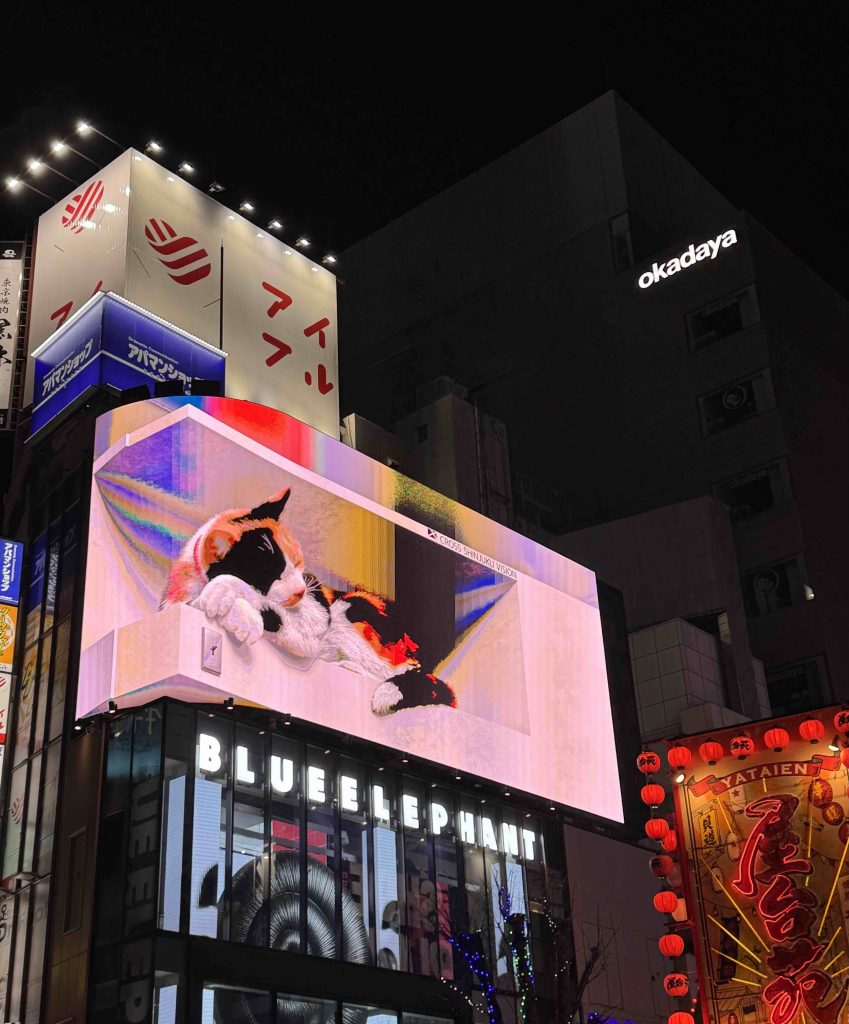
Visiting Shinjuku at night is mandatory while in Tokyo. As the sun sets, the district transforms into a dazzling maze of neon lights, giant screens and nonstop movement, capturing the city’s ultra-modern, cinematic side. One of the most famous sites in Shinjuku is the Godzilla Head, towering above the streets near Kabukicho and watching over the crowds below. Another one is the giant digital billboard displaying a 3D cat in action. This area offers a great diversity of restaurants and nightlife.
Just a short walk away, the atmosphere shifts completely in Omoide Yokocho, also known as Memory Lane. The narrow, lantern-lit alley feels frozen in time, with tiny eateries, smoky grills and locals gathered shoulder to shoulder. The contrast between the glowing skyscrapers and this traditional street couldn’t be stronger, and that’s exactly what makes Shinjuku so special. Moving between modern high-rises and decades-old alleyways in a matter of minutes perfectly captures Tokyo’s ability to merge past, present and future.
Tokyo Tower
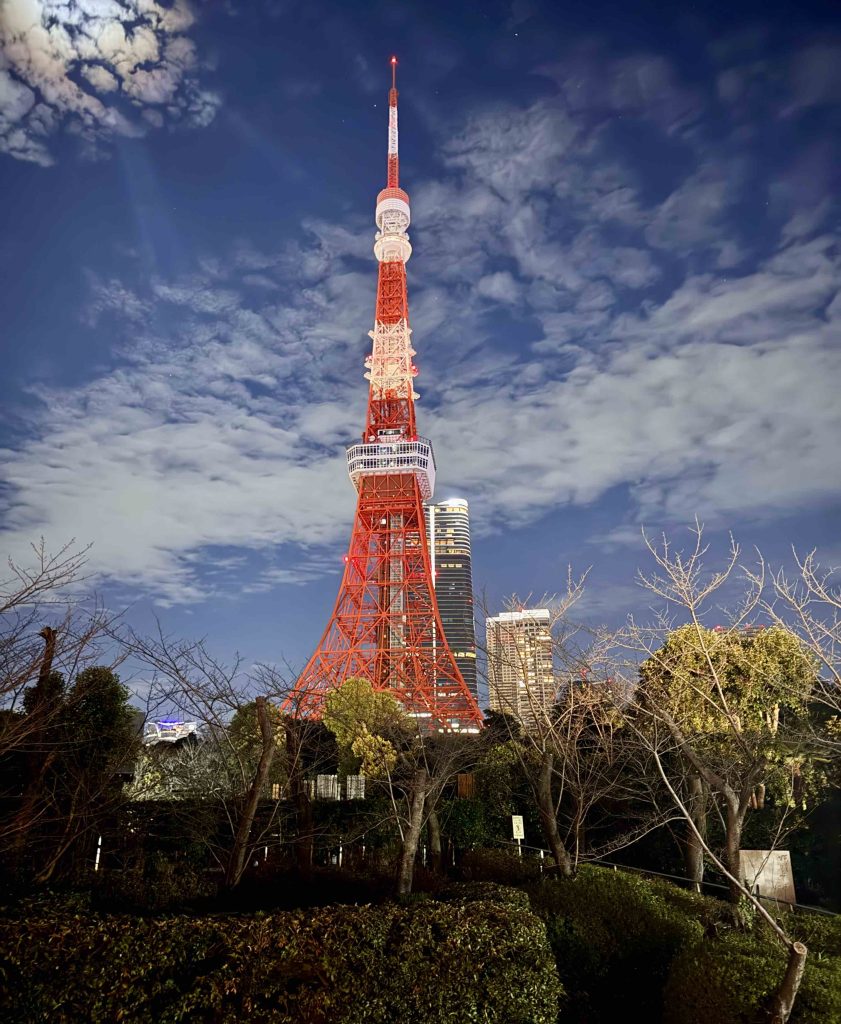
Built in 1958 and inspired by the famous Eiffel Tower in Paris, Tokyo Tower is one of the most known landmarks in the city. It’s an important symbol of Japan’s capital rebirth after the World War II and for many years it was the tallest tower in the country, until Tokyo Skytree was constructed in 2012. I admired Tokyo Tower from different locations in the city, but it’s possible to visit it and go up to a panoramic observatory providing all around views.
Zozoji Temple
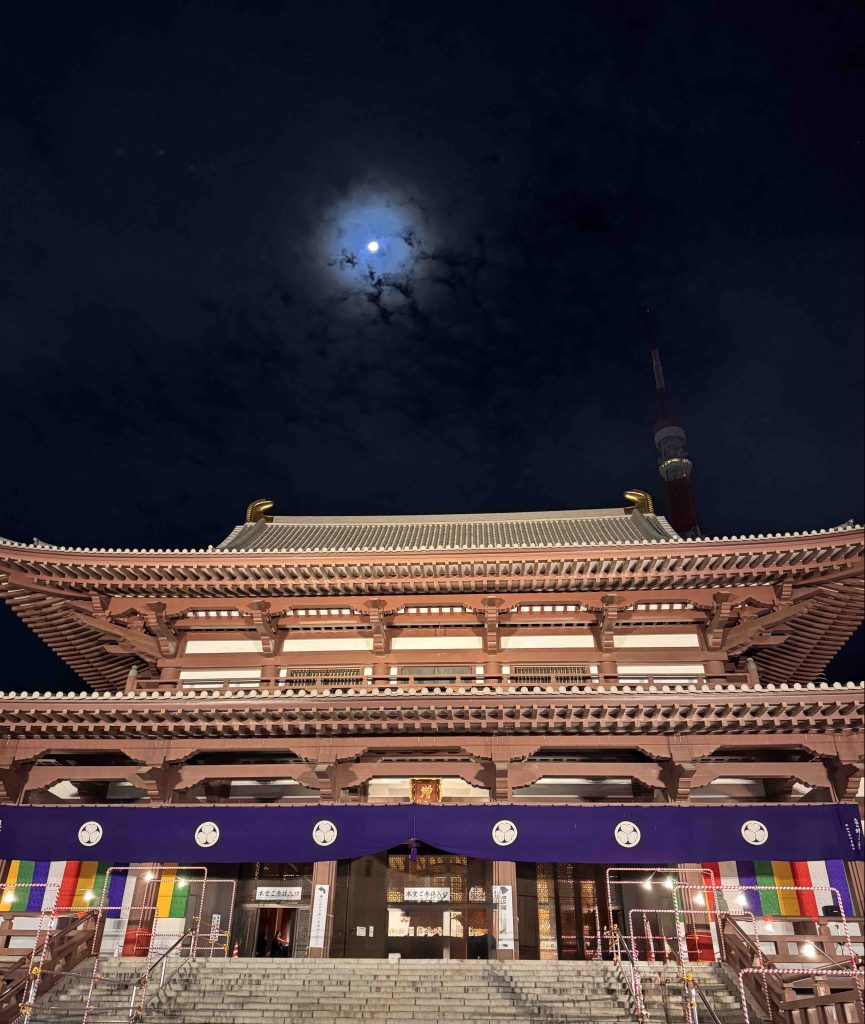
Next to Tokyo Tower, Zozoji is another temple that is completely worth to add to your Tokyo’s itinerary. Originally built in 1393, it was moved to its current location at the end of the 16th century. The complex hosts a temple, a small museum and the mausoleum of the Tokugawa family.
I visited Zozoji at New Years Eve, and it was a a deeply moving and unforgettable experience. I arrived to Zozoji around 11pm and as midnight approached, thousands of people gathered in quiet anticipation. The temple’s traditional architecture, softly illuminated against the night sky and standing in striking contrast with Tokyo Tower glowing just behind it, created a magical scenario. As the bells rang to mark the arrival of the New Year, the air was filled with a sense of reflection and renewal. This was one of the most meaningful and special starts of the year ever.
teamLab Borderless
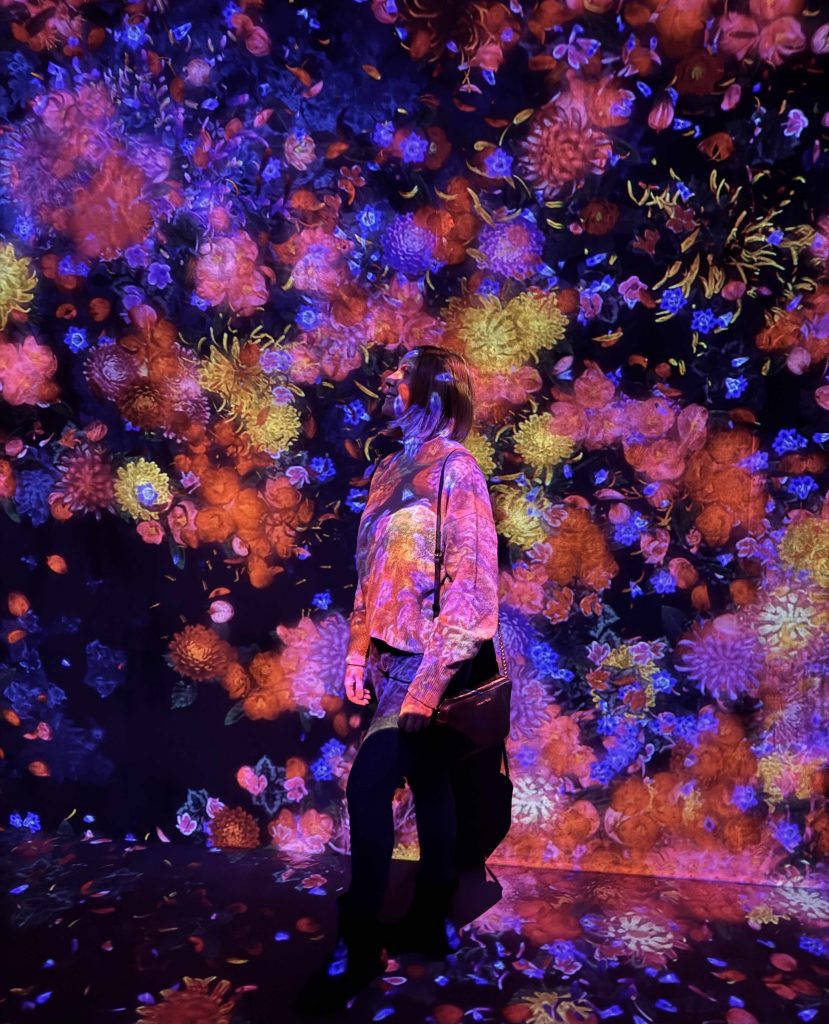
teamLab is an international art collective merging art, science, technology and nature. It was originally created in Tokyo in 2001 by an interdisciplinary group of artists. Nowadays it has different locations around the world, but the most known ones are located precisely in Tokyo, teamLab Borderless and teamLab Planet.
I decided to go to teamLab Borderless in my last day in Tokyo, and it was the perfect way to end my visit to Japan’s vibrant capital. This immersive art museum goes far beyond traditional exhibitions with light, sounds and movement blending seamlessly. Artworks flow from one room to another without fixed paths or clear boundaries. So you can easily loose track of time, wandering between glowing landscapes, mirrored rooms and constantly evolving installations that look like a scene from a dream. I felt I was not simply observing art, but becoming part of it.
Gotokuji Temple
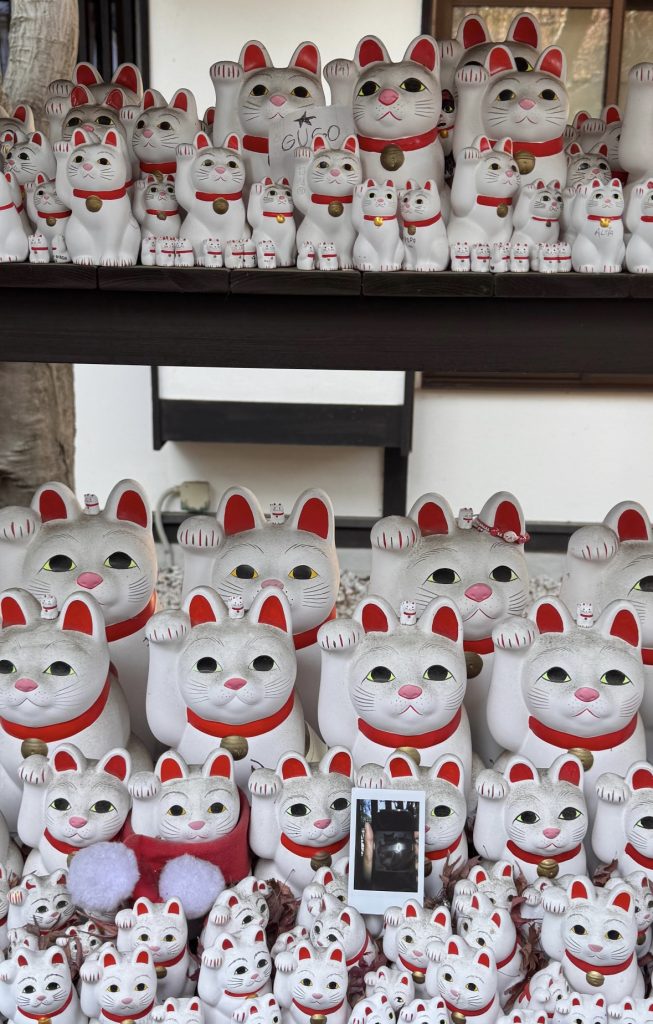
There’s so much to see in Tokyo that it’s difficult to choose what places to visit. You don’t need to see everything on your first trip, but if you have time I recommend to take a half an hour train ride from the city centre to Gotokuji. This quiet residential neighbourhood is home to one of the most unique temples I’ve visited in Japan.
Gotokuji Temple is widely believed to be the birthplace of the maneki-neko, the famous “beckoning cat” symbol associated with good fortune, protection and prosperity. The temple’s grounds are filled with thousands of small white cat statues, left by visitors as a sign of gratitude or a wish for continued luck.
I went to Gotokuji in the first day of January, which was a very special experience. As part of the Japanese tradition of Hatsumōde (the first shrine or temple visit of the year), the temple received thousands of people offering prayers for health, happiness and success in the year ahead. Despite the crowds, it was a beautiful way to start the year, surrounded by centuries-old traditions and a hopeful sense of renewal.
Ginza District
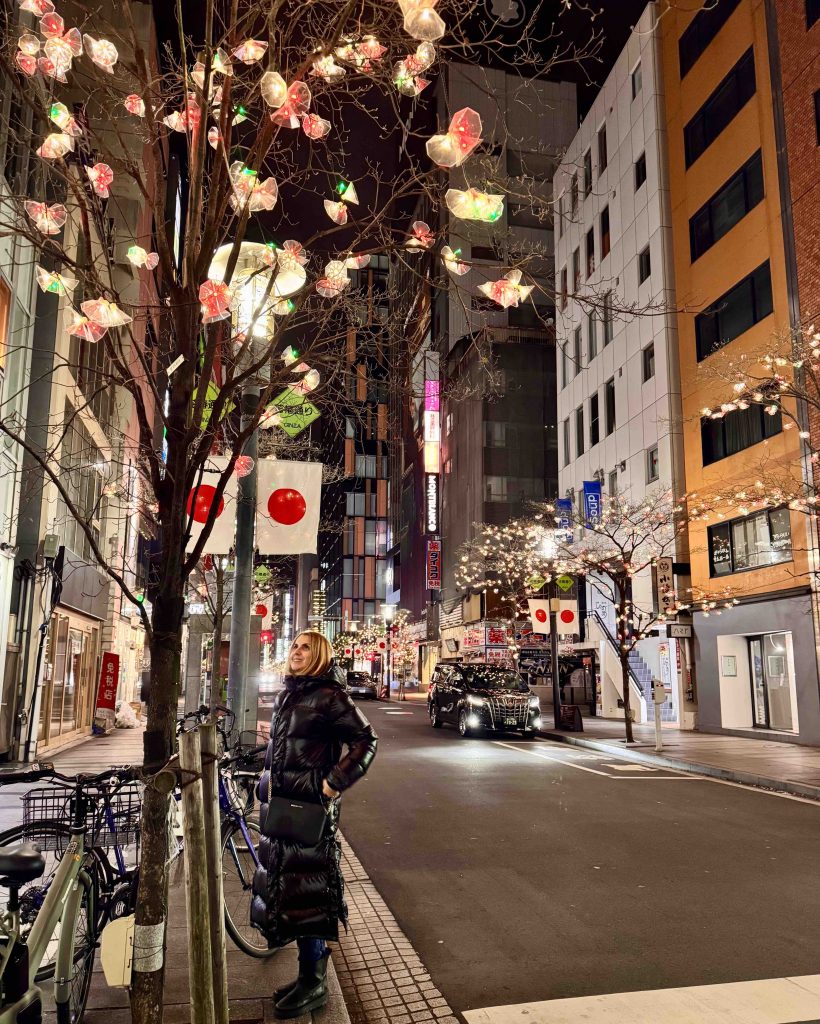
I decided to stay in Ginza district while visiting Tokyo following some friend’s recommendation, and I couldn’t be happier about my choice. Perfectly connected with different metro lines, it is less crowded than other neighbourhoods in Tokyo. Walking through Ginza feels calm and spacious, with wide avenues, impeccable design and modern atmosphere.
Ginza is considered Tokyo’s high-end shopping and entertainment district, known for its luxury boutiques, art galleries, flagship stores and many dining options. It is worth visiting for its elegance, from beautifully curated shop windows to stylish cafés and traditional establishments that have been serving locals for generations.
Kyoto: discover Japan’s timeless traditions and cultural heart
If Tokyo shows you Japan’s modern face, Kyoto introduces you to its soul and traditions. Walking through Kyoto feels like stepping into another era, where ancient temples, wooden houses and centuries-old rituals still shape daily life. For first-time visitors, Kyoto is essential to truly understand Japan’s cultural depth and sense of continuity.
Kyoto is a city best explored slowly. Whether wandering through historical streets, visiting serene temples or observing local traditions, Kyoto offers a calmer and more contemplative contrast to Tokyo. It’s one of those places that doesn’t just impress you, but it stays with you long after you leave.
Golden Pavilion
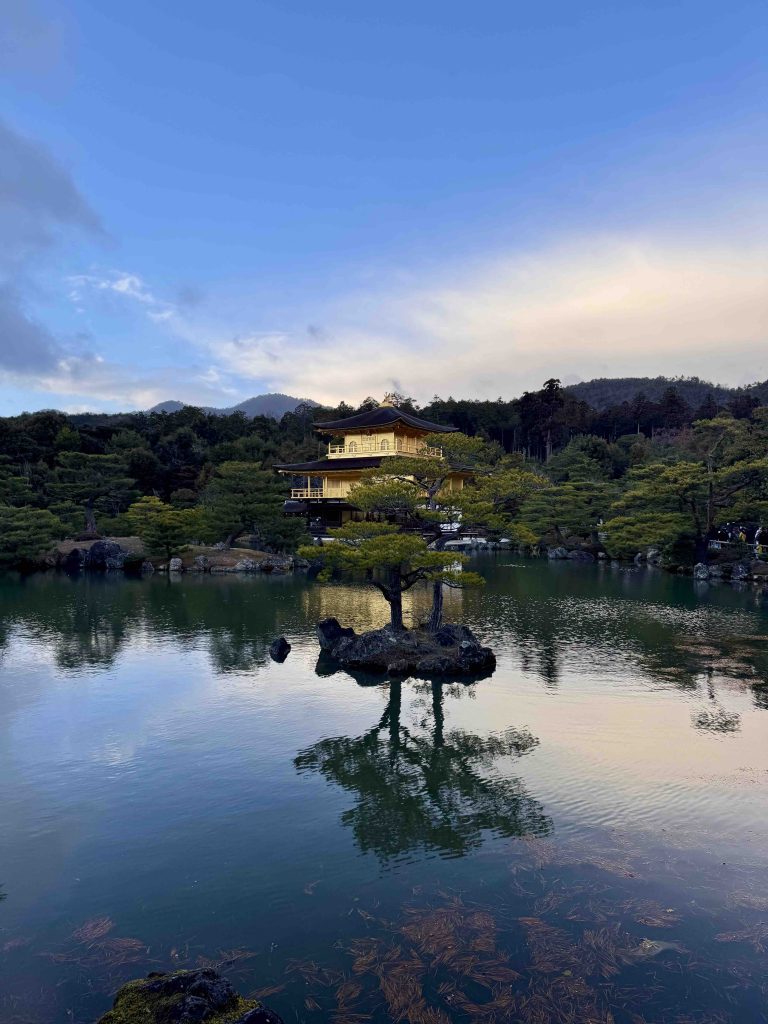
My journey in Kyoto started in the north of the city visiting Kinkakuji temple on a winter afternoon when snow began to fall over the city. It was the only day I experienced some snow in Japan, and it was a magical experience.
Kinkakuji, also known as the Golden Pavilion, is worldwide famous for its top two floors completely covered in gold leaf. Built overlooking a large pond, this UNESCO World Heritage site was originally constructed in 1397 as a shogun’s villa, and it became a buddhist temple after this death in 1408. It has been destroyed by fire multiple times, and the current structure was rebuilt in the middle of the 20th century.
To visit the Golden Pavilion you need to buy a ticket that gives you access to the area where the temple is located, surrounded by beautiful lush gardens. I walked around the grounds of the temple and I was amazed by the views from the other side of the pond. This was a moment I will never forget. The impressive structure of Kinkajuji temple reflected in the still waters against the surrounding muted winter landscape, as the snow started to fall. It was a perfect postcard from Kyoto on wintertime!
Chionin Temple
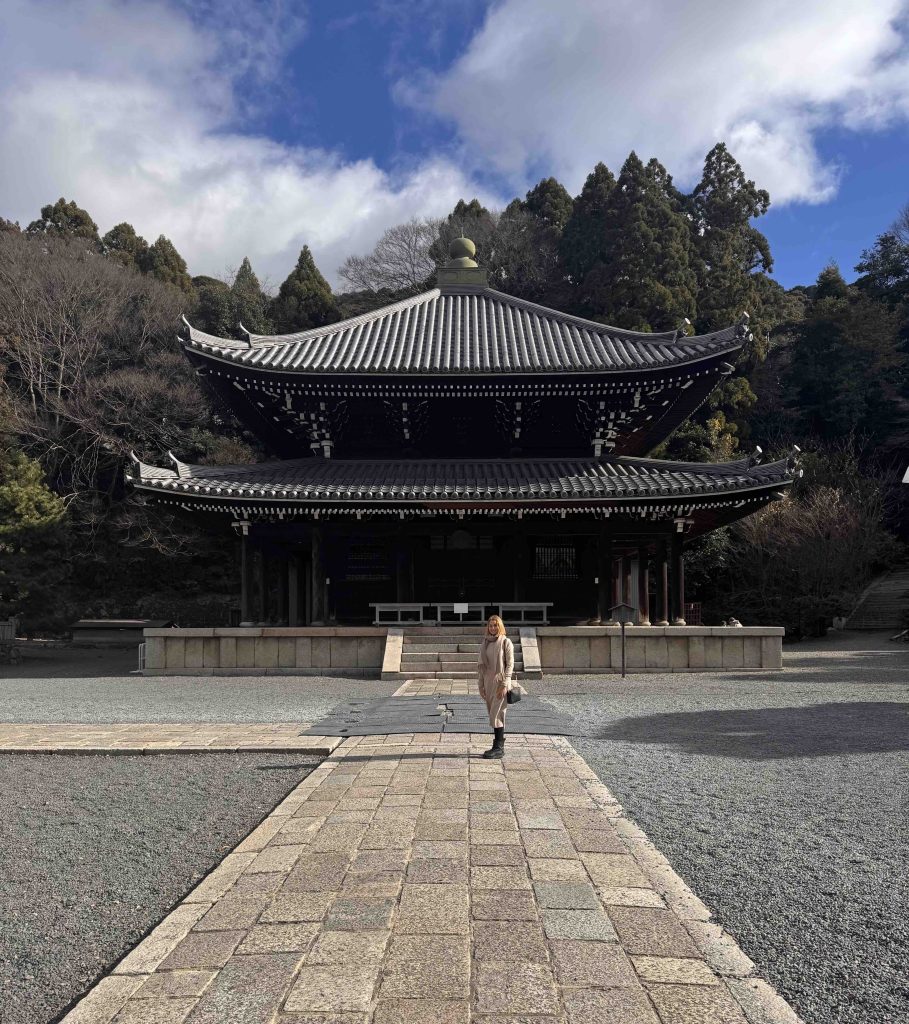
In the eastern part of Kyoto, not far away from Gion District, Chionin Temple is also worth to visit. As the head temple of the Jōdo school of Buddhism, some of its buildings date back to the 16th century. Passing through monumental Sanmon Gate, the largest wooden temple gate in Japan, the spacious grounds of Chionin offer stone paths connecting the temple main buildings.
Chionin area spreads across a small hill surrounded by forest. There are two lovely gardens, one of them, Hojo Garden, designed in a traditional Japanese style. One of its most remarkable features is the enormous temple bell, famously rung only a few times a year using a traditional team of monks, a ritual that reflects centuries-old practice.
Gion
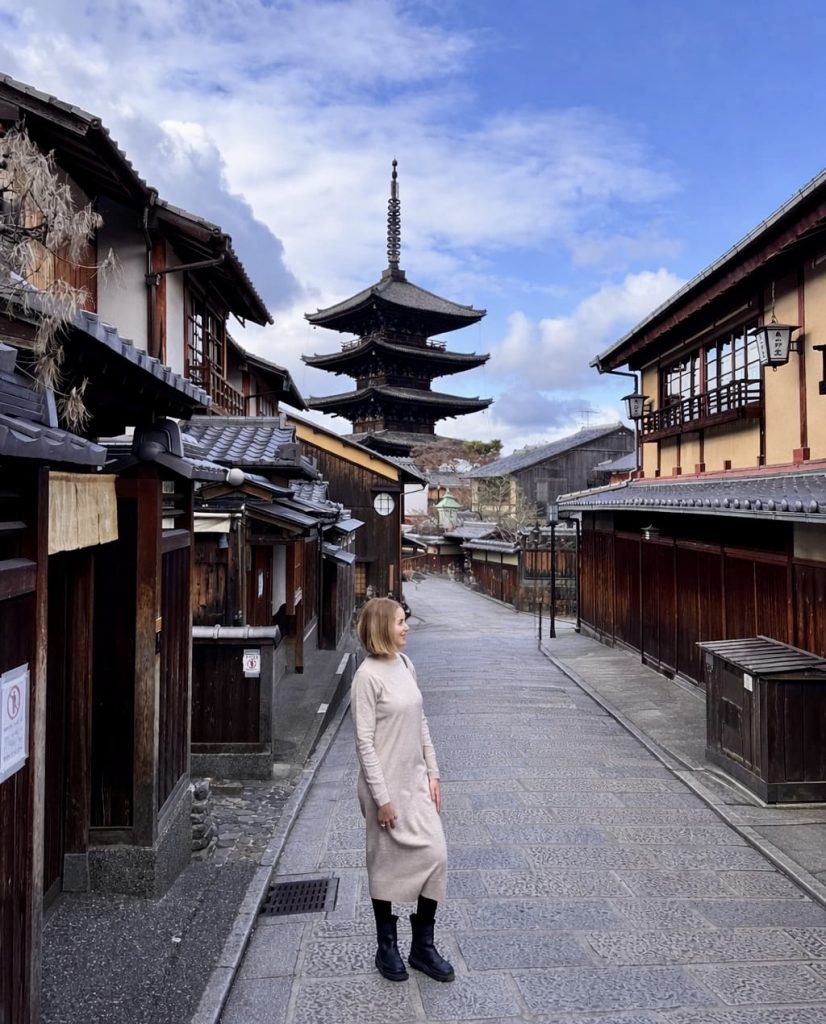
Gion is undoubtedly one of Kyoto’s most atmospheric areas, and exploring it feels like walking through its living past. Known as the city’s most famous geisha district, Gion impresses with its traditional wooden machiya houses and narrow streets. At the heart of the district stands Yasaka Shrine, a vibrant Shinto shrine that has watched over Gion for centuries and plays a central role in Kyoto’s cultural life.
From Yasaka Shrine, I walked south towards Sannenzaka and Ninenzaka streets, and I had the feeling of stepping into a perfectly preserved postcard. These gently sloping, stone-paved streets are lined with typical shops, small craft stores, teahouses and restaurants where I tasted the delicious Japanese gastronomy. With views opening towards Kiyomizudera temple and historic rooftops stacked along the hillside, every turn feels photogenic and timeless.
Kiyomizudera Temple
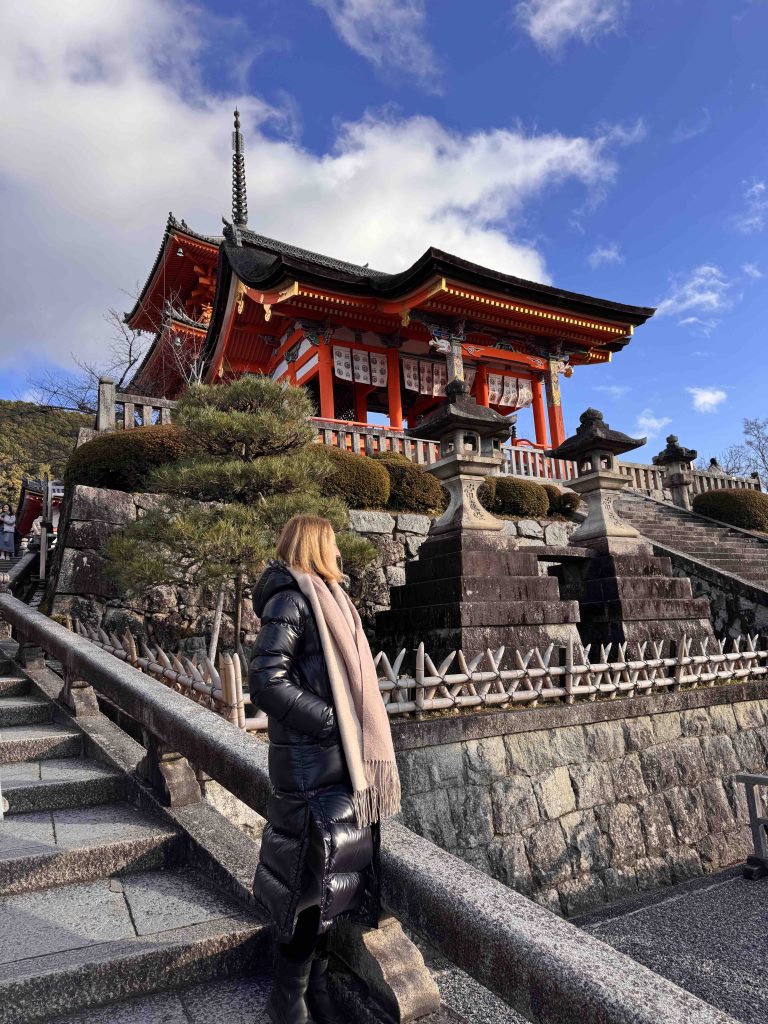
If I had to choose one place to visit in Kyoto, it would be Kiyomizudera Temple, one of its most iconic and timeless sites. Founded in the 8th century, the temple is closely associated with the Hosso school of Buddhism, and it has been an important place of worship for over a thousand years. Today it is recognised as a UNESCO World Heritage Site, celebrated not only for its spiritual significance but also for its remarkable architecture. You need to buy a ticket to access it, but it’s totally worth it.
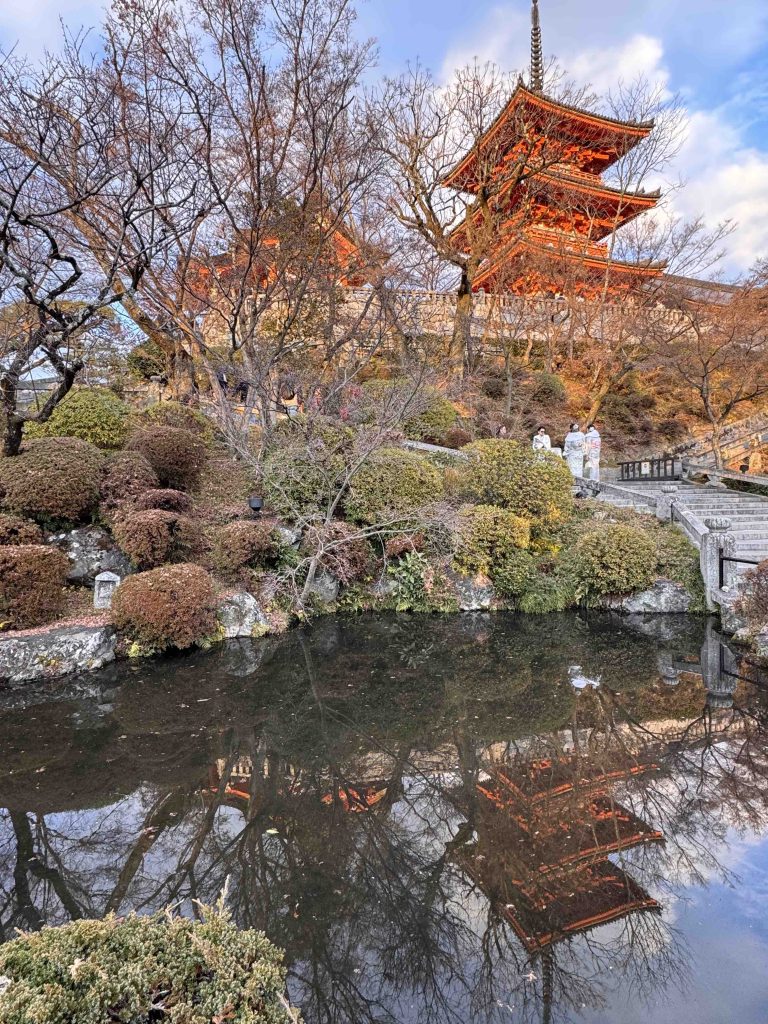
The temple complex sits dramatically on the slopes of Mount Otowa, overlooking the city. One of the temple’s most famous features is its vast wooden stage, constructed entirely without nails and extending out from the main hall. From here, the views across Kyoto are simply breathtaking. Below the main hall flows the Otowa Waterfall, whose three streams are believed to grant longevity, success at school and a fortunate love life to those who drink from them.
Fushimi Inari Shrine
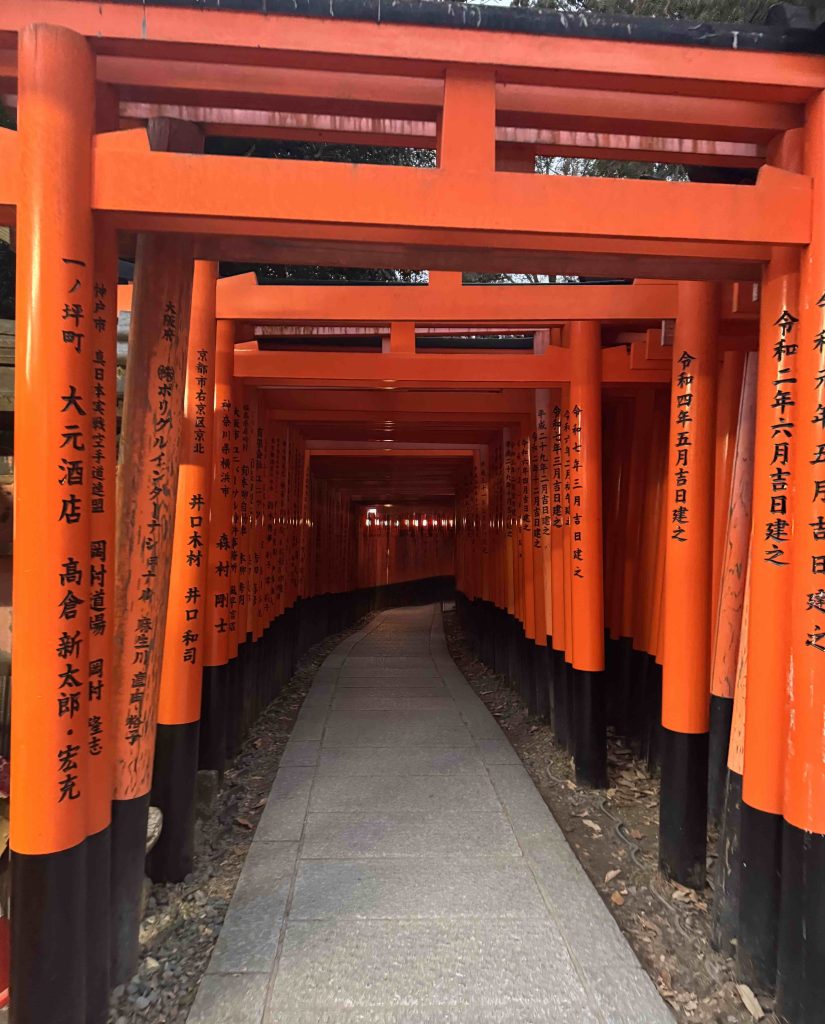
No trip to Kyoto is complete without visiting the iconic Fushimi Inari Shrine. Dedicated to Inari, the Shinto deity of rice, prosperity and success, the shrine dates back to the 8th century. It has long been associated with abundance and good fortune. Its thousands of vibrant vermillion torii gates donated over the centuries form winding tunnels that lead deep into the forested slopes of Mount Inari. Each gate represents a wish, a prayer or gratitude, turning the entire path into a powerful symbol of devotion and continuity.
At the entrance of the torii there are usually many visitors, but as the ascent begins towards the mount, the crowds gradually decrease and the atmosphere becomes quieter. The trail climbs steadily up the mountain, passing smaller shrines, stone fox statues and peaceful forest clearings. I didn’t hike until the higher viewpoint, as I went to Fushimi Inari Shrine at the end of the day and the night started to fall. I wish I had been there earlier to have experienced going all the way up to the summit.
Pontocho Alley
In Kyoto’s centre, Pontocho Alley is often considered one of the most beautiful streets in the city. Running from Shijo-dori to Sanjo-dori close to Kamogawa river, its narrow path and wooden buildings adorned with traditional decorations create a serene atmosphere. Lined with many options of restaurants offering Japanese cuisine from sushi to ramen or wagyu beef, it’s the ideal place to head for a traditional dinner.
Arashiyama
One of the highlights of my entire trip was undoubtedly Arashiyama in Kyoto. Visiting Arashiyama feels like stepping into a quieter, more contemplative side of Kyoto, where nature and tradition exist in perfect harmony. It is located outside of the city centre, and the easiest way to get there is taking a train from Kyoto.
When you arrive to Arashiyama by train, don’t miss Kimono Forest near the station offering a striking contrast with pillars wrapped in colorful kimono textiles. This exhibition turns a simple stroll into a visual experience that bridges old craftsmanship and contemporary design. Outside the station, the main street is full of restaurants serving delicious Japanese cuisine and traditional shops selling local goods, handcrafts and souvenirs.
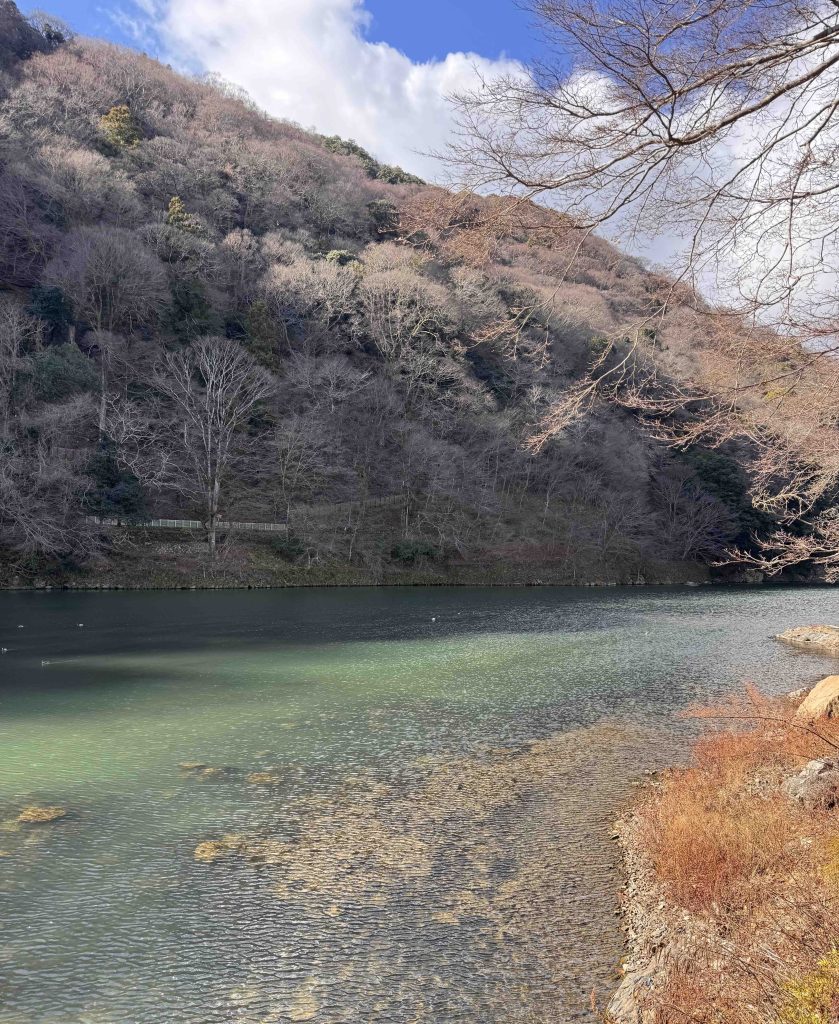
Walking around Arashiyama, you will get to the famous Togetsu-kyo Bridge, which has been a landmark in Kyoto for more than four centuries. This wooden bridge with 155 meters spans the Katsura river in front of Arashiyama Mountain. Walk around the river shore for some of the most atmospheric views to the surrounding landscape. You will feel like you are part of a living postcard.
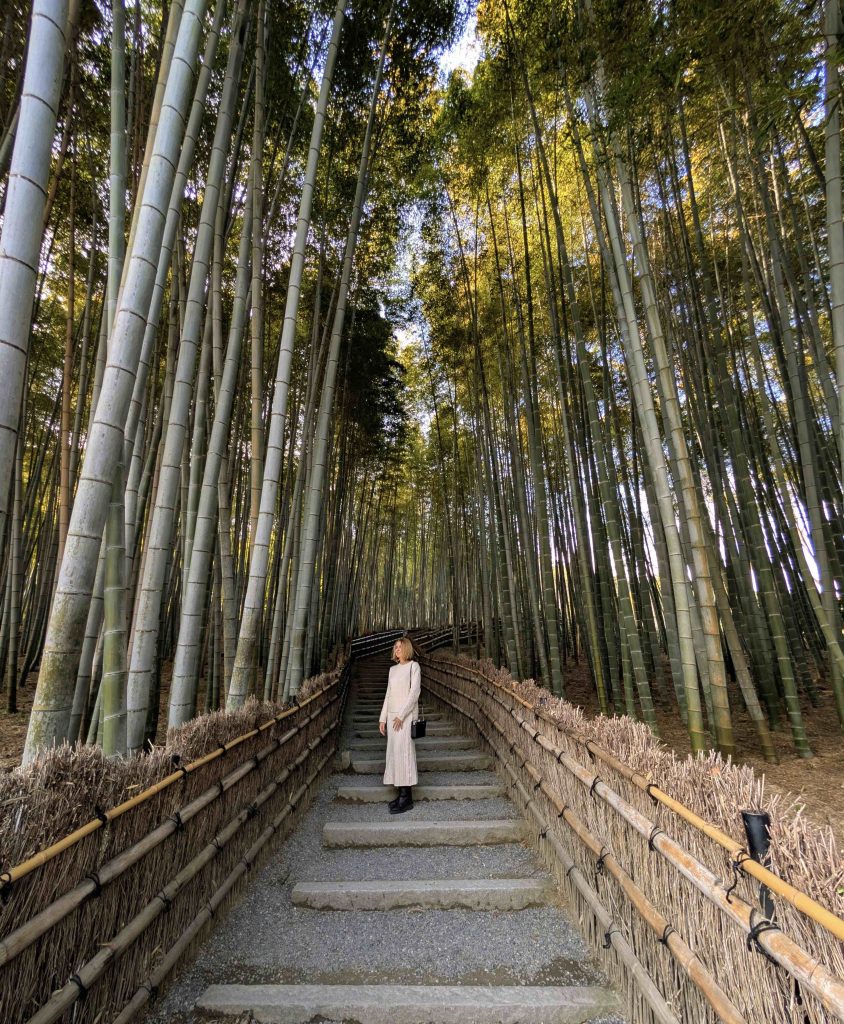
The iconic Arashiyama Bamboo Grove is often the next stop. This is one of Kyoto’s top sites due to its towering stalks of bamboo rising endlessly towards the sky. This bamboo forest has long been intertwined with the cultural landscape of the area, which flourished more than one thousand years ago as a retreat for aristocrats. I recommend going there early in the morning before the crowds arrive.
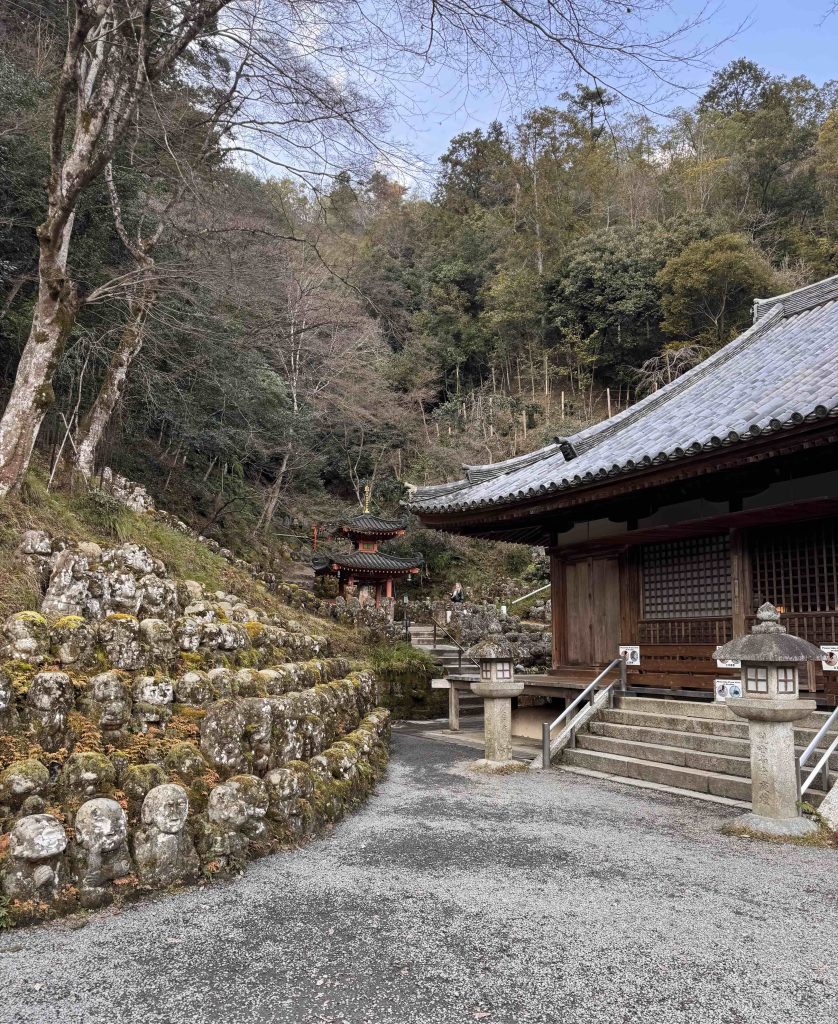
For a similar experience of walking in a bamboo forest without the crowds, let me tell you one of Kyoto’s best kept secrets. Built around the 8th century, Adashino Nenbutsu-ji is surrounded by its own bamboo grove, and it offers a deeply moving atmosphere with approximately 8 thousand stone statues dedicated to forgotten souls. When I visited it in the afternoon, there was almost no one there.
Nearby, in a remote location at the top of a hill, Otagi Nenbutsu-ji is one of the most unique temples I’ve visited. With its collection of 1200 whimsical Rakan statues covered in moss representing the disciples of the historical Buddha, this off-the-beaten-path treasure has an interesting history of resilience. It was relocated throughout the centuries several times due to natural disasters like floods or typhoons, and it remains as is since the second half of the 20th century.
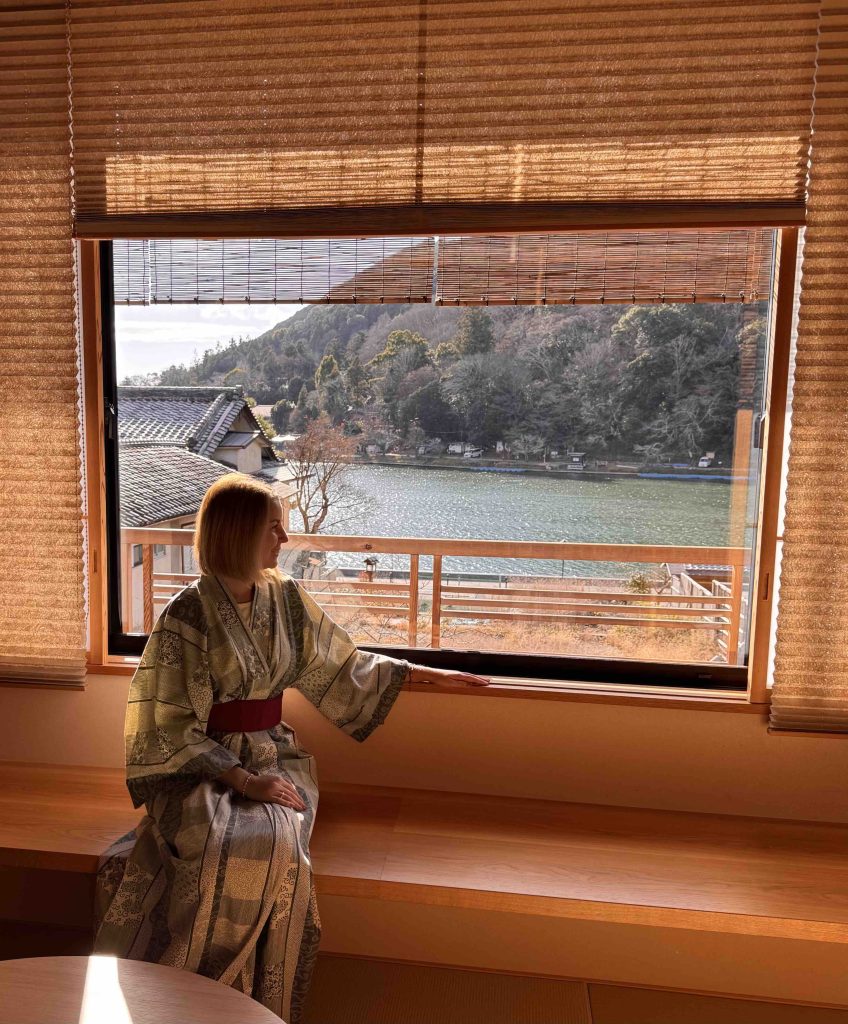
To elevate any Arashiyama’s visit, I recommend staying overnight in a traditional ryokan. Ryokans are Japanese inns offering a unique, culturally immersive lodging experience that dates back centuries ago. I stayed at Ryotei Rangetsu at the shores of the river, with beautiful typical architecture and design. Admiring the river views from my room, wearing a yukata (a traditional garment similar to a kimono), soaking in an onsen or enjoying a carefully prepared kaiseki dinner (a multi-course Japanese meal) were bucket list experiences.
Mount Fuji: experiencing Japan’s most iconic natural wonder
Seeing Mount Fuji was one of the most emotional moments of my trip to Japan. There was one thing that I had clear since I started planning my journey. I wanted to have enough time to see and experience the surroundings of one of the most iconic spots in the country. Listed as World Heritage site by UNESCO and considered a national treasure, Mount Fuji is Japan’s highest mountain at 3,776 meters, and it is also an active volcano which last eruption occurred in 1707.
After researching about the best options to go to Mount Fuji area – by train, renting a car, joining a group tour or having a private driver, I choose the latter. I booked my trip at Get Your Guide and I was very happy about my choice. Even if more expensive, it gave me the chance to go to the places I really wanted at my own pace. As a bonus, our great driver even took us to additional spots with some of the best views to the mountain.
I was very lucky with the weather in the day of the tour. Mount Fuji is visible only approximately 100 days a year, as it is often veiled by clouds and haze. Winter, with its crisp and dry air, offers the best chances of seeing the mountain in sharp clarity, with its snow-capped summit glowing brilliantly against the deep blue sky. I got one of those sunny winter days with perfect visibility!
For first-time travellers to Japan, visiting Mount Fuji offers a welcome pause from the cities and a chance to connect with the country’s natural beauty. More than just a mountain, it is a powerful symbol deeply embedded in Japanese culture, art and spirituality. Its presence feels almost mythical, and witnessing it with your own eyes is a truly unforgettable experience.
Chureito Pagoda
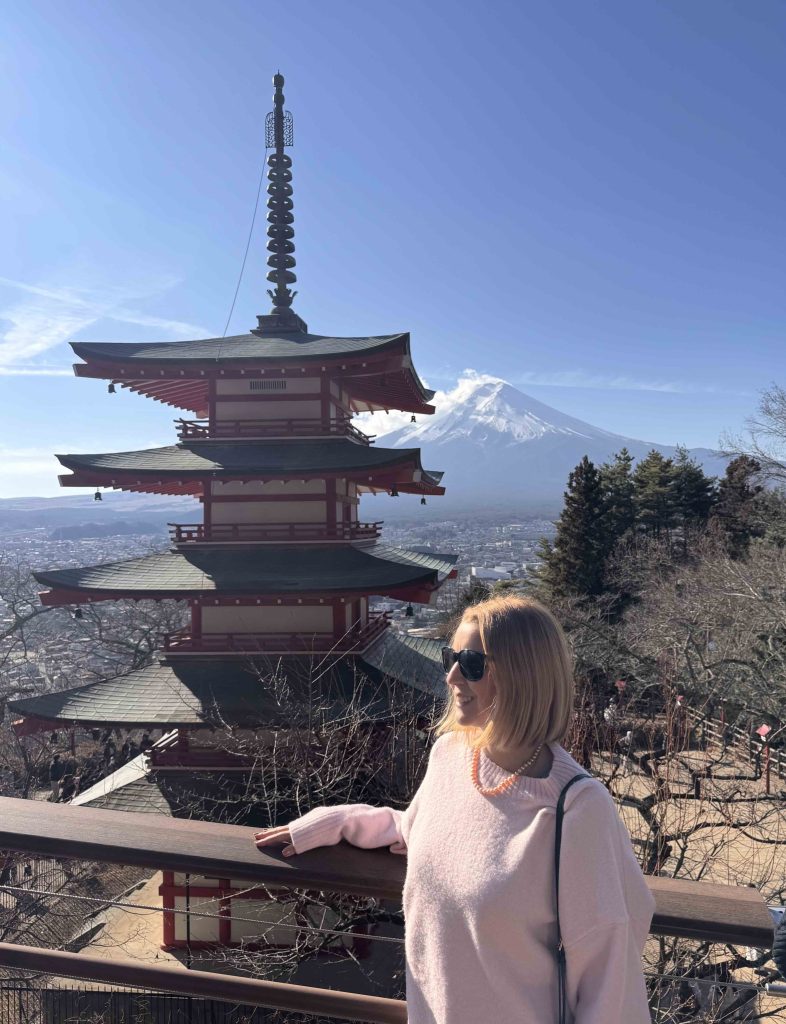
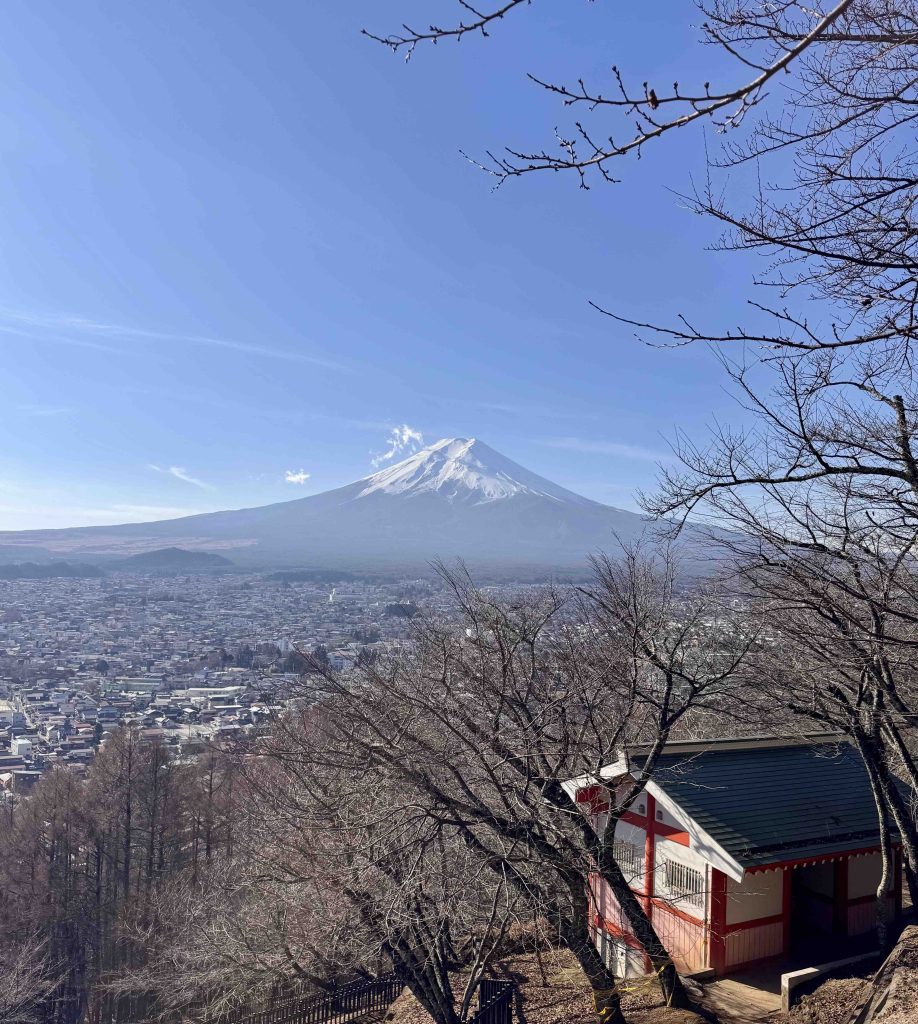
One of the most iconic images of Japan is Chureito’s Pagoda standing against the horizon, with its vermilion tiers perfectly framed by the snow-capped silhouette of Mount Fuji rising majestically in the backdrop. Visiting it on a clear sunny winter day with impressive views to Mount Fuji was one of those “pinch me” moments I will never forget.
I’ve started my visit to this place at Arakura Sengen Shrine. Located at the base of the stairs to Chureito Pagoda, this shrine was founded on Mount Arakura in 705 and it is marked by a large red torii gate. It is surrounded by a park with hundreds of cherry trees that blossom each spring, making it a very popular destination to admire the sakura.
Much later in 1963, Chureito Pagoda was built as a peace memorial and it is now part of the Arakura Sengen Shrine complex. The five-storied pagoda overlooks Fujiyoshida City and Mount Fuji off in the distance. Its traditional design, vivid vermilion color and elevated position on the hillside makes it one of the most photographed viewpoints in the country.
To get to the pagoda, you have to climb almost 400 steps or, in alternative, walk around the hill through a steep path. But after reaching the observation deck at the top, the reward unfolds dramatically: the pagoda in the foreground, the town below, and beyond it all, the perfectly symmetrical cone of Mount Fuji rising under the blue sky.
Saiko Lake
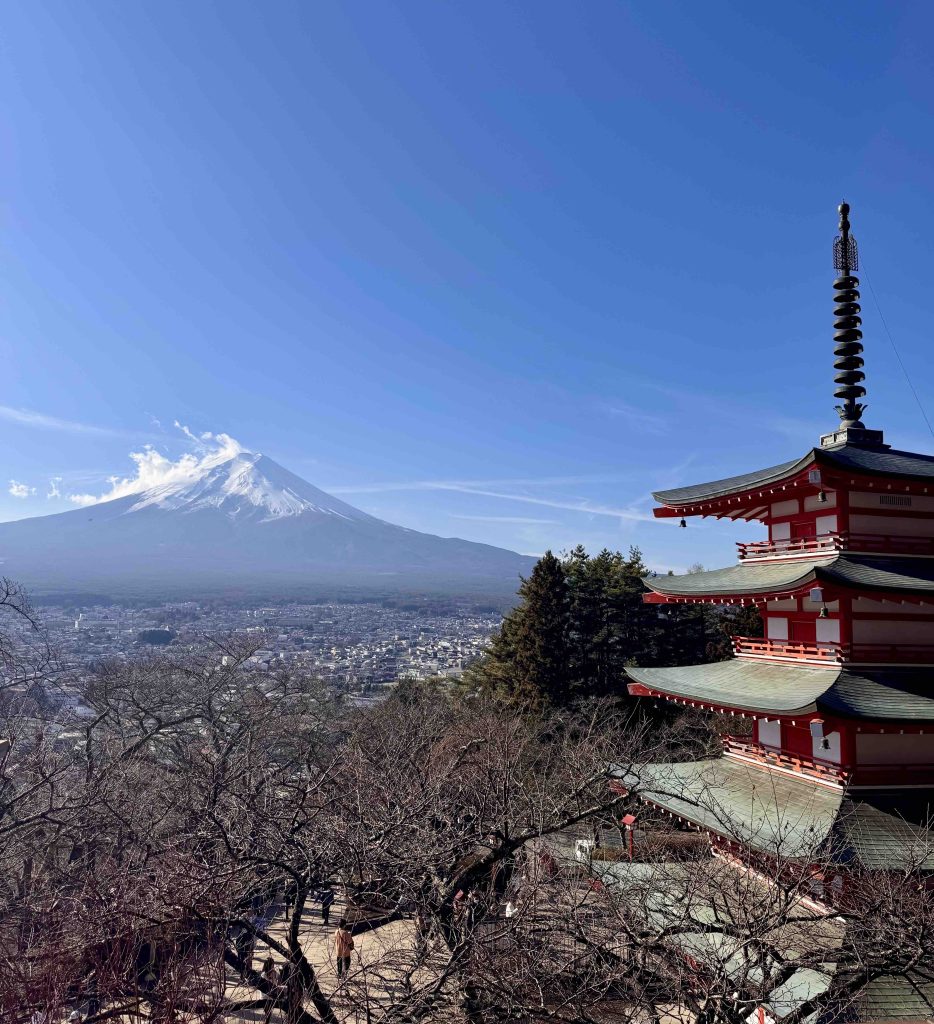
After visiting Chureito Pagoda, we drove to the Fuji Five Lakes region. We stopped by Saiko Lake, which offers one of the most tranquil and panoramic perspectives of Mount Fuji. Less visited than some of its neighbouring lakes, Saiko feels wonderfully untouched, with its still waters reflecting the mountain’s symmetrical silhouette like a perfect mirror on clear days. Surrounded by forested hills, the atmosphere here is peaceful and contemplative.
Saiko Iyashi-no-Sato Nenba
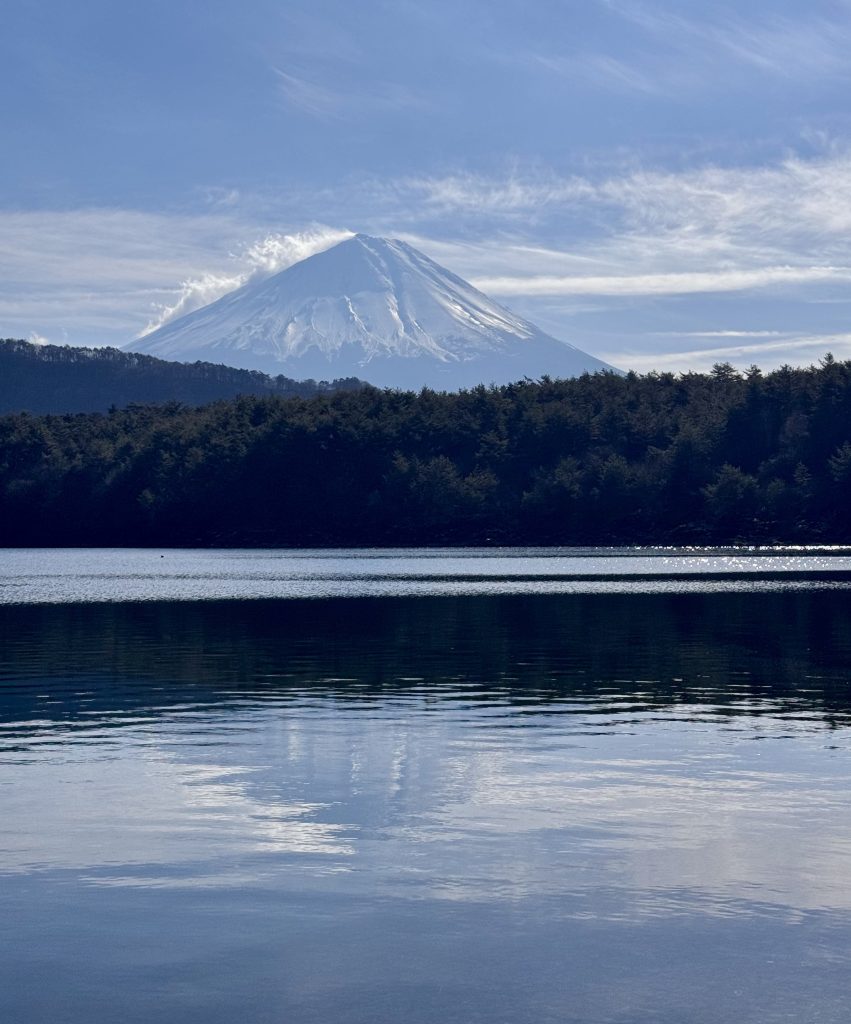
One of the places I loved visiting the most in my trip to Mount Fuji was Saiko Iyashi-no-Sato Nenba. This beautiful village of traditional tatched-roof houses (samurai helmet-shaped roof) is located on the shore of Saiko Lake and has incredible views to the iconic mountain. But it has a heartbreaking story, which is also an example of resilience and hope.
The ancient village of Nenba was once called “the most beautiful village in Japan” and it had a thriving farming community. Until 1966, when it was largely destroyed by a devastating typhoon and landslides triggered by heavy rains. Rather than allowing its heritage to disappear, the area was carefully restored decades later with 20 traditional thatched-roof houses, recreating the atmosphere of a rural settlement from Japan’s past.
Nowadays, the village stands as an open-air museum and a cultural space, honouring the resilience of the community that once lived there. Walking through Saiko Iyashi-no-Sato Nenba feels like stepping back in time. The wooden houses with their steep thatched-roofs sit against a dramatic backdrop of forested hills, with the impressive Mount Fuji rising in the distance. Each house now hosts artisan workshops, small museums, craft studios, or typical restaurants where visitors can learn about traditional textiles, local cuisine, and regional craftsmanship.
Oishi Park
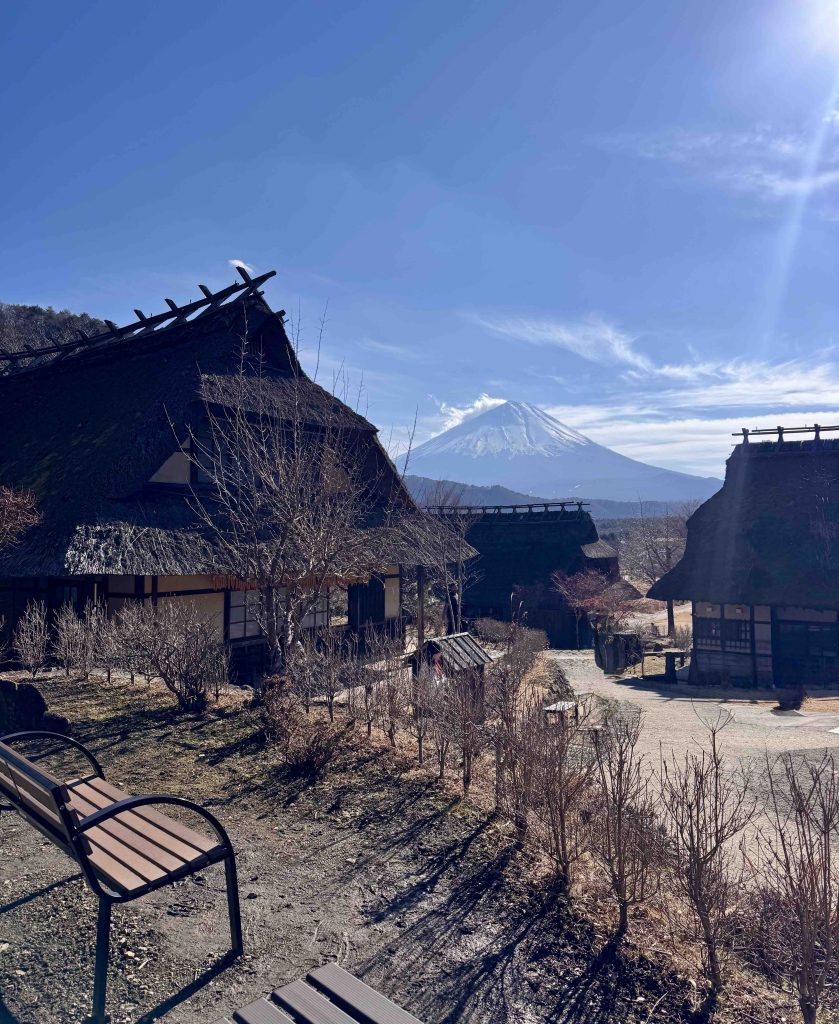
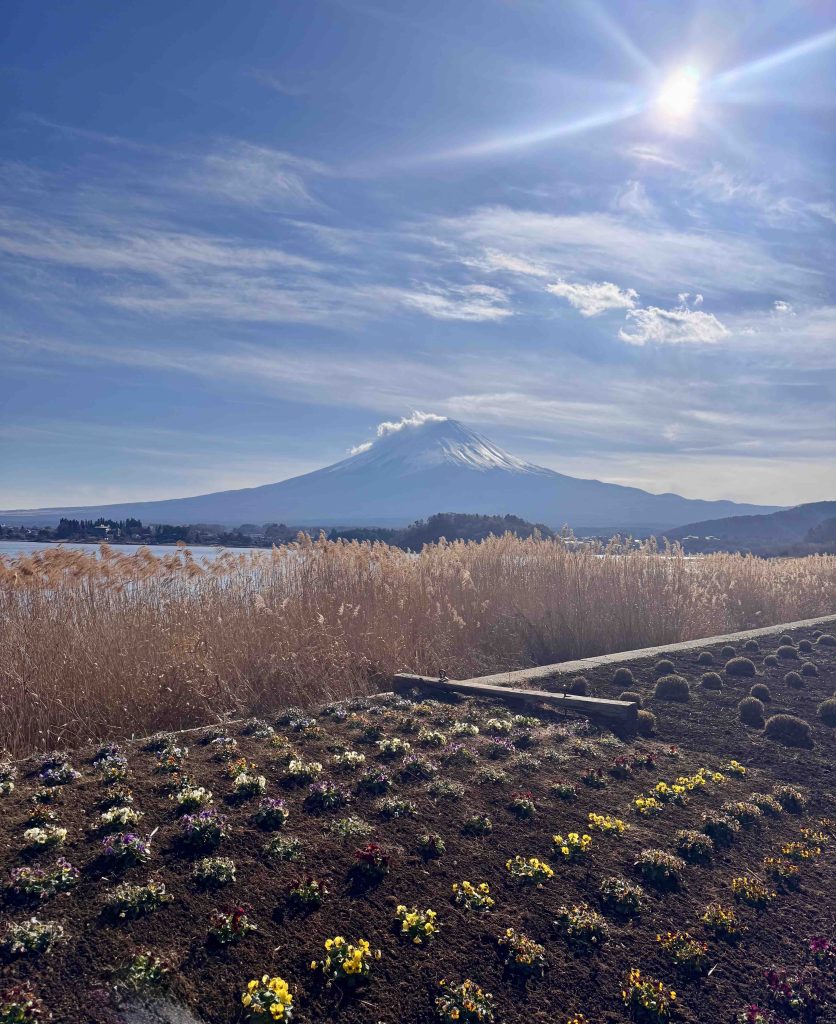
Set along the northern shore of Kawaguchi Lake, Oishi Park is one of the most serene and photogenic places to admire Mount Fuji. The park stretches gently along the waterfront, offering uninterrupted panoramic views of the lake with Mount Fuji rising majestically beyond.
What makes Oishi Park particularly special is its carefully curated seasonal flower displays, from lavender fields in early summer, to vibrant autumn blooms. This creates a colourful foreground that frames the mountain in constantly changing tones. On a clear day like the one I visited, with blue skies and Mount Fuji’s snow-capped peak standing sharply defined, the composition feels almost impossibly perfect.
5th Station
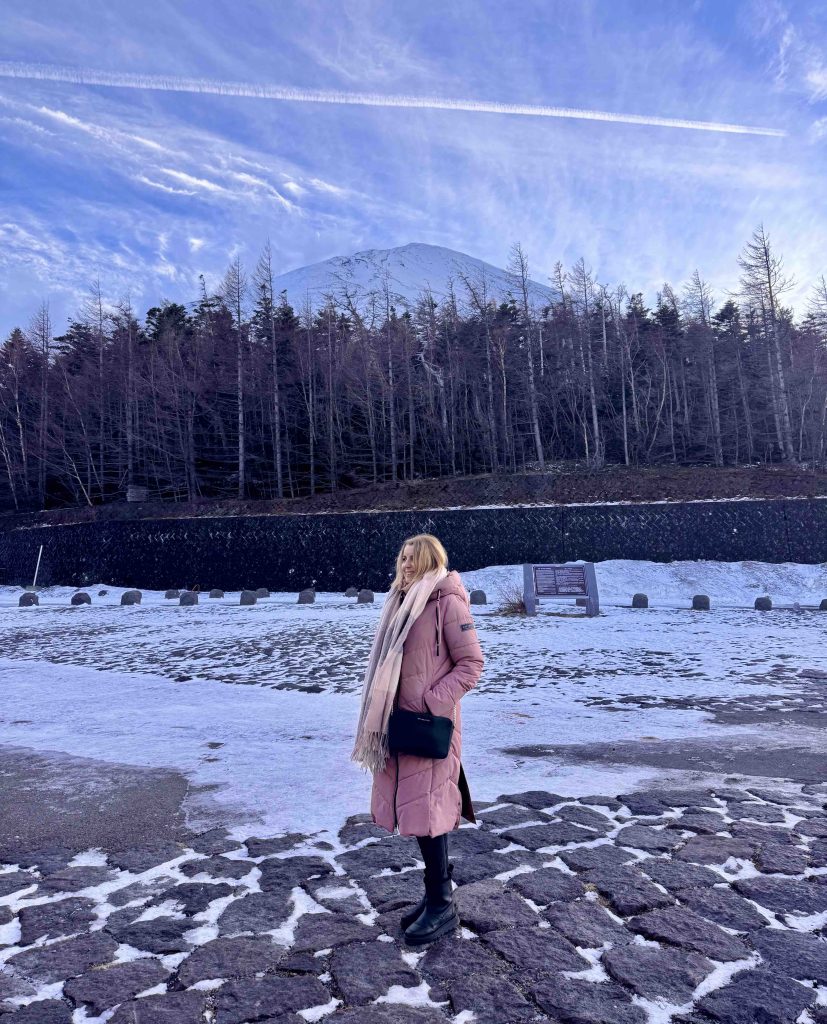
To end on a high note my day trip to Mount Fuji, there was no better plan than driving up to Mount Fuji 5th Station, the closest you can get to the summit if you are not climbing it. As the road winds higher in the mountain, forests gradually thin out and the landscape becomes more rugged, volcanic and dramatic.
At around 2,300 meters, 5th Station offers on a clear day views stretching endlessly across the surrounding Fuji Five Lakes region. The perspective of Mount Fuji incredibly close is also stunning. The air is noticeably cooler and thinner, and clouds often drift below.
In this area there are a few restaurants and shops. Nearby it’s worth to visit Komitake Shrine, a small but significant shrine dedicated to the mountain’s protective deities. Pilgrims traditionally stopped here to pray before beginning their ascent, seeking protection and safe passage to the summit.
From the 5th Station there are four trails open from July to September to hike to the top, a journey that can take up to 10 hours. The most popular trail is Yoshida Trail, which offers overnight mountain hut stays and the possibility of watching the sunrise. That must be an incredible plan on summertime.
Nara: a peaceful first-time introduction to Japan’s ancient past
Famous for its vast parklands with deers that seem to be part of a fairytale, historical temples and sacred sites, Nara is definitely a place to add to any Japan’s first time trip. Smaller and more relaxed than Tokyo or Kyoto, it offers an intimate glimpse into Japan’s early history and spiritual traditions. With seven different temples, it’s the kind of place where you slow down, and where the essence of traditional Japan feels especially present.
Conveniently located half an hour from Kyoto centre by train, I recommend visiting Nara as a day trip from Kyoto. You can easily spend half a day exploring Nara’s different sites and enjoying the very unique experience of engaging with deers roaming freely in the parks. To optimize your time, you can combine Nara with Fushimi Inari Shrine, which is located in the same train line.
Todai-ji Temple
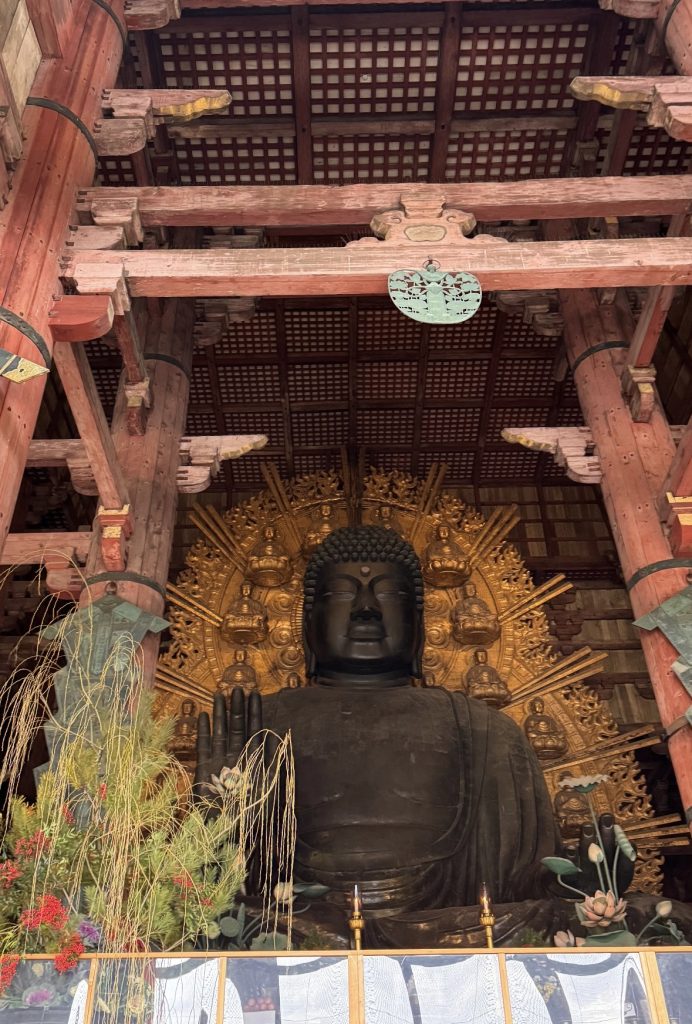
Visiting Todai-ji temple is mandatory when in Nara. Built in the 8th century as the head temple of all provincial Buddhist temples in Japan, this is one of the country’s most historically relevant landmarks. As you approach the temple grounds, passing through Nara Park with its freely roaming deers, you will see Nandaimon Gate, a large wooden gate with two fierce looking statues that represent the Nio Guardian Kings.
When you get to the temple, the sheer size of the Daibutsuden (Big Buddha Hall) immediately commands your attention. Until recently, this hall held the record of the largest wooden building in the world. It hosts the colossal bronze statue of Daibutsu (Great Buddha) seated in meditation, flanked by two Bodhisattvas. With 15 meters tall, this is one of Japan’s largest statues of Buddha.
In the temple there are also several smaller buddhist statues. Another popular attraction is a wooden pillar featuring a small opening at its base, which is said to be the same size as the Buddha’s nostril. According to the legends, passing through it is believed to bring enlightenment or good fortune.
Nara Park
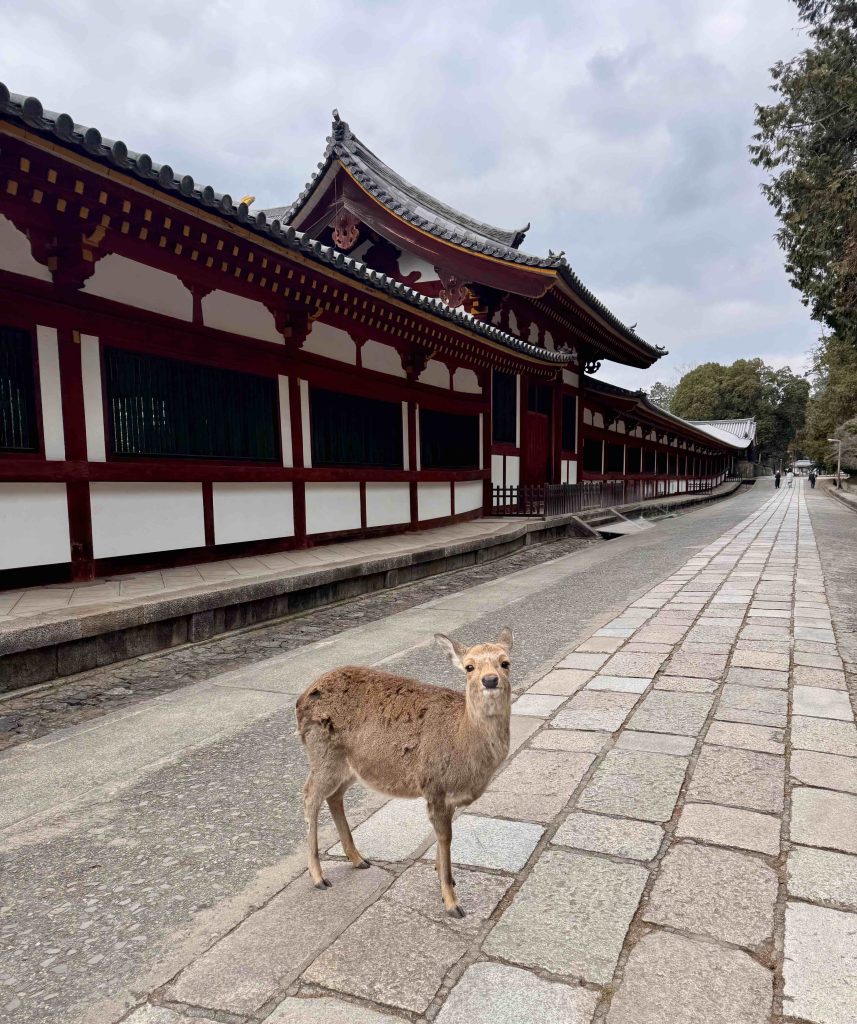
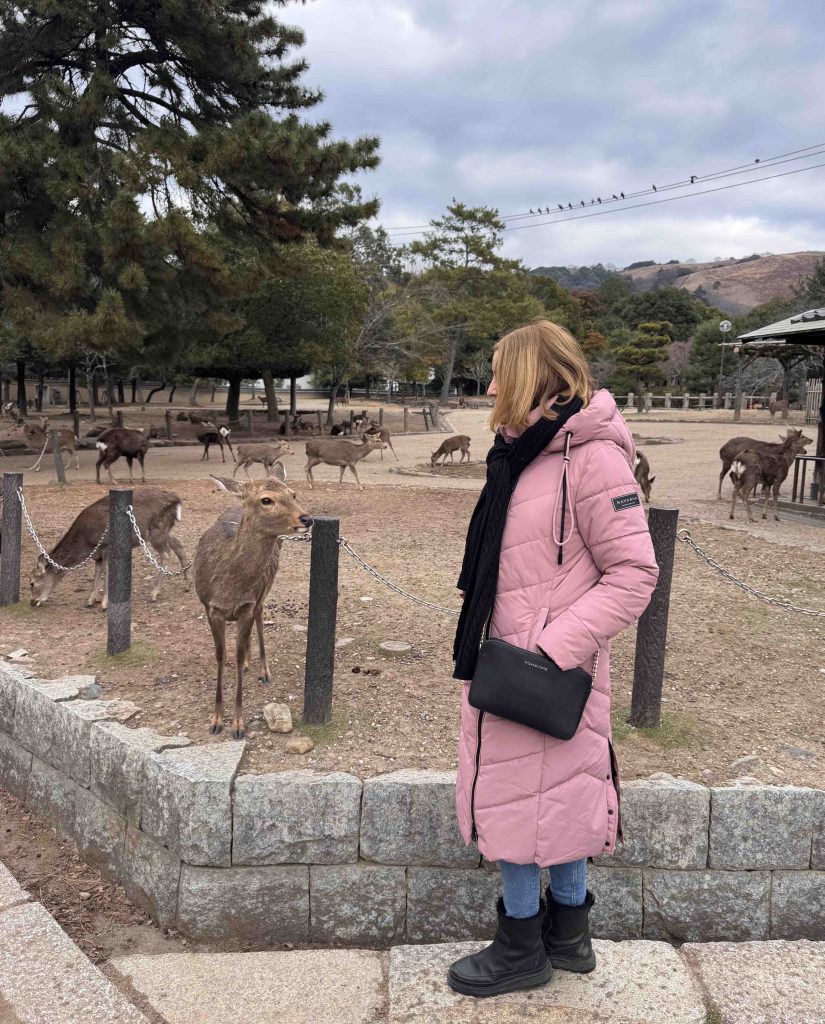
At the foot of Mount Wakakusa, Nara Park is one of the most unique places in the country. Besides Todai-ji, it also hosts other temples like Kofuku-ji and Kasuga Taisha. With more than 600 hectares, this public park dates back from the 19th century and it’s characterized by its robust population of more than one thousand free-roaming deers.
Nara Park deers have been inhabiting the area for over 1300 years and they are considered sacred messengers of the gods in Shinto belief. Therefore, these deers have long been protected as national treasures, and their presence gives the park an atmosphere that feels both mythical and tender.
Engaging with the deers is part of the magic. You can purchase special shika senbei crackers to feed them, and many deers will bow politely before accepting their treat, a gesture that feels almost surreal the first time you witness it.
Planning Japan without overwhelm
After exploring these iconic destinations, one thing became very clear to me: Japan is extraordinary, but planning a first trip can feel intimidating. I felt that overwhelm myself while preparing this journey while navigating train systems, deciding where to stay, and figuring out how to move efficiently between cities.
But once I arrived, I quickly realised that Japan is actually much easier to navigate than it initially appears. With a little preparation and a few helpful tips, planning your itinerary becomes part of the adventure rather than a source of stress. Here are a few practical things that made my trip smoother and I wish I had known from the start.
Getting around Japan: transports and useful tips
Japan’s public transportation system is famously efficient and incredibly reliable. In large cities like Tokyo and Kyoto, one of the easiest things you can do is to buy a Suica or Pasmo card and charge it with credit. These rechargeable transport cards allow you to move seamlessly through metro stations, buses and trains without needing to buy individual tickets each time. You can even use them in some convenience stores and shops.
To travel between cities, the Shinkansen (Japan’s high-speed train) is the fastest and most comfortable option. It connects major destinations like Tokyo and Kyoto in just a few hours and is an experience in itself. If buying tickets online feels confusing, don’t worry. You can easily purchase them once you arrive in Japan. That’s exactly what I did following the advice from locals. Simply visit a train station ticket counter, where staff are very helpful and used to assisting international travelers.
If you’re planning excursions — for example to Mount Fuji — consider booking through reliable local tour operators. These tours often simplify transportation logistics and provide helpful context about the places you visit, making the experience much more relaxed and enjoyable.
One practical tip: always carry some cash. While Japan is increasingly card-friendly, certain places (such as metro ticket machines, small restaurants and shops, or local market stalls) may still operate on a cash-only basis.
Where to stay on your first trip to Japan
Choosing where to stay can make a big difference to your overall experience. In major cities like Tokyo and Kyoto, I recommend staying close to a major train or metro station, which makes it much easier to explore the city and move between destinations. Areas such as Ginza, Shinjuku or Shibuya in Tokyo, and central Kyoto near Kawaramachi or the station area, provide excellent access to transportation and attractions.
Whenever possible, try to include at least one night in a traditional Japanese ryokan. These inns offer a unique cultural experience, with tatami rooms, futon beds, and beautifully prepared kaiseki meals. Staying in a ryokan — especially in a scenic area like Arashiyama or near Mount Fuji — allows you to experience a slower, more intimate side of Japan’s hospitality and traditions.
How many days you need for your first Japan itinerary
Japan is a country you could easily explore for weeks, but a 10–12 day itinerary is a great starting point for a first trip. This allows enough time to experience Tokyo’s vibrant energy, Kyoto’s historic temples, a visit to Mount Fuji, and a day trip to places like Nara without rushing too much between destinations.
The biggest lesson I learned is that Japan rewards curiosity and openness. Even when plans change or things feel unfamiliar, the country’s remarkable organisation and the kindness of its people make traveling here surprisingly smooth. What initially seems complex quickly becomes intuitive and before long, you find yourself navigating train stations, temple paths, and bustling neighborhoods with confidence.
Planning your first trip to Japan may feel overwhelming at first, but once you arrive, you’ll realise that the journey unfolds naturally. And every step of the way, the country reveals moments of beauty, culture, and wonder that make the effort more than worthwhile.
For more travel inspiration in Asia, visit my articles “Cambodia Bucket List” and “Ultimate Langkawi Travel Guide“.