Lanzarote: bucket list experiences on an island sculpted by volcanoes
Lanzarote: bucket list experiences on an island sculpted by volcanoes
Lanzarote bucket listexperiences on an island sculpted by volcanoes
An island sculpted by millions of years of volcanic activity, Lanzarote is one of the most extraordinary destinations I’ve ever visited. Located in the Atlantic Ocean, off the northwest coast of Africa, Lanzarote is one of the seven main islands of the Canary Islands, a Spanish archipelago. Its volcanic origins have shaped a surreal landscape of vast lava fields, imposing craters, black sand beaches and dramatic coastline, creating striking sceneries.
Beyond its otherworldly landscapes, Lanzarote offers a remarkable variety of bucket list experiences. From exploring the atmospheric scenery of Timanfaya National Park and wandering through the volcanic vineyards of La Geria to discovering the extraordinary architecture creations of César Manrique, there are countless things to do in Lanzarote. Add to that beautiful beaches likeJanubio, Famara and Papagayo, as well as charming coastal villages, and you will discover an island that is truly unique.
Renowned for its mild climate, Lanzarote is a wonderful year-round destination. I visited it in early November and I was greeted by warm temperatures and perfect beach weather. The island can be windy due to the northeast trade winds, particularly from late spring to early autumn. However, during my visit, there was hardly any wind, making it an ideal time to explore the island.
Lanzarote volcanic landscapes
I highly recommend renting a car to reach the best places to visit in Lanzarote at your own pace. The roads are generally in excellent condition, making it very easy to drive around the island. Alternatively, there are public bus services and organized tours connecting some of Lanzarote’s main attractions.
Thanks to its proximity to other Canary Islands, Lanzarote can be also easily combined with a visit to Fuerteventura or La Graciosa. Regular ferries connect Playa Blanca, in southern Lanzarote, with Corralejo, in Fuerteventura, while boats depart from Órzola, in the north of the island, to La Graciosa.
In this article, I will share some of the most unforgettable bucket list experiences in Lanzarote — the places that took my breath away and made me fall in love with this extraordinary island. From otherworldly volcanic landscapes to spectacular coastlines and architecture wonders, Lanzarote is a destination that will stay with you long after you leave.
Step into a volcanic world at Timanfaya National Park
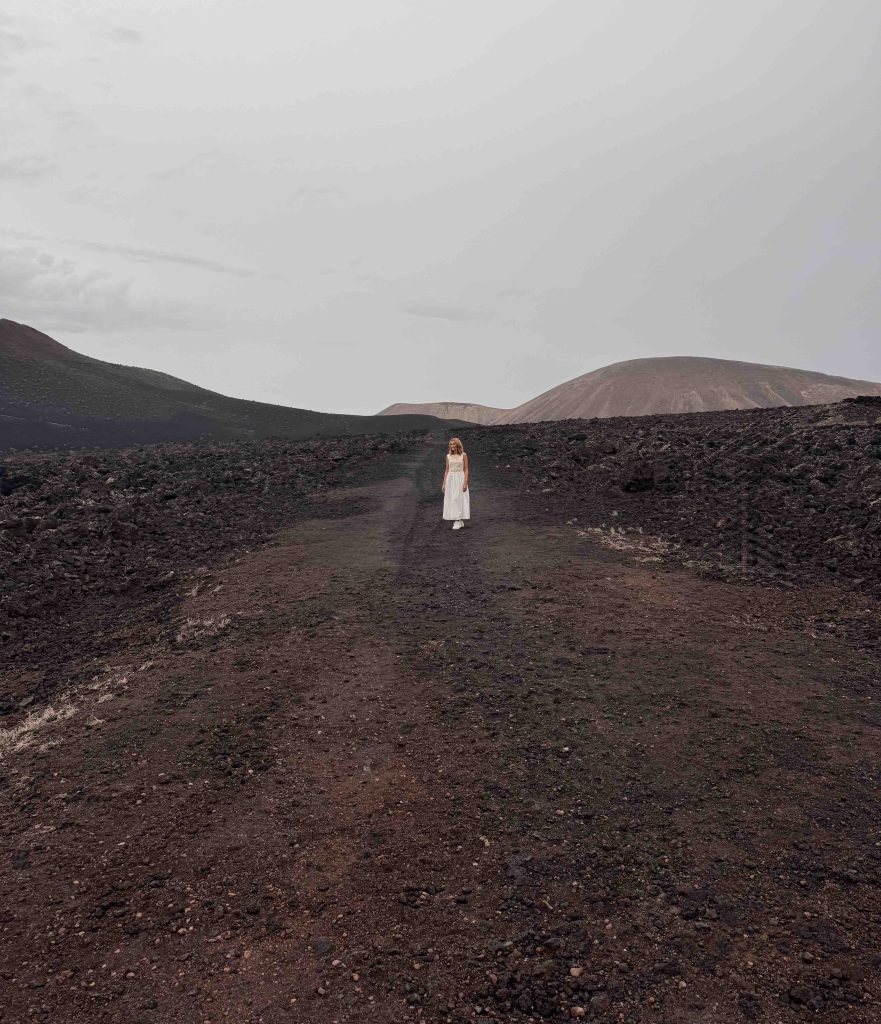
There is no better way to begin exploring Lanzarote than visiting Timanfaya National Park. Located in the southwestern part of Lanzarote, this protected natural area is home to one of the most extraordinary volcanic landscapes in the world. The surreal lava fields, volcanic craters and rugged mountains were sculpted by a massive eruption that lasted from 1730 to 1736. Over six years, lava and volcanic ash covered approximately 200 square kilometres, creating the surreal scenery we can admire today.
Nowadays it’s possible to visit Timanfaya National Park in the organised Tour of the Volcanoes, a 40 minutes bus tour starting from Islote de Hilario in Montanas del Fuego (Fire Mountains). The route takes you through the heart of the volcanic landscape, offering a close-up view of the lava fields and volcanic formations. It also includes geothermal demonstrations, as well as the opportunity to visit El Diablo Restaurant, where food is grilled using geothermal heat from the volcano itself.
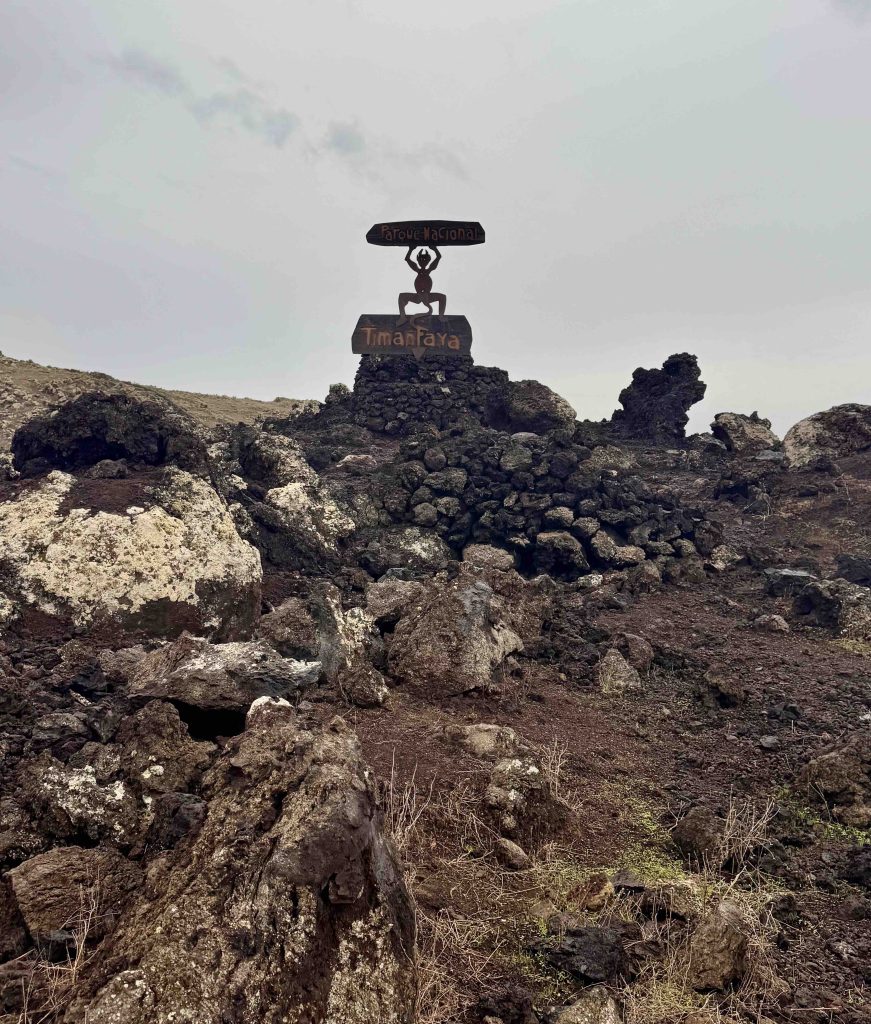
Entrance of Timanfaya National Park
I didn’t take the bus tour on this visit, as I had already experienced it during a previous trip to Lanzarote. However, I definitely recommend it for first time visitors. Even without entering the park on the organised tour, it’s possible to admire the spectacular volcanic scenery by driving along the road connecting Yaiza to Mancha Blanca which runs alongside the park. The views of the vast lava fields and volcanoes in the distance are breathtaking, making this one of the most scenic drives on the island and, in my opinion, an absolute must do in Lanzarote.
Timanfaya National Park
Marvel at the colourful Janubio Salt Pans
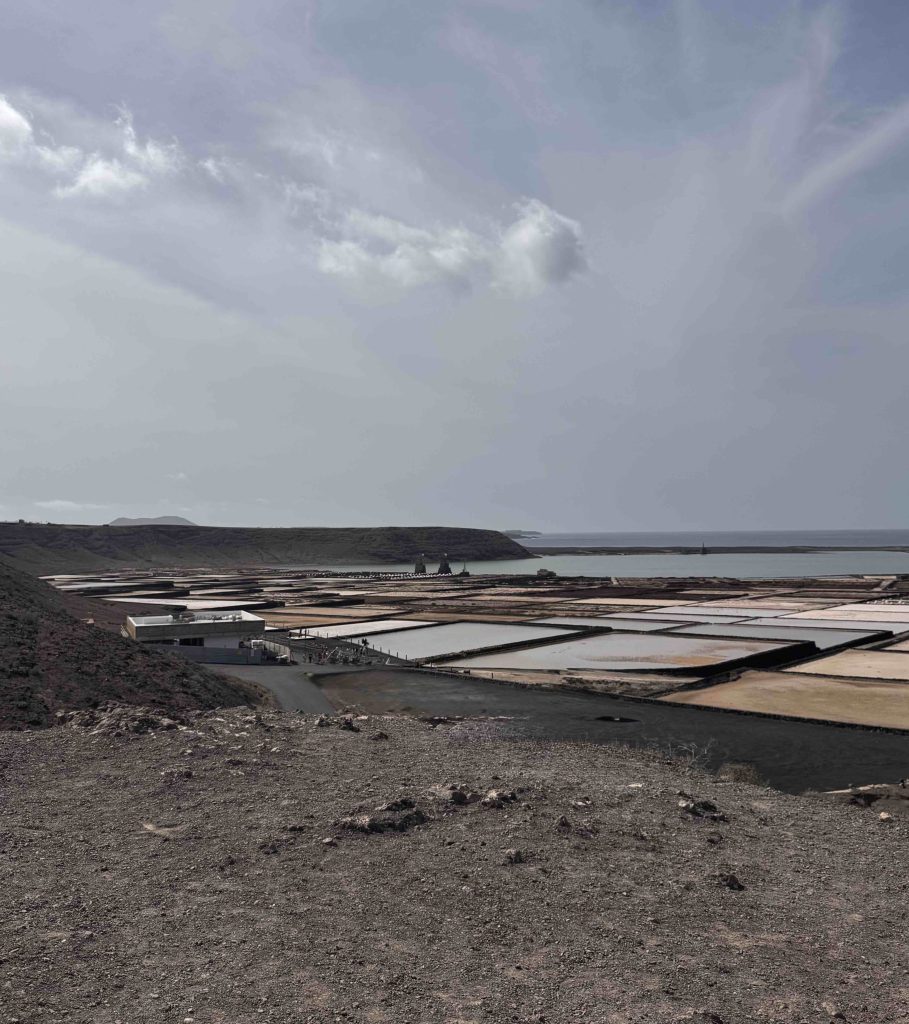
Located on the southwest coast of Lanzarote, near Yaiza and El Golfo, the Janubio Salt Pans are the largest salt works in the Canary Islands. Established in the late 19th century, they occupy a natural lagoon formed when volcanic lava flows cut off a former bay from the ocean. Since then, salt has been harvested here using traditional techniques that are still used today, preserving an important part of Lanzarote’s cultural and industrial heritage.
Set against the volcanic soil and the sea, the salt pans create a beautiful mosaic of shallow pools in shades of white, ochre, pink and deep blue. The blend of colours and textures, framed by the surrounding dark volcanic landscape, makes it a distinctive and photogenic site. You can stop near the salt pans to admire the scenery, but I also recommend visiting a viewpoint nearby, which offers a panoramic perspective over Janubio.
Janubio Salt Pans
Walk along the black volcanic sands of Janubio Beach
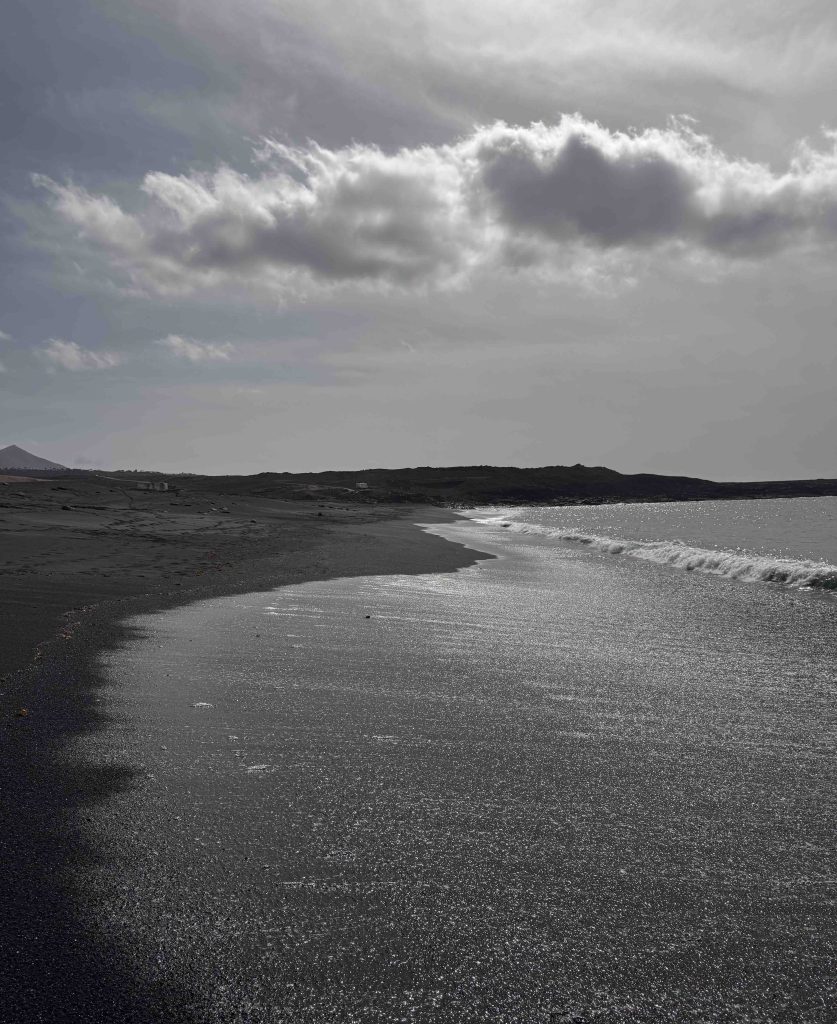
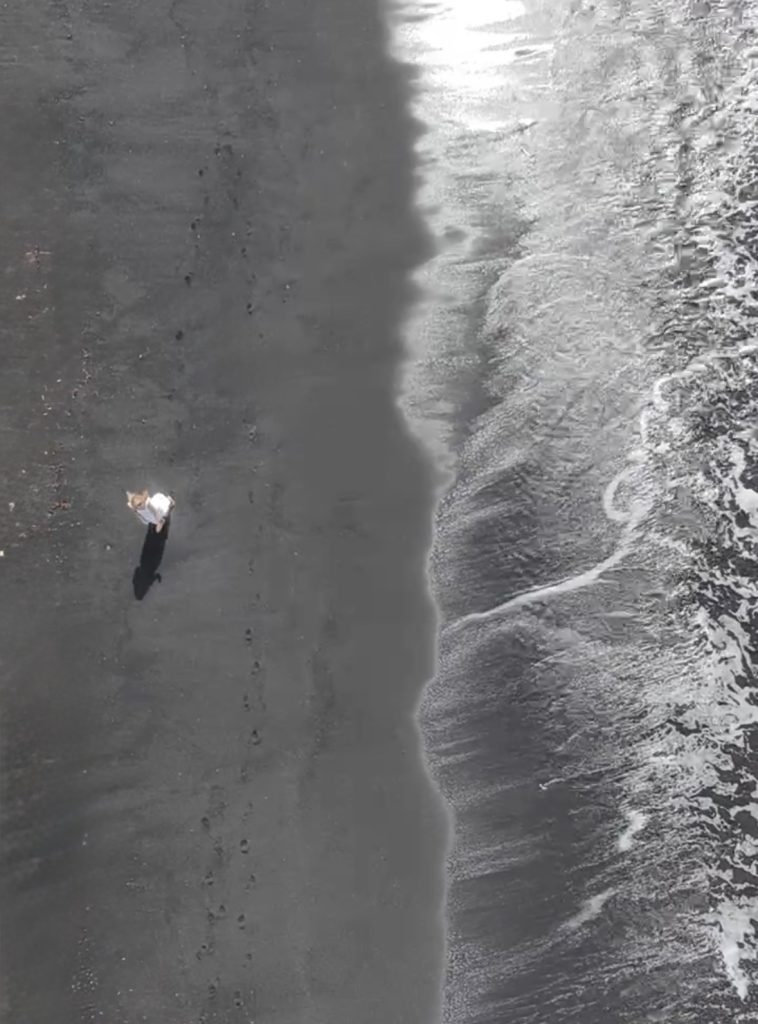
Janubio Beach is one of the most atmospheric beaches I’ve ever visited. This dramatic stretch of coastline, where black volcanic sands meet the Atlantic Ocean, is defined by its rugged surroundings and powerful waves. The contrast between the dark shore, the deep blue ocean and the surrounding volcanic landscape makes it an extraordinary place to visit and a wonderful spot for photography.
Janubio Beach
Unlike many of Lanzarote’s more sheltered beaches, Janubio is fully exposed to the ocean, with strong waves and powerful currents that make swimming unsafe. Instead, it’s the perfect place to soak up the sun, stroll along the black sands and appreciate the raw beauty of Lanzarote’s coastline. Thanks to its location, close to the Janubio Salt Pans and the El Golfo village, you can easily combine a visit to the beach with some of the island’s most beautiful spots along the southwest coast.
Janubio Beach from above
Discover El Golfo, a charming fishing village by the sea
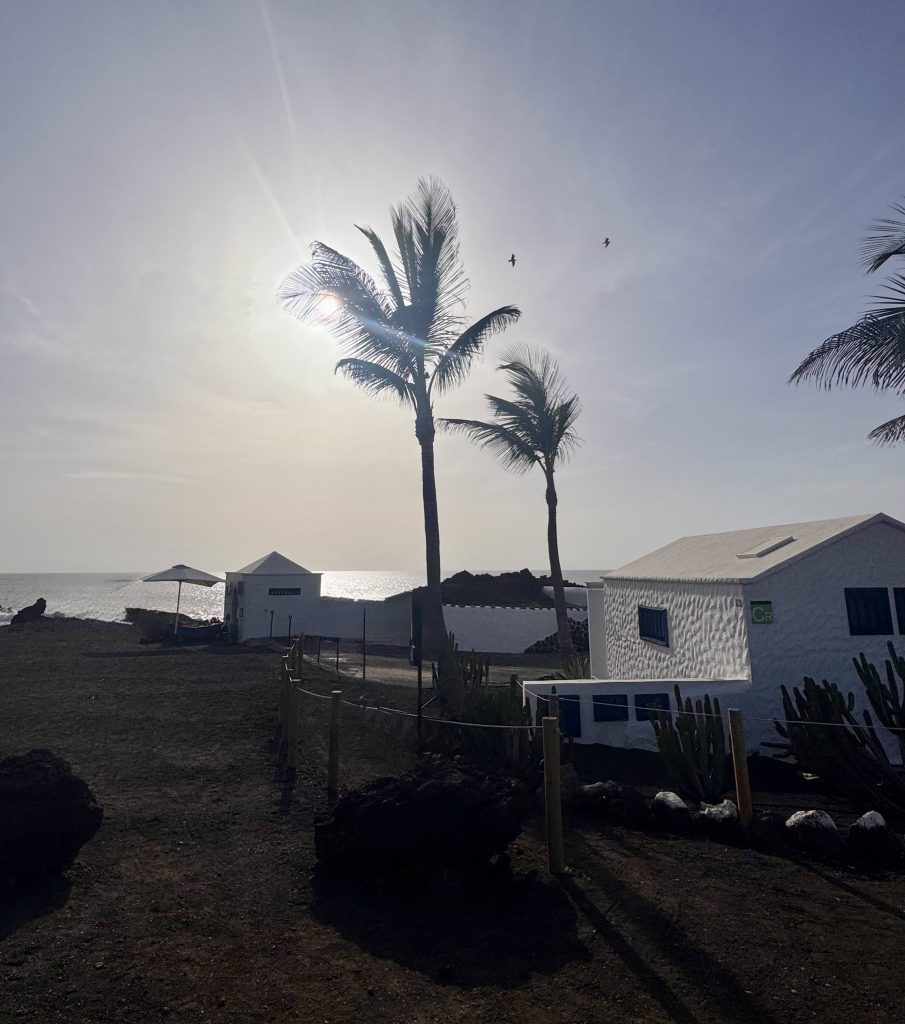
El Golfo is a small fishing village where traditional whitewashed houses contrast against the rugged volcanic landscape. Home to fewer than 300 inhabitants, this peaceful seaside settlement is characterised by its beautiful white façades, scattered palm trees and great views over the ocean. Its fishing heritage remains an important part of everyday life, and its waterfront restaurants serve delicious local dishes, often featuring fresh fish and seafood from the day’s catch.
I particularly loved visiting El Golfo at sunset, when the warm golden light bathed the white houses in beautiful shades of pink and orange. Its picturesque setting makes it one of the most charming and authentic villages to visit in the island.
El Golfo village
Admire the emerald waters of Charco Verde
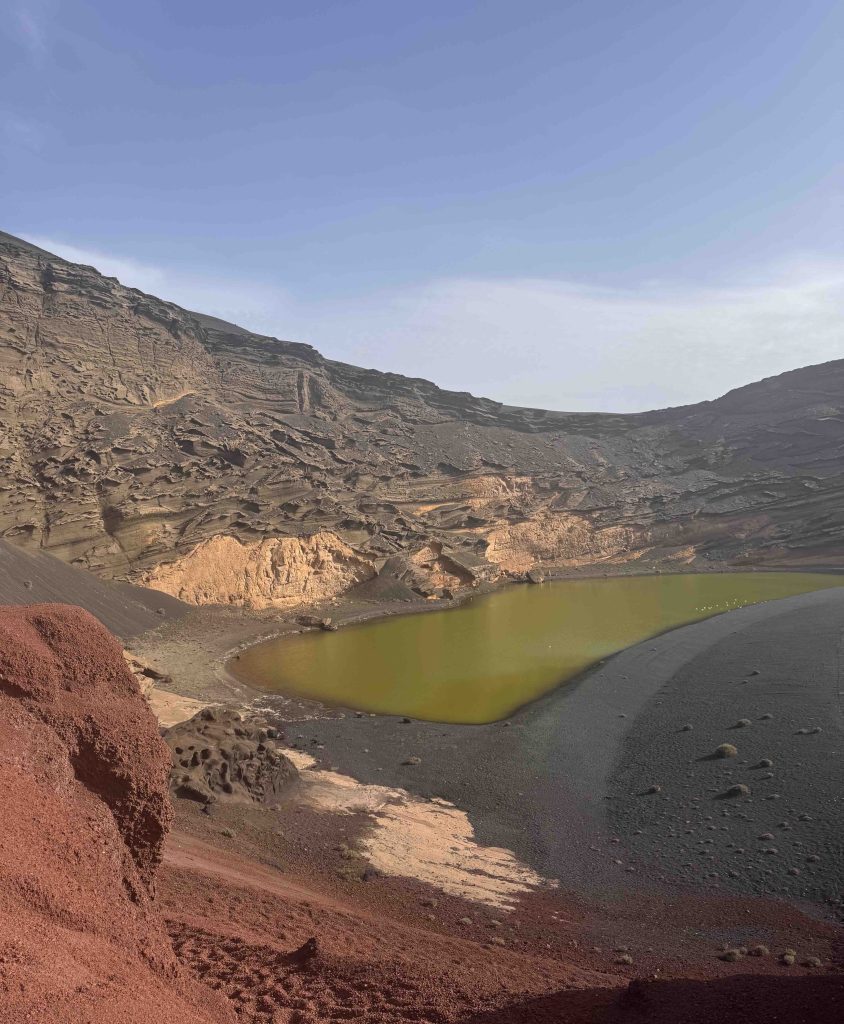
When visiting El Golfo, don’t miss one of Lanzarote’s most unmissable natural wonders – Charco Verde, also known as Charco de los Clicos. This striking neon-green lagoon is nestled within a partially collapsed volcanic crater, creating an unusual and photogenic landscape. Its extraordinary colour is caused by the presence of algae and other microorganisms in the water, making it stand out beautifully against the surrounding volcanic scenery.
Visiting Charco Verde is very easy. It is located just before reaching the village of El Golfo, along the coastal road connecting the area with Janubio Salt Pans. There is a nearby car park and a short, accessible path leading to a viewpoint overlooking the lagoon.
Charco Verde lagoon
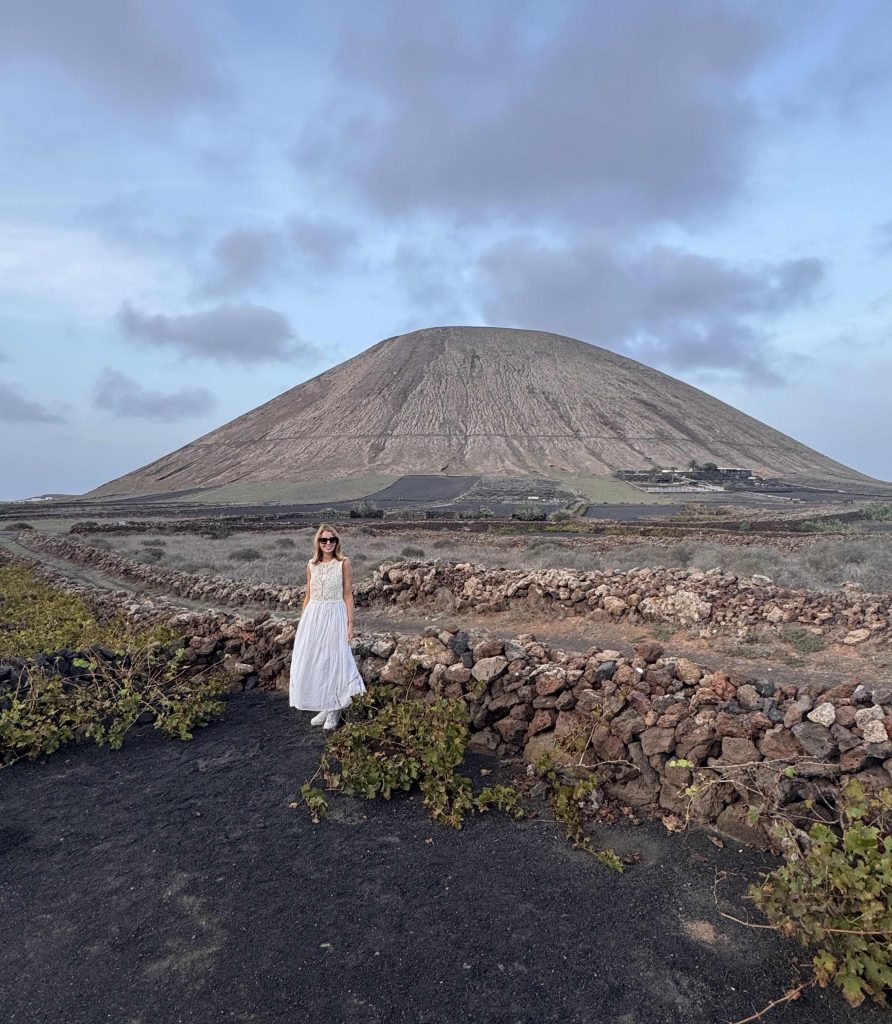
Wander through the otherworldly volcanic vineyards of La Geria
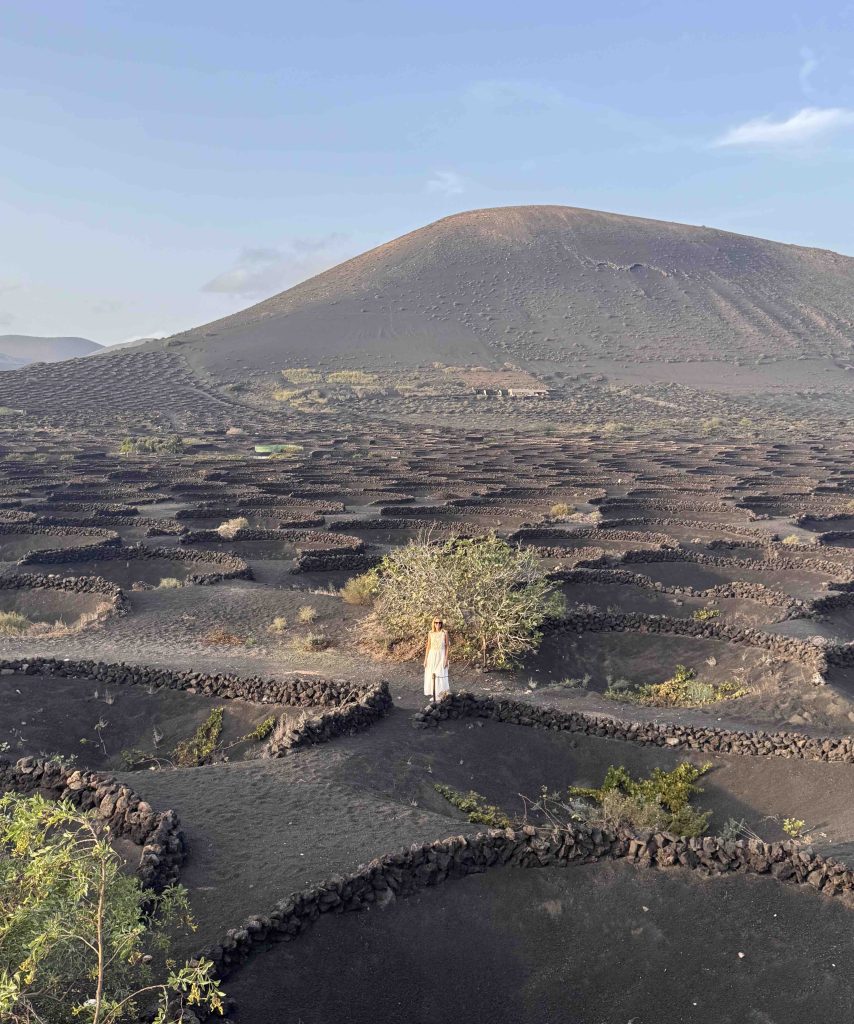
If I had to choose my favourite place in Lanzarote, it would be the La Geria wine region. This was one of those places that had been on my bucket list for many years. When I finally found myself wandering through its otherworldly volcanic vineyards, I almost had to pinch myself to make sure it was real.
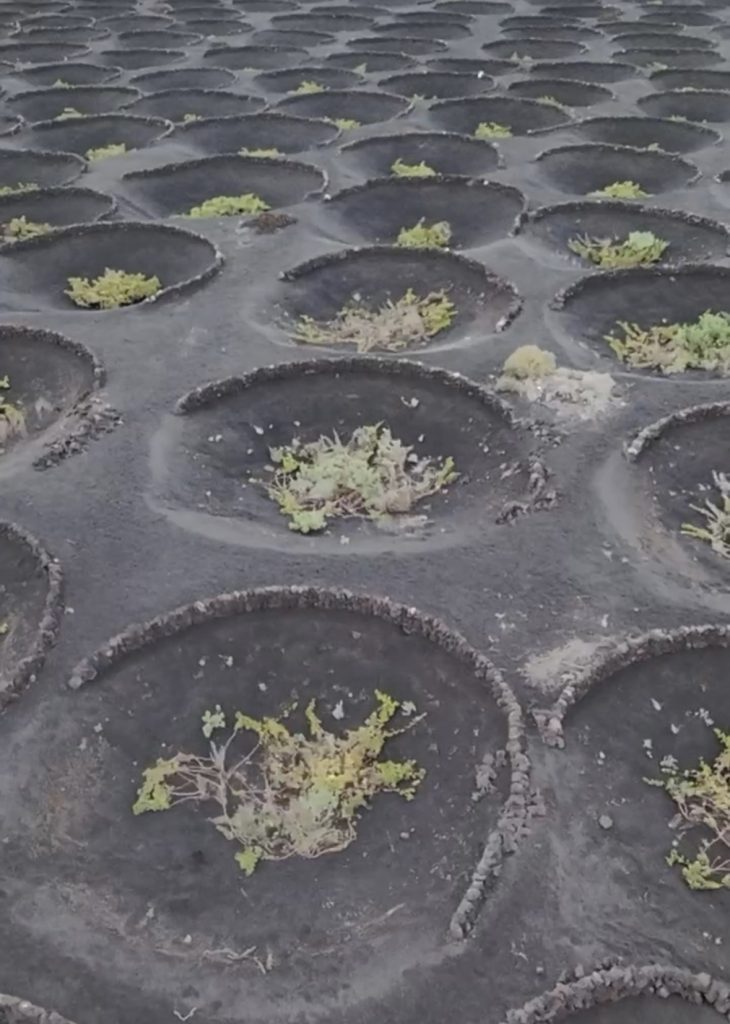
Located in the heart of Lanzarote, La Geria is a protected volcanic wine-growing landscape and one of the most distinctive vineyard regions in the world. Following the massive eruptions of Timanfaya in the 18th century, this area was covered by a thick layer of volcanic ash. Rather than abandoning the land, local farmers developed an ingenious way of cultivating vines in this challenging environment. The vines are planted in deep circular hollows dug into the volcanic ash and protected by semicircular stone walls, which shelter them from the strong winds and help retain moisture. This remarkable traditional technique allows grapes to thrive in Lanzarote’s dry volcanic soil.
La Geria vineyards
Stretching across vast volcanic plains, thousands of individual vines are scattered across the landscape, each growing inside its own circular hollow. The result is an extraordinary patchwork of dark volcanic soil, green vines and curved stone walls, creating an amazing contrast against the rugged volcanic mountains.
I recommend stopping at Bodega La Geria, one of the region’s best-known wineries, where you can learn more about Lanzarote’s unique wine traditions and enjoy a tasting of the local wines. Sunsets from the winery’s terrace are stunning.If you park the car in the winery and walk a few hundred meters in the direction of Teguise, you will find a pathway through the vineyards where you can walk around and enjoy the breathtaking beauty of this unique landscape.
La Geria vineyards from above
Unwind in the turquoise waters of Papagayo Beach
Papagayo Beach is often considered one of the most beautiful beaches on the island. Located within Los Ajaches Natural Monument in the south, it’s famous for its golden sands, crystal-clear turquoise waters and spectacular natural surroundings. Sheltered between volcanic cliffs, this beautiful cove offers a contrast to the island’s darker volcanic coastline. I didn’t have time to return to Papagayo during this latest visit to Lanzarote, but having been there on a previous trip, I can definitely say it’s worth including in your itinerary.
Discover the magical world of Jameos del Agua
No visit to Lanzarote is complete without experiencing the remarkable legacy of César Manrique, a visionary artist, architect and environmentalist born on the island. He devoted much of his life in bringing art and architecture into harmony with Lanzarote’s extraordinary landscapes. His creations have become some of the island’s most iconic attractions, with Jameos del Agua widely regarded as one of his masterpieces. Interestingly, the word jameo comes from a local geological term referring to a large opening formed when the roof of a volcanic lava tube collapses.
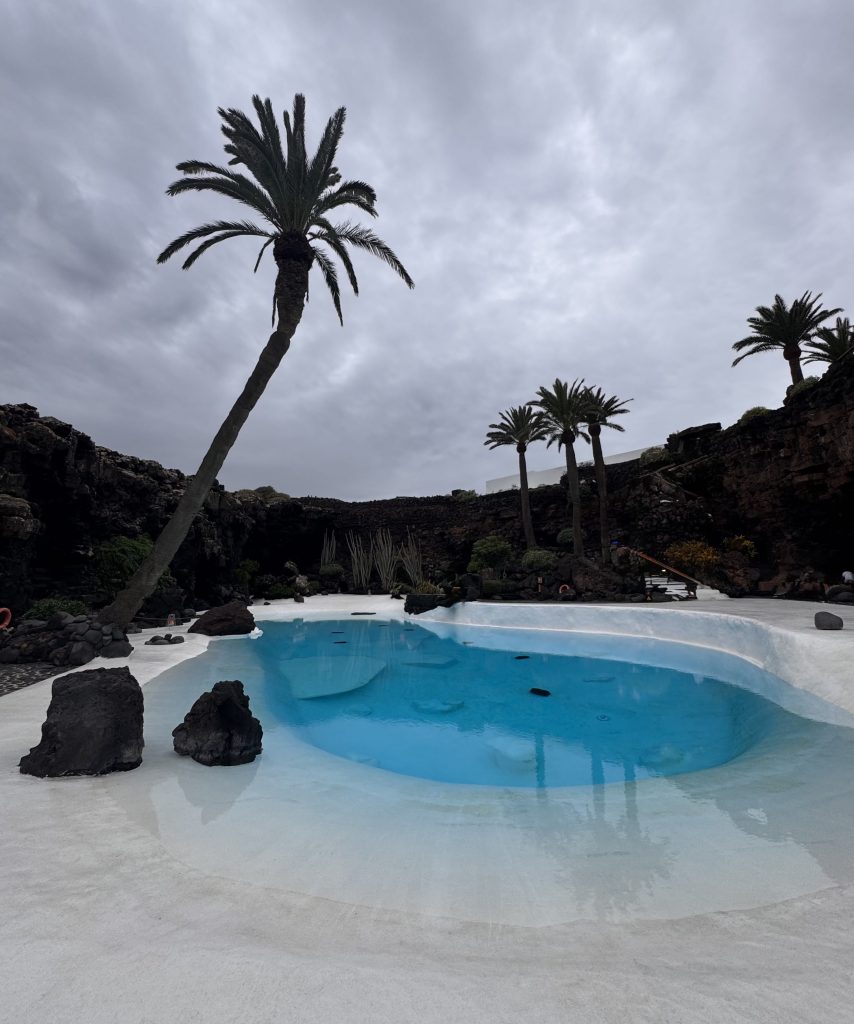
Located in the north of Lanzarote, Jameos del Agua is a spectacular cultural and artistic space created inside a volcanic tunnel formed thousands of years ago by the eruption of La Corona volcano. Developed in the 1960s, this natural formation was transformed by César Manrique into an extraordinary architectural experience, incorporating volcanic caves, an underground lake, an iconic white swimming pool, beautiful gardens filled with palm trees and cacti, and an auditorium with exceptional natural acoustics.
Pool at Jameos del Agua
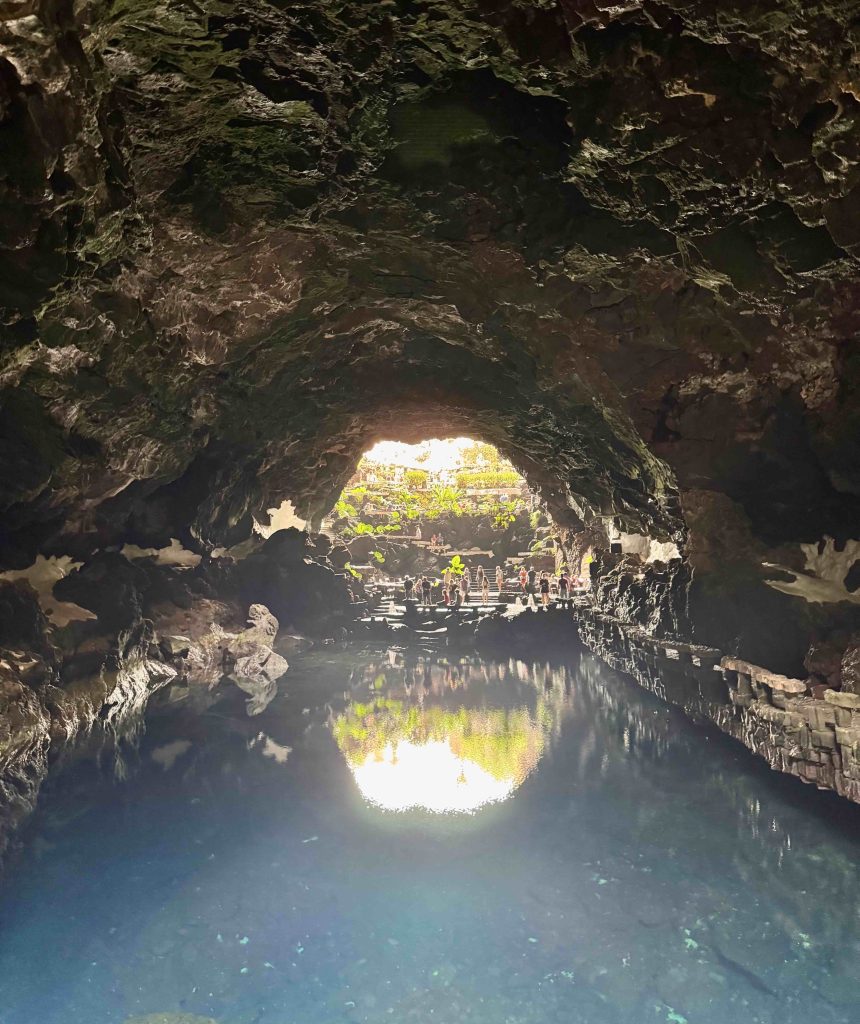
One of the most fascinating features of Jameos del Agua is its natural underground lake, home to tiny endemic white crabs, a rare species found only in this volcanic environment and one of its most recognisable symbols. The dark volcanic rock, the natural light filtering into the caves, the lush vegetation and Manrique’s carefully integrated architecture elements creates an almost magical atmosphere.
Underground lake at Jameos del Agua
Enjoy the breathtaking views from Mirador del Río
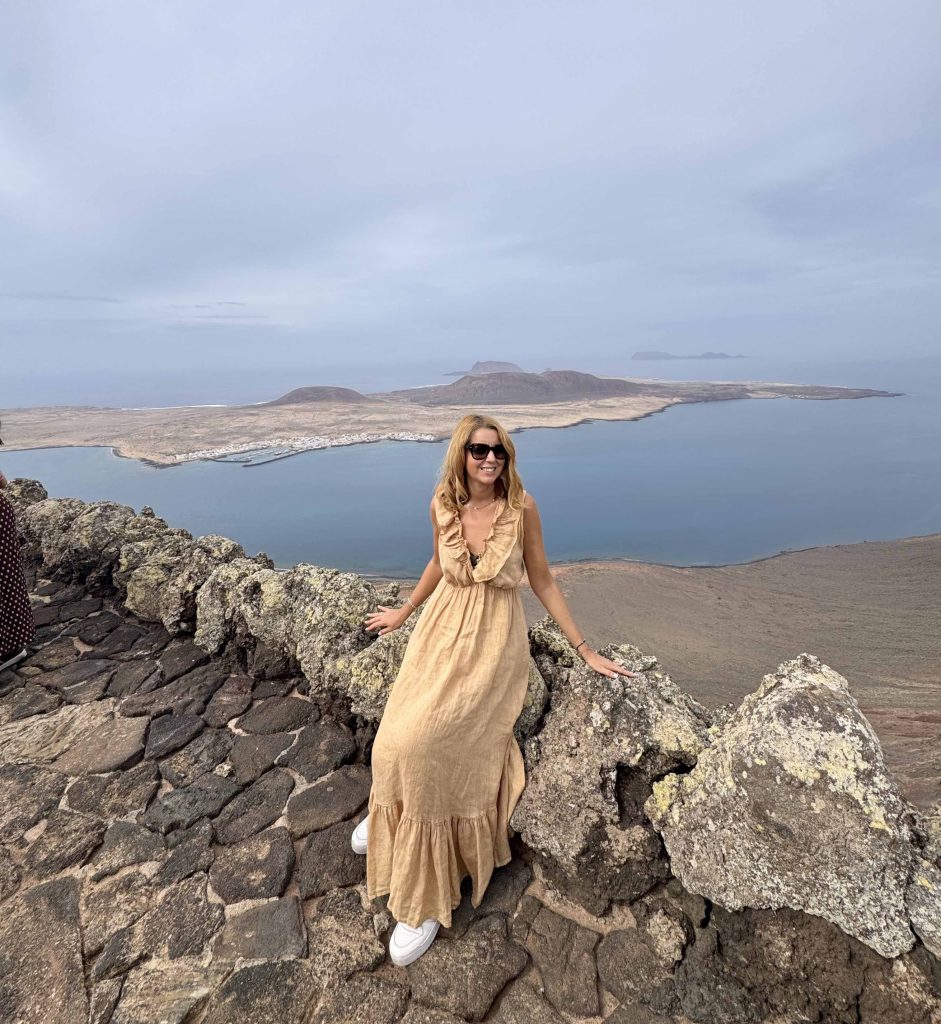
Another creation of César Manrique, Mirador del Río is one of Lanzarote’s most amazing viewpoints, offering breathtaking views over the Atlantic Ocean and the neighbouring island La Graciosa. At the northern top of the island, it is perched high up on Risco de Famara cliffs overlooking “El Río”, a narrow strip of sea sparring the two islands. Inaugurated in 1973, it seamlessly blends architecture with natural surroundings.
The building itself is quite unique and it is almost invisible from the outside. It is carved into the cliffside and integrated into the rugged landscape, covered with vegetation and volcanic stone. Inside, the design features winding corridors, vaulted ceilings, organic shapes and white interiors.There is also a café with panoramic windows, perfect to enjoy a drink while admiring the scenery. However, the highlight of Mirador del Río is undoubtedly the outdoor terrace and its spectacular views.
Viewpoint at Mirador del Río
Discover more of César Manrique's artistic legacy
Beyond Jameos del Agua and Mirador del Río, Lanzarote is home to several other impressive creations of César Manrique. One of the most fascinating is the Fundación César Manrique, located in Tahíche. Set inside Manrique’s former home, this extraordinary building was designed around five natural volcanic bubbles, transforming the island’s unusual geological formations into living spaces.
Another great place to visit is Jardín de Cactus, a botanical garden built inside a former volcanic quarry. This amphitheatre-like space is home to thousands of cacti from different parts of the world, arranged among volcanic stone pathways, sculptural elements and a traditional windmill. Monumento al Campesino stands at the geographical centre of Lanzarote and pays tribute to the generations of farmers who learned to cultivate the island’s challenging volcanic soil.
Experience the wild beauty of Famara Beach
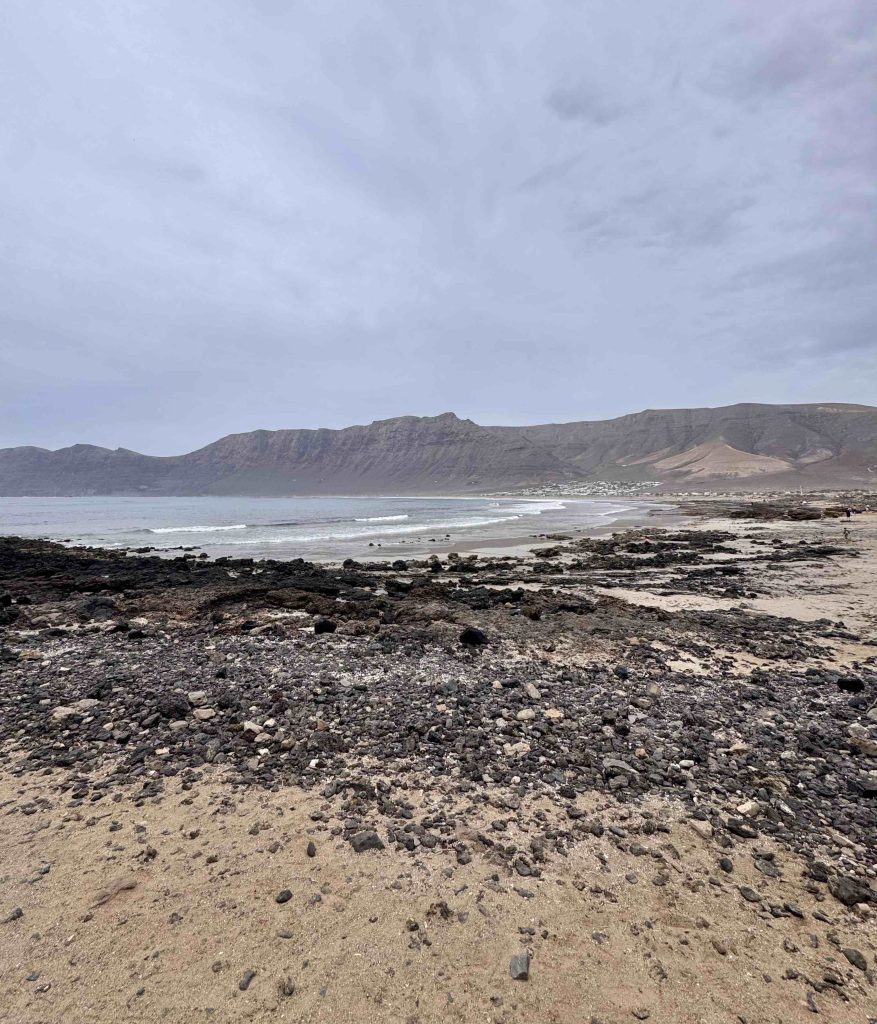
On the northwest coast of Lanzarote lies one of the island’s most distinctive beaches, renowned for its endless stretch of golden sand, dramatic cliffs and untamed Atlantic scenery. Set at the foot of the impressive Famara Cliffs, which rise more than 500 metres above the coastline, Famara Beach faces the neighbouring island of La Graciosa.
This beach is internationally known as one of the best surfing and water-sport destinations in Europe thanks to its consistent waves and prevailing trade winds. It is also considered a must go for its spectacular sunsets, when the fading light casts beautiful colours over the cliffs and the sea. In the area it’s worth to go to Caleta de Famara nearby, a charming fishing village with sandy streets, whitewashed fishermen’s houses and a laid-back atmosphere.
I visited Famara Beach and Caleta de Famara in the only rainy day of my trip to Lanzarote. Despite the grey skies, I couldn’t resist taking a walk along the beach and admiring its wild beauty. Afterwards, I wandered through the picturesque streets of the little village and ended up enjoying one of the best meals of my trip, tasting delicious fresh seafood at a traditional local restaurant.
This website uses cookies to improve your experience. We'll assume you're ok with this, but you can opt-out if you wish. Cookie settingsACCEPT
Privacy & Cookies Policy
Privacy Overview
This website uses cookies to improve your experience while you navigate through the website. Out of these cookies, the cookies that are categorized as necessary are stored on your browser as they are essential for the working of basic functionalities of the website. We also use third-party cookies that help us analyze and understand how you use this website. These cookies will be stored in your browser only with your consent. You also have the option to opt-out of these cookies. But opting out of some of these cookies may have an effect on your browsing experience.
Necessary cookies are absolutely essential for the website to function properly. This category only includes cookies that ensures basic functionalities and security features of the website. These cookies do not store any personal information.
Any cookies that may not be particularly necessary for the website to function and is used specifically to collect user personal data via analytics, ads, other embedded contents are termed as non-necessary cookies. It is mandatory to procure user consent prior to running these cookies on your website.