Óbidos, Portugal: The Ultimate Guide to a Fairytale Town
Óbidos, Portugal: The Ultimate Guide to a Fairytale Town
Óbidos, PortugalThe Ultimate Guide to a Fairytale Town
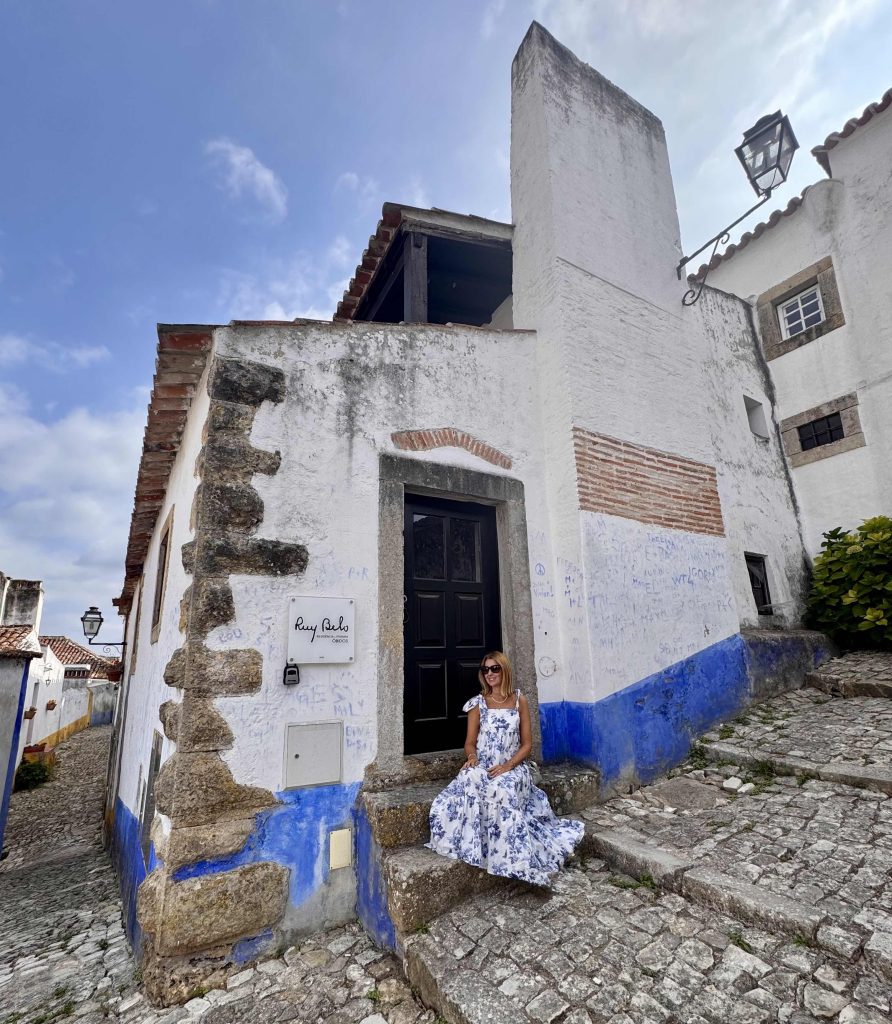
Imagine a fairytale town perched at the top of a hill with an ancient castle, imposing walls, cobblestone flower-filled streets, whitewashed houses and a storybook atmosphere. Imagine no longer because you will find it in Óbidos, a historic medieval town in the West region of central Portugal, located less than an hour’s drive from Lisbon. I recently revisited Óbidos and fell in love with this beautiful destination all over again, so I want to share my Ultimate Guide to Óbidos, Portugal: a timeless place that feels like stepping into another time.
With roots dating back to Roman times, Óbidos has witnessed centuries of Portuguese history. Conquered by Portugal’s first king, D. Afonso Henriques, in 1148, the town grew around its castle and defensive walls. In 1282, King D. Dinis gave Óbidos to his wife, Queen Isabel, beginning a tradition that saw the town become part of the dowry of Portugal’s queens until 1883. For that reason, it earned the charming name “Town of Queens”.
Óbidos has much to offer beyond its fairytale appearance. From centuries-old churches and an impressive medieval castle to its charming cobbled streets and dreamy bookshops, there is something beautiful to discover around every corner. Simply wandering through the historic centre, taking in its atmosphere and getting lost among its winding streets is an experience in itself.
Streets of Óbidos
Óbidos is also a vibrant cultural hub, with a remarkable calendar of events taking place throughout the year. In 2015, it was designated a UNESCO Creative City of Literature and it is home to FOLIO – Óbidos International Literature Festival, which brings together writers, artists and readers. Other events celebrate different facets of the town’s heritage and creativity, from the immersive Óbidos Medieval Market and the enchanting Óbidos Christmas Market to the famous International Chocolate Festival.
But the magic doesn’t end at Óbidos’ ancient walls. The surrounding region is home to equally beautiful places worth exploring, from the peaceful shores of Lagoa de Óbidos and its nearby beaches to the charming town of Caldas da Rainha. This makes Óbidos an ideal base or a stop on a longer itinerary, allowing you to easily combine the town with other destinations and experiences.
In this article, I will share my ultimate travel guide to Óbidos, Portugal and the surrounding region, with tips and useful information on what to see, where to go and the experiences worth having. I hope you fall in love with Óbidos as much as I did.
Óbidos Ultimate Guide
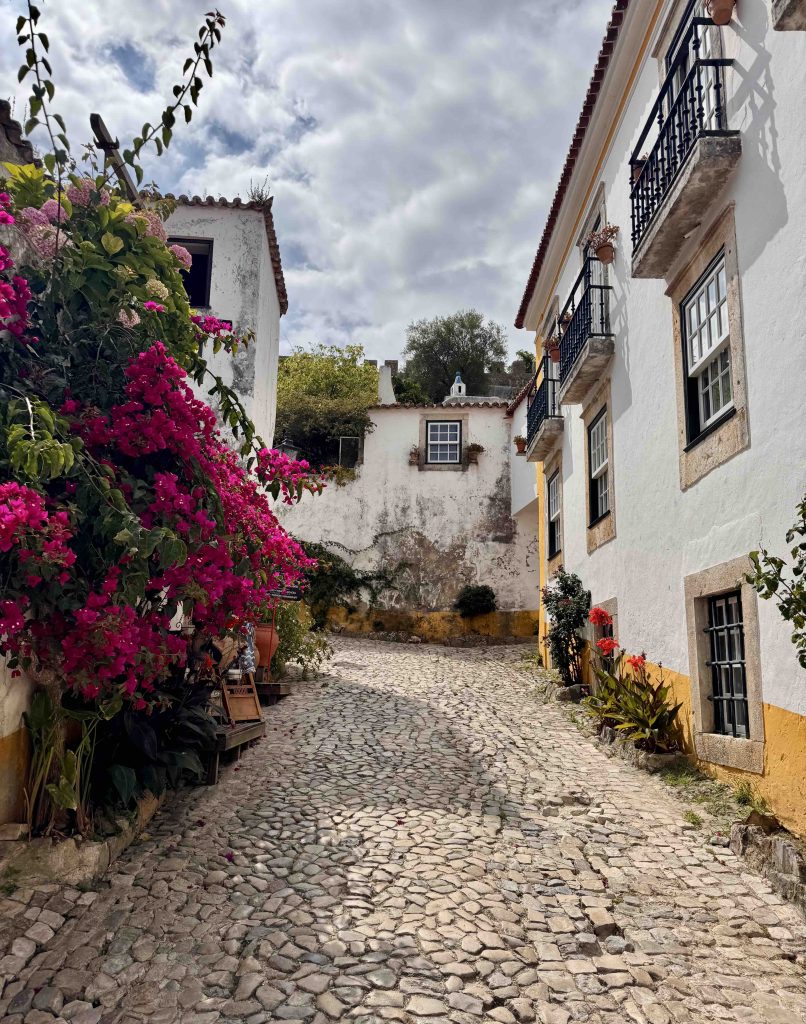
Wander through Óbidos picturesque streets
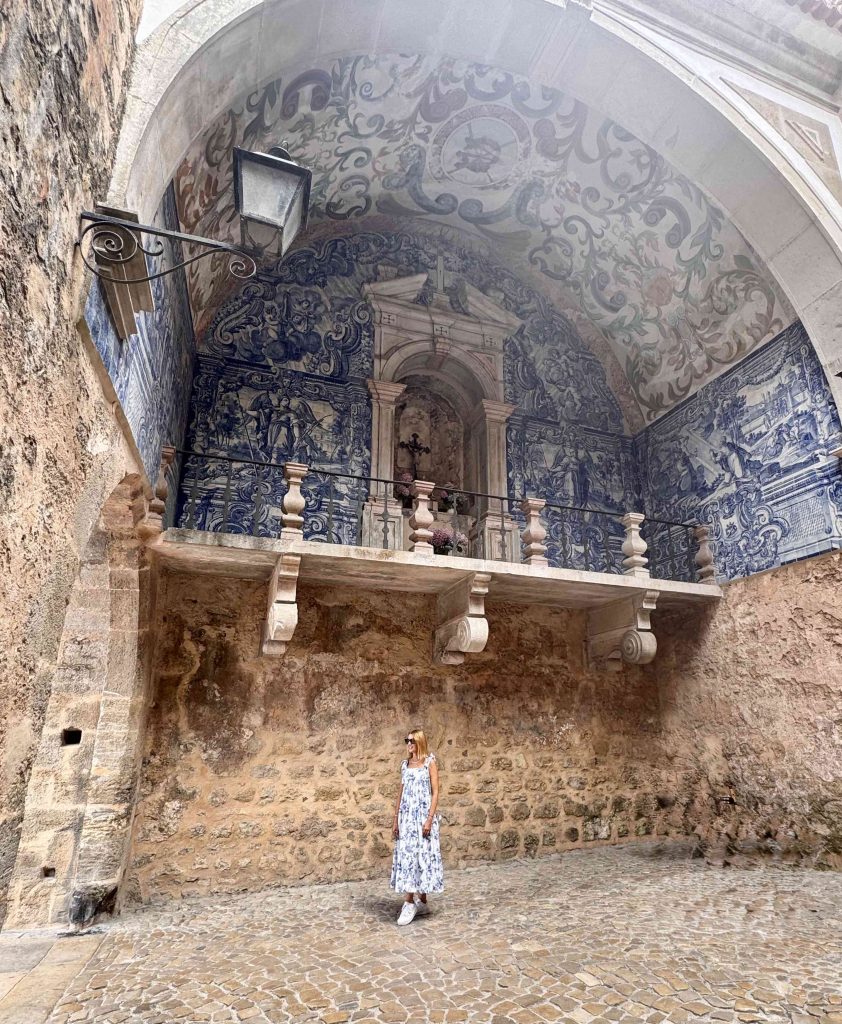
The best way to discover Óbidos is simply wandering around its beautiful medieval streets and discover its most charming corners. The center of the town is surrounded by ancient walls with several entrance gates. The most famous is Porta da Vila, a double gateway built in the 14th century with a balcony inside lined with a beautiful blue-and-white tile panel dating back to 1740.
Porta da Vila in Óbidos
After passing this gateway, you enter right into Rua Direita, the main street of Óbidos full of traditional products and souvenirs stores, small boutiques, art galleries, bookshops, restaurants and cafes offering the traditional cherry liqueur – ginginha de Óbidos. Just walking around the atmospheric centre of Óbidos, you will absorb its timeless charm visible in the whitewashed houses, flower-filled streets, small quaint squares and picturesque corners.
Don’t miss the opportunity to visit historic landmarks like Santa Maria Church, the main church located in the town’s central square with striking blue and white glazed stiles, São Pedro Church and Municipal Museum, displaying many paintings of Josefa d’Óbidos, a famous Spanish-bornPortuguese 17th century artist that spent most of her life in this town.
Streets of Óbidos
Visit Óbidos Castle and walk the medieval walls
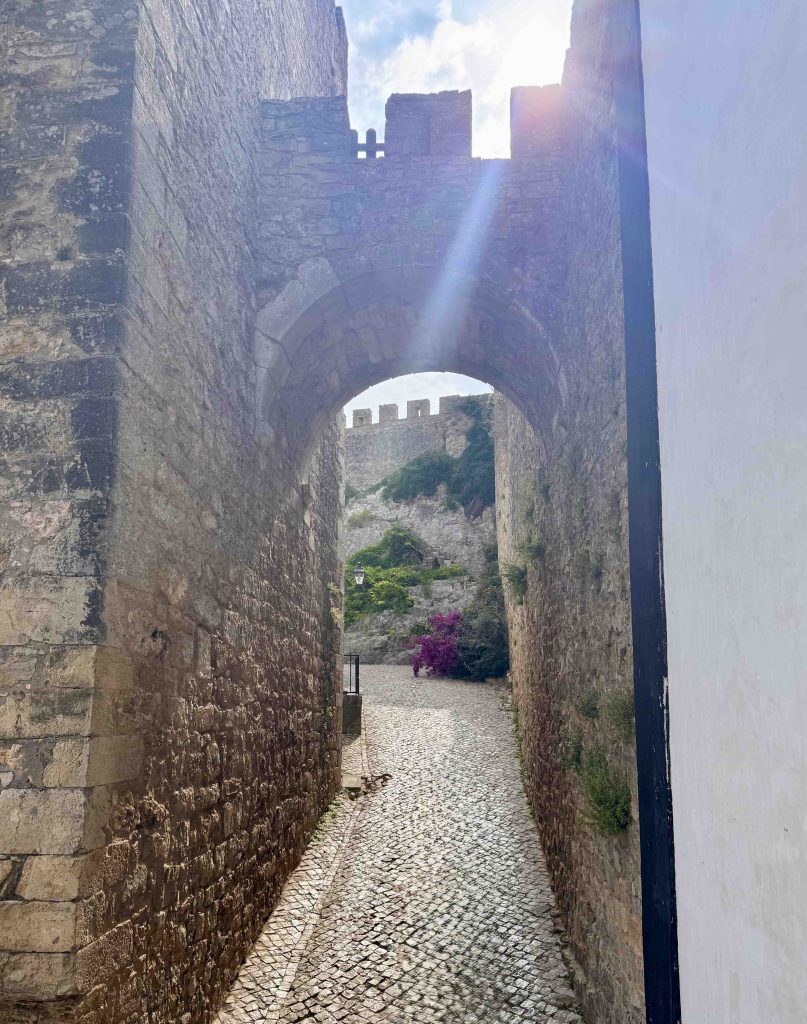
Óbidos is a fortified town build around its castle. So undoubtedly one of the unmissable things to do is exploring the castle area and walk its impressive medieval walls. With origins attributed to Roman times, the castle had Moorish influences and was later extended by Portuguese kings in the medieval period. Over the centuries, it became an important defensive stronghold.
Óbidos Castle
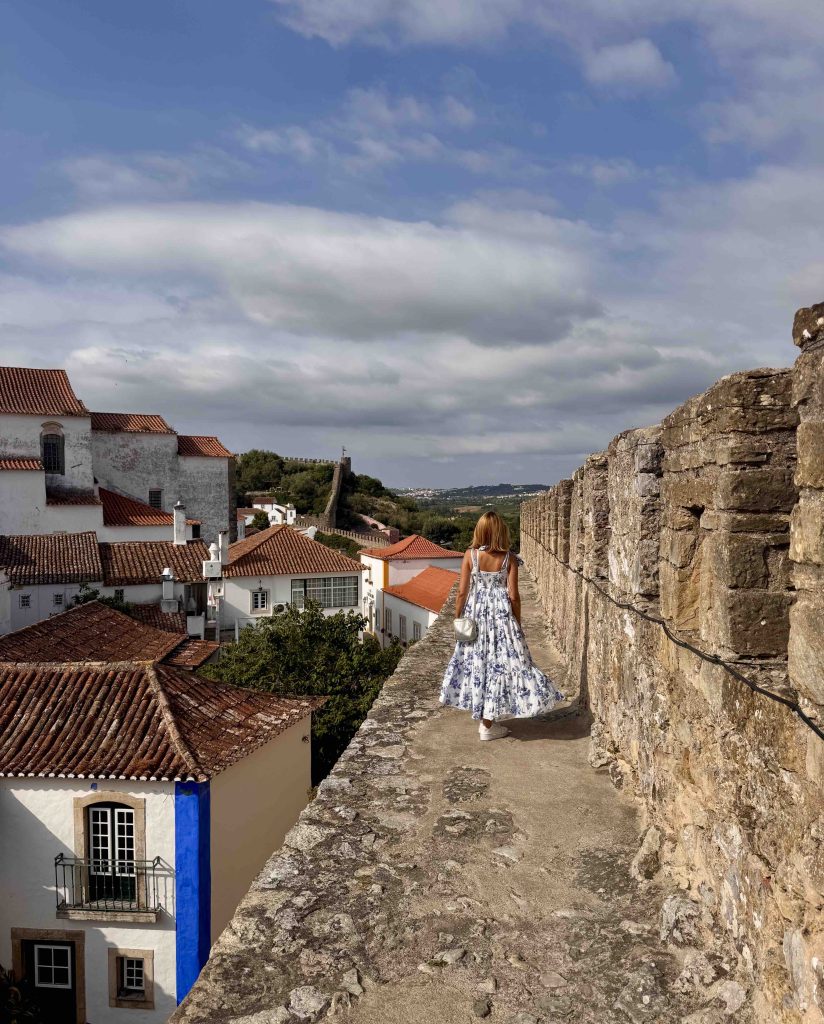
It’s possible to explore the castle’s exterior grounds and courtyards, and walk along the historic walls surrounding the town. This walk offers beautiful views over Óbidos’ charming streets, whitewashed houses and the countryside, making it one of my favourite ways to experience the town. There are several stairways providing access to the walls, including one near Porta da Vila.
Óbidos Castle Walls
Discover Óbidos literary side
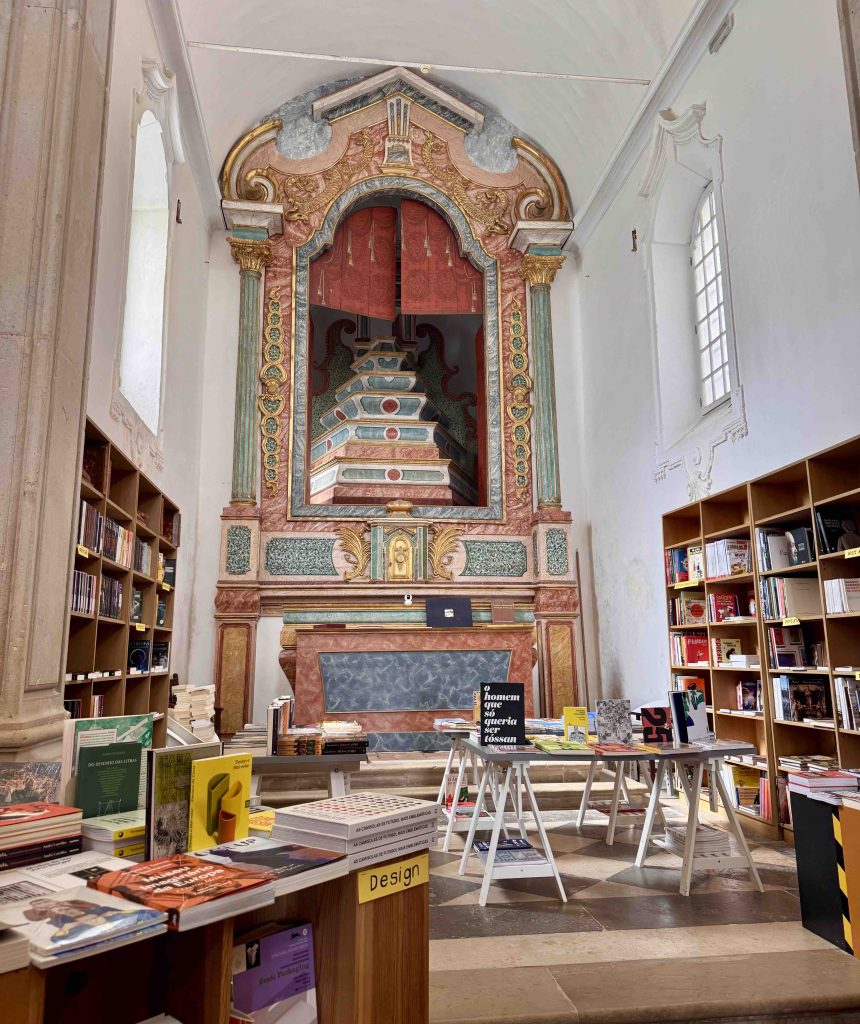
Óbidos is celebrated as a literary town, having been designated a UNESCO Creative City of Literature in 2015, in recognition of its commitment to promoting books, reading and cultural initiatives. Its historic streets are home to unique bookshops and literary spaces. One of the most remarkable is Santiago Bookshop, housed in a former 12th-century church, literally within the medieval walls and just steps away from the entrance to Óbidos Castle. The town also hosts annually FOLIO – Óbidos International Literature Festival,.
Santiago Bookshop
For a book lover like me, being in a literary hotel was a bucket-list experience that became a reality in Óbidos. The Literary Man, located just outside the town’s medieval walls, is one of the world’s largest literary-themed hotels, housed in a historic former convent. It features around 100,000 books, spread across its reading rooms, lounges and corridors.
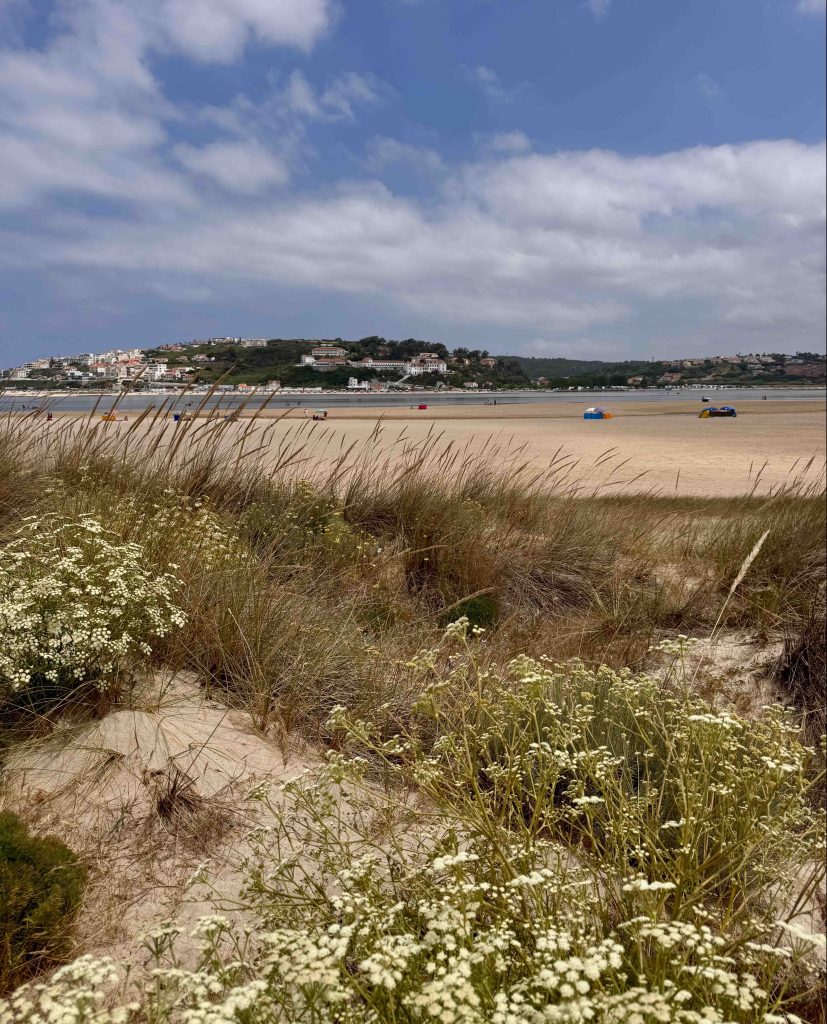
Located around 15 kilometres from Óbidos, don’t miss the opportunity to explore Lagoa de Óbidos, the largest lagoon system on Portugal’s central coast and a unique coastal ecosystem where freshwater and seawater meet. Surrounded by dunes, wetlands and small waterways, the lagoon creates a beautiful landscape that is home to diverse birdlife.
The lagoon also leads to a beautiful stretch of sandy coastline, with its calm waters and nearby beaches like Foz do Arelho or Bom Sucesso, making it a great place to spend a few hours.
Lagoa de Óbidos
Explore the charming town of Caldas da Rainha
Close to Óbidos and Lagoa de Óbidos, Caldas da Rainha is a historic spa town that is well worth exploring. Famous for being home to one of the world’s oldest purpose-built thermal hospitals, it is also renowned for its ceramics, which have become an important part of the town’s artistic identity.
The story of Caldas da Rainha is deeply connected to Queen D. Leonor, wife of King D. João II. According to the tradition, the Queen discovered the healing properties of the local thermal waters. She ordered the construction of a hospital in 1485, so that those seeking treatment could benefit from the thermal waters in greater comfort. A settlement gradually grew around the hospital and became known as Caldas da Rainha, meaning “Queen’s Hot Springs.”
Over the centuries, the town developed into an important spa destination, reaching its cultural and social peak in the late 19th and early 20th centuries, when it became fashionable among European nobility and aristocracy. This period left its mark, giving the town a fascinating blend of thermal heritage, elegant public spaces and artistic traditions. Its ceramics became particularly famous, with the work of Rafael Bordalo Pinheiro helping to establish the town as one of Portugal’s great centres of ceramic art.
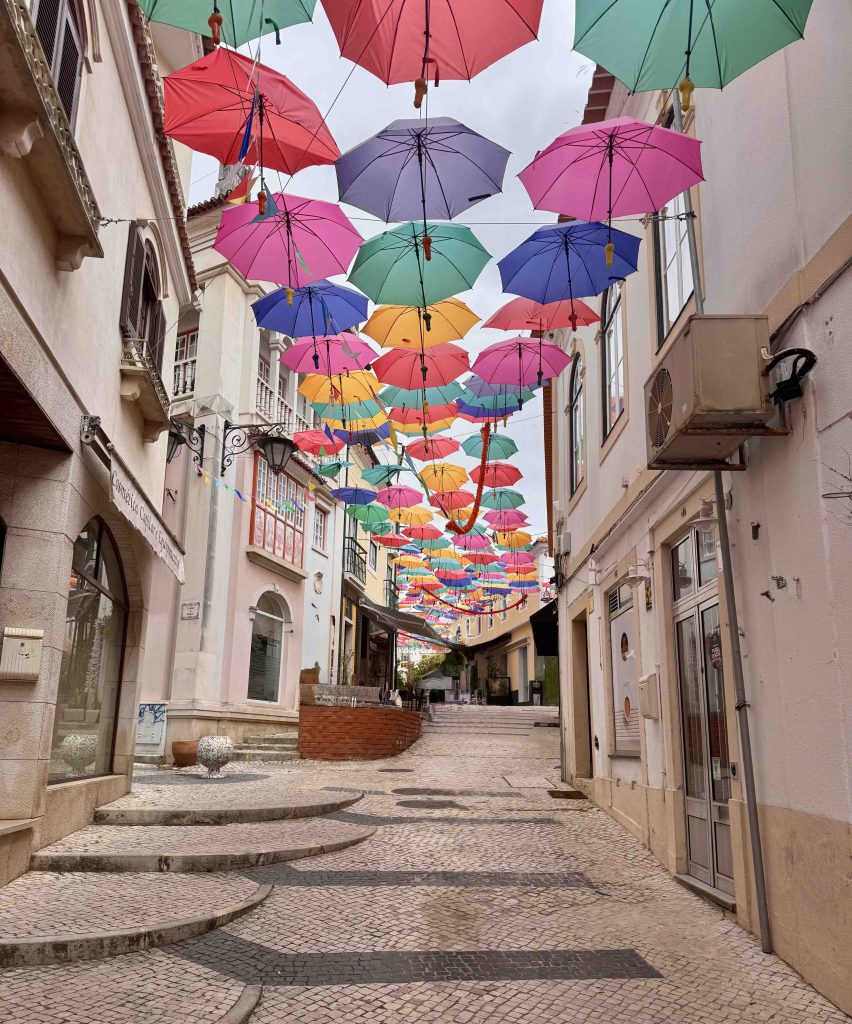
Streets of Caldas da Rainha
I spent one morning discovering Caldas da Rainha and wandering through its historic city centre, where traditional architecture, colourful details, small shops and ceramic creations reveal the town’s artistic character. It’s also possible to visit the new thermal baths and embrace the spa tradition that has shaped Caldas da Rainha for centuries.
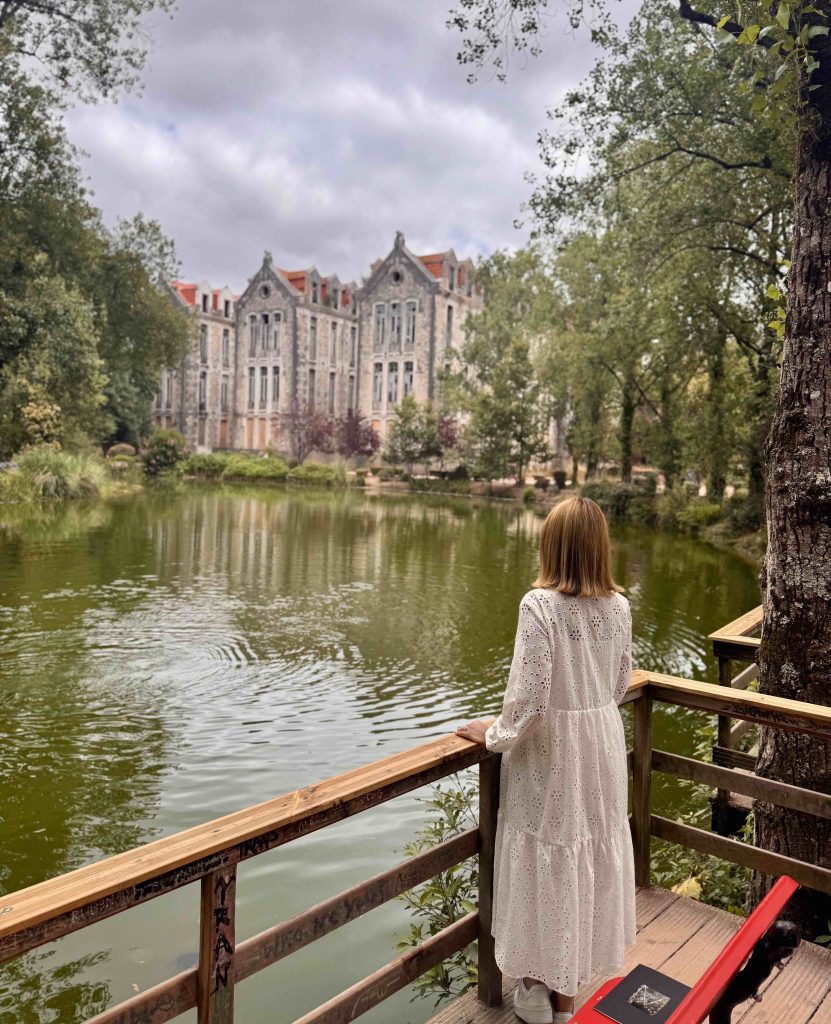
But the place that captivated me the most was D. Carlos I Park. This beautiful historical park from the 19th century is a peaceful green oasis in the heart of the city. It hosts José Malhoa Museum, dedicated to the naturalist painter José Malhoa. The main highlight of the park is the atmospheric old building of the former thermal hospital near a charming lake, which gives it an almost mysterious, timeless feeling.
This website uses cookies to improve your experience. We'll assume you're ok with this, but you can opt-out if you wish. Cookie settingsACCEPT
Privacy & Cookies Policy
Privacy Overview
This website uses cookies to improve your experience while you navigate through the website. Out of these cookies, the cookies that are categorized as necessary are stored on your browser as they are essential for the working of basic functionalities of the website. We also use third-party cookies that help us analyze and understand how you use this website. These cookies will be stored in your browser only with your consent. You also have the option to opt-out of these cookies. But opting out of some of these cookies may have an effect on your browsing experience.
Necessary cookies are absolutely essential for the website to function properly. This category only includes cookies that ensures basic functionalities and security features of the website. These cookies do not store any personal information.
Any cookies that may not be particularly necessary for the website to function and is used specifically to collect user personal data via analytics, ads, other embedded contents are termed as non-necessary cookies. It is mandatory to procure user consent prior to running these cookies on your website.